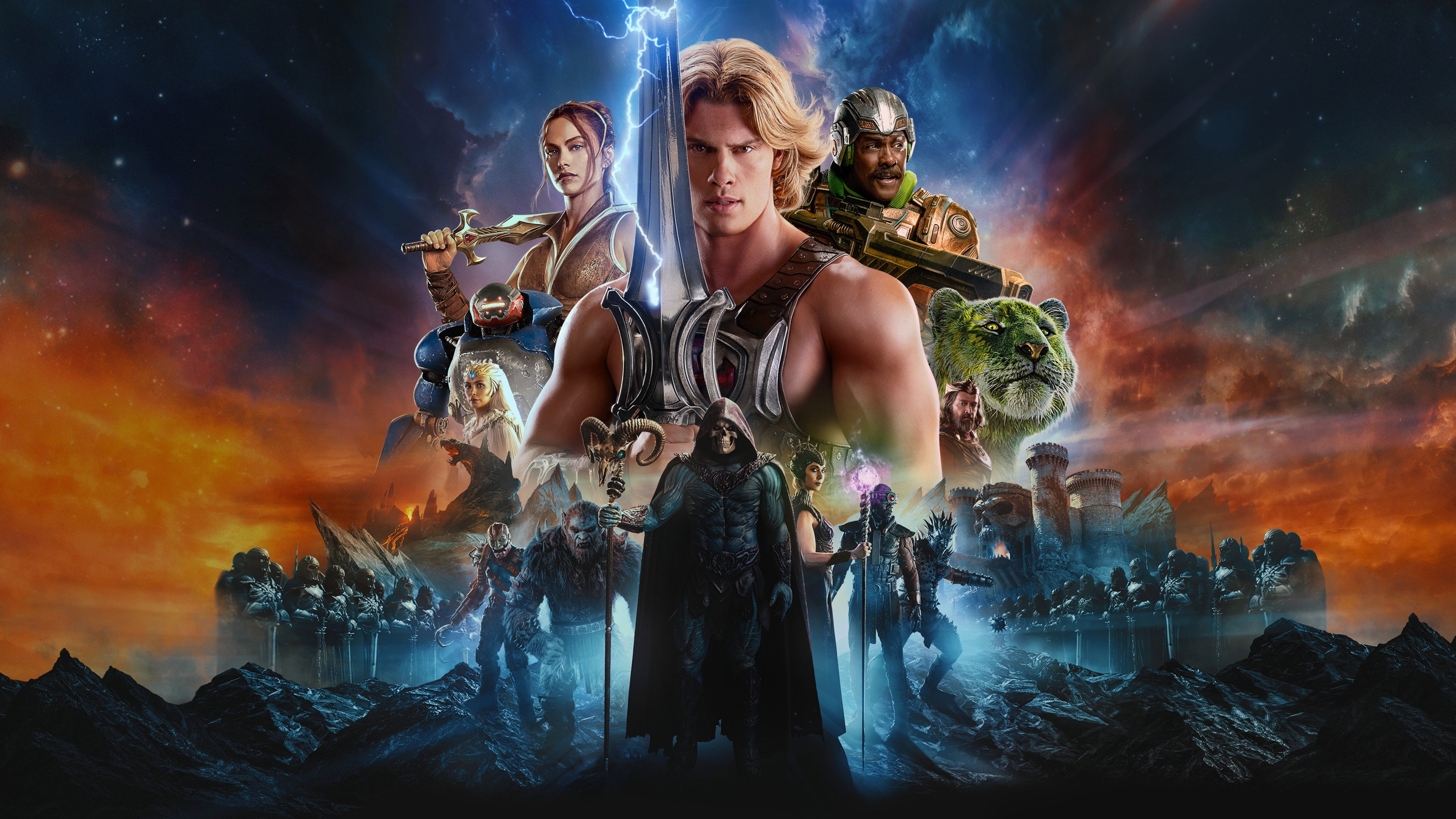

Masters of the Universe (1987) arrived at the tail end of the sword-and-sorcery craze, a live-action Mattel toy commercial that somehow became a cult object of genuine affection. Dolph Lundgren's He-Man is all muscle and sincerity; Frank Langella's Skeletor is the rare campy villain played with total conviction, giving the film an unlikely emotional anchor. What fans chase here is a specific flavor: high-concept fantasy transplanted into contemporary settings, outsider heroes who stand for something without irony, and a visual boldness that prioritizes spectacle over plausibility. The film is the distilled spirit of Saturday morning adventure, rebuilt at feature scale. If that combination hits right, there is a whole universe of material that feeds the same appetite.
Essential Masters of the Universe
The core He-Man canon, from the original animated series to its modern revival
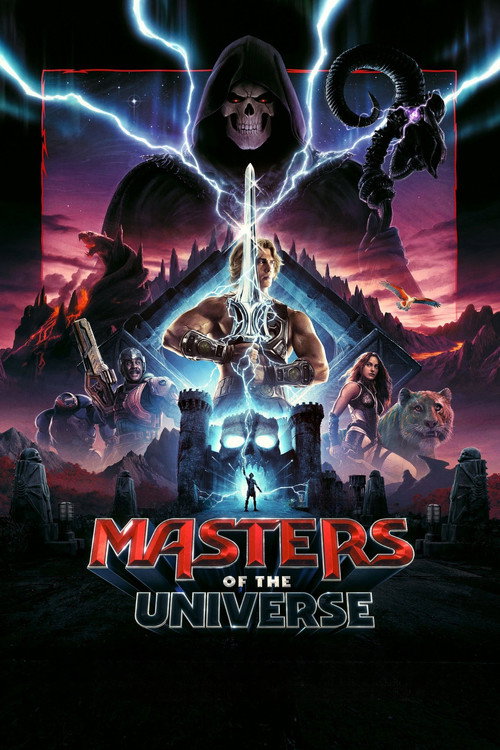
Same Pulpy Fantasy Energy
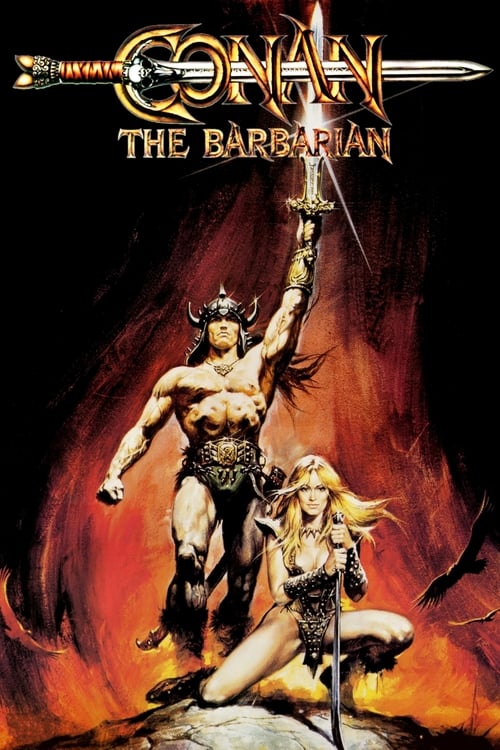
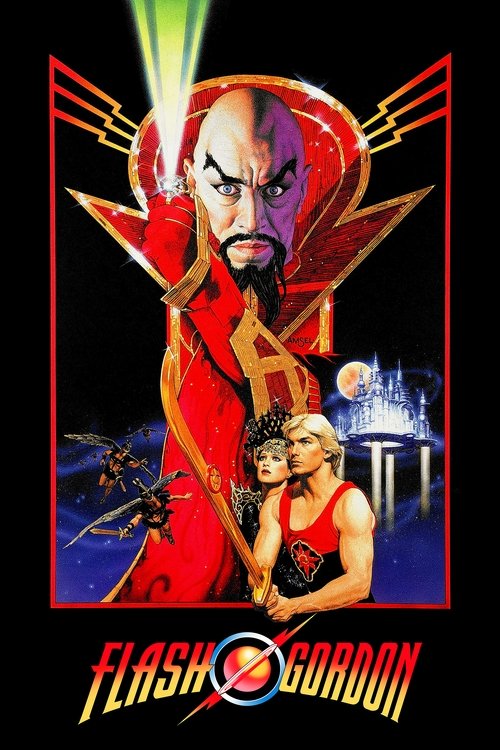
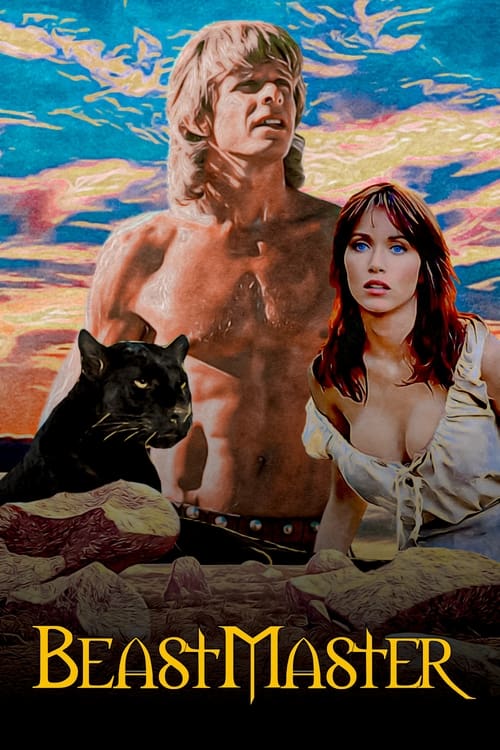
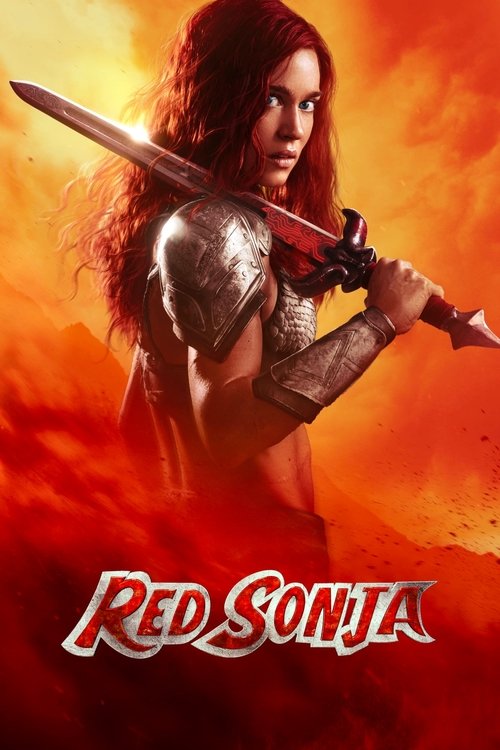
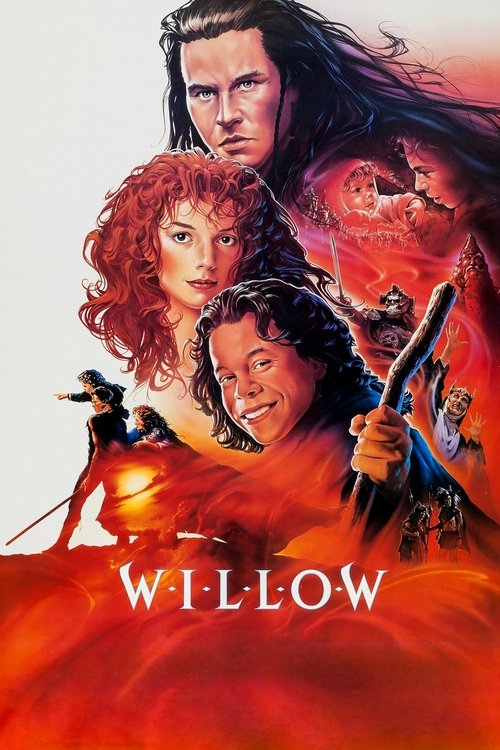
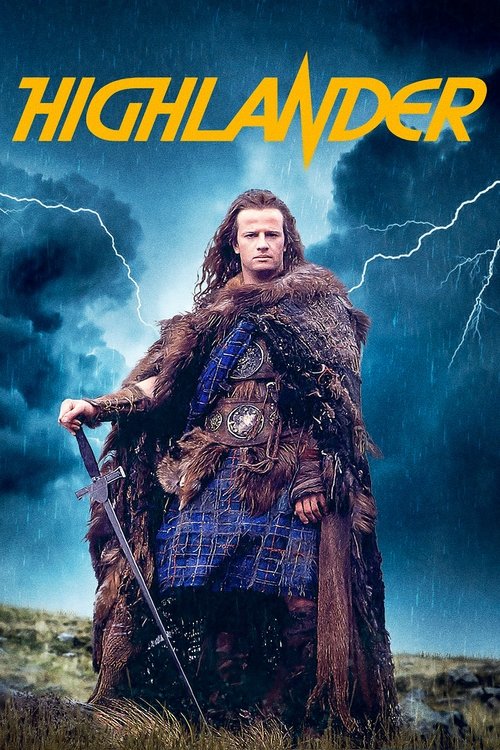
Films that share the gleeful, unapologetic spectacle of Eternia brought to live-action



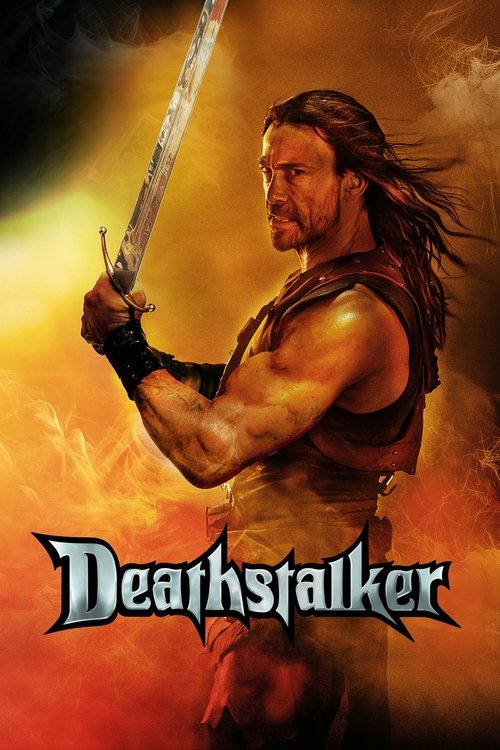
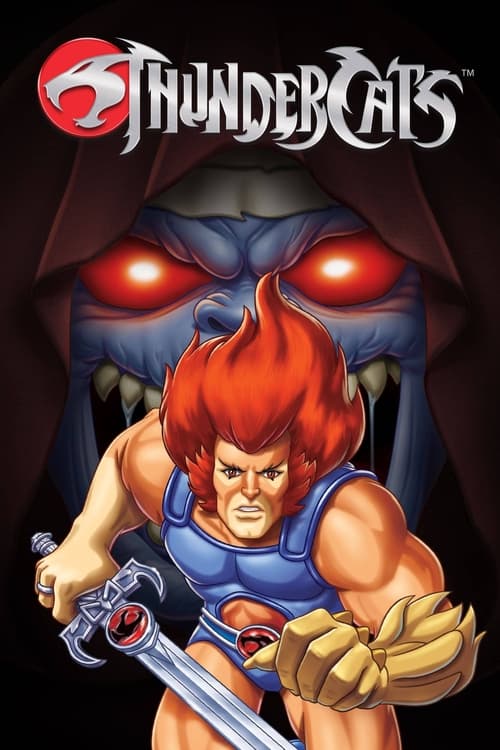
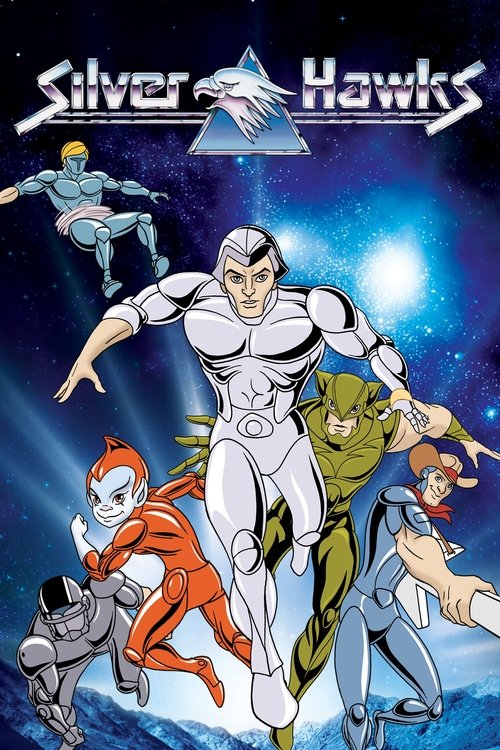
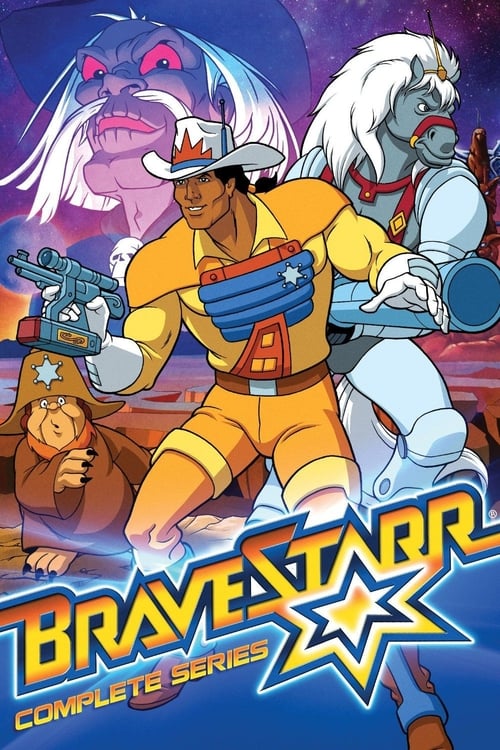
Saturday Morning into Prime Time
Animated and live-action series with the same mythic heroes-vs-evil structure
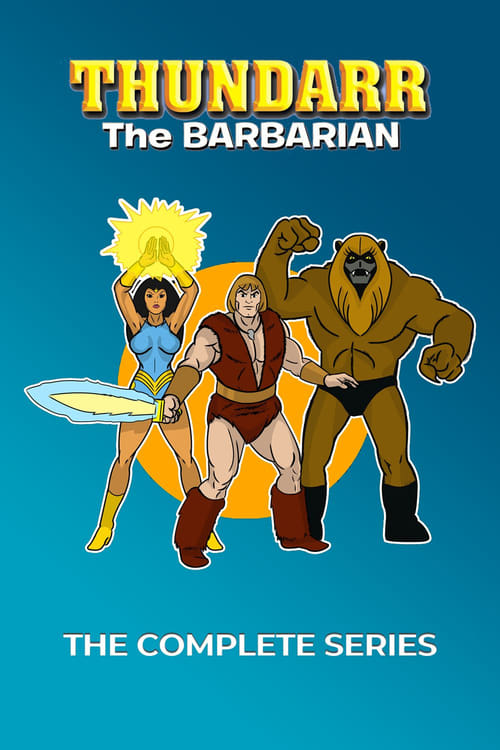
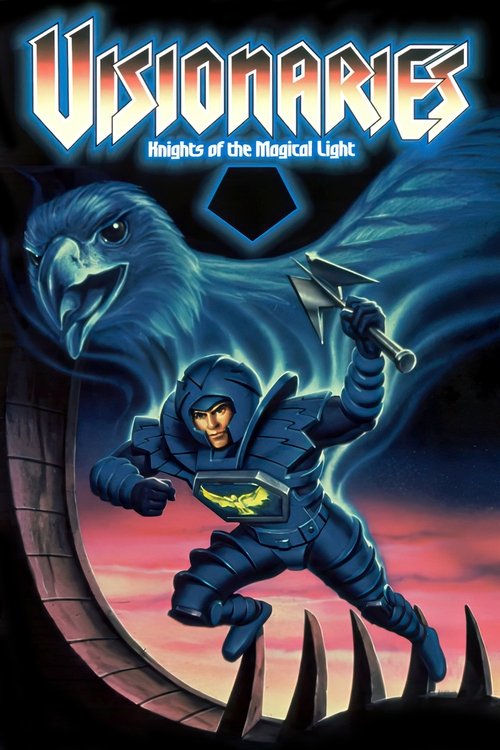
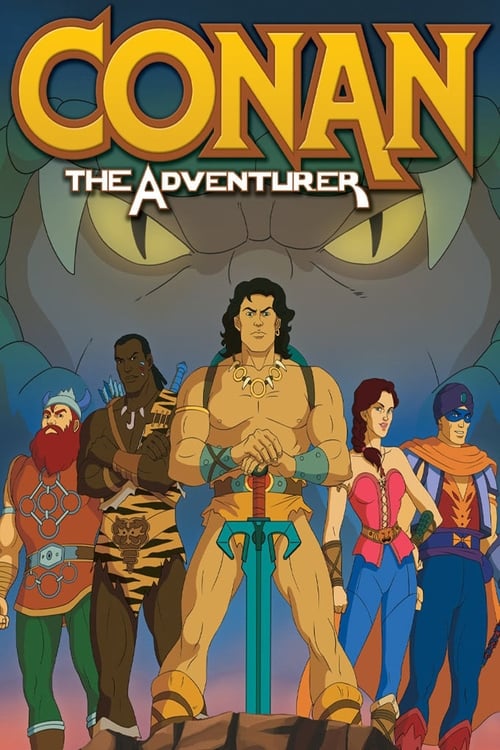
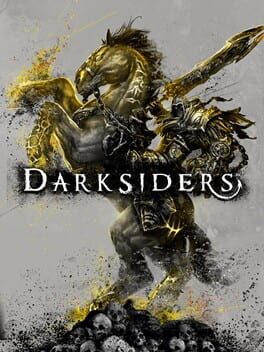
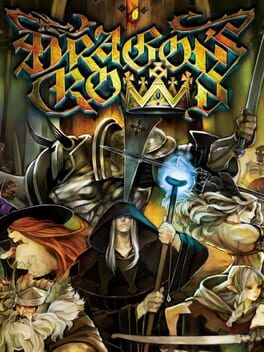
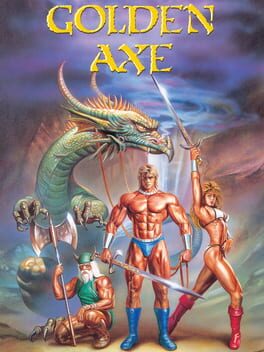
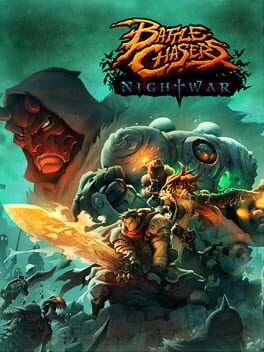
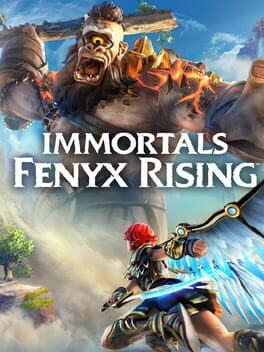
Games Worthy of Power
Games where you are the mightiest fighter in the universe, or close enough

Frank Langella Gave Skeletor Everything
Langella took a job playing a toy skeleton in blue makeup and decided to perform it as Shakespearean villainy. His Skeletor is wounded, hungry for power, and faintly tragic, which is far more than the material required and far better than the film deserved. The performance is the reason the film survives in memory when dozens of similar 1980s fantasy films do not.
Revelation Understood What the Original Got Right
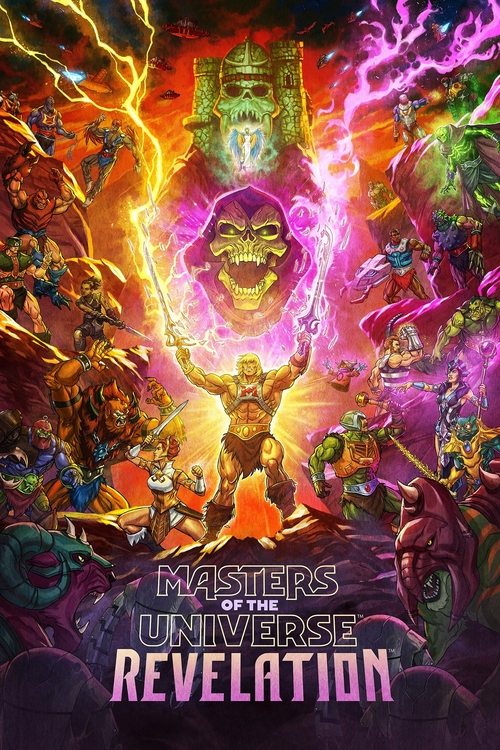
Kevin Smith's Masters of the Universe: Revelation (2021) treated the property as actual mythology worth taking seriously, leaning into Teela as a full protagonist and letting the story carry real stakes. Some fans resisted; the series rewarded the ones who stayed. It is the rare reboot that earns its darkness by respecting the source's emotional core rather than ironically distancing from it.
She-Ra and the Princesses of Power Outdid Its Source
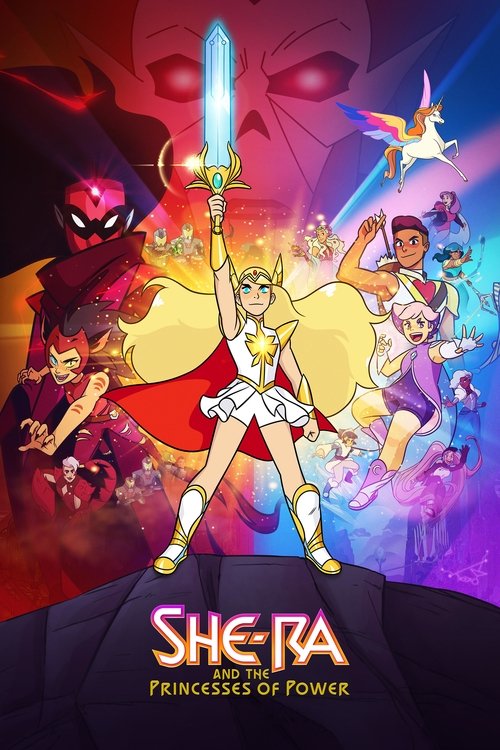
The Netflix reboot of She-Ra (2018-2020) took the premise of a princess discovering her heroic destiny and built something emotionally sophisticated around it, with a found-family core and a central relationship between Adora and Catra that grew into one of the most compelling arcs in recent animated television. It shares DNA with the 1985 original but belongs fully to its own era.
The Masters of the Universe Timeline
- 1981Mattel launches He-Man action figures, the first major toy line designed without a pre-existing license
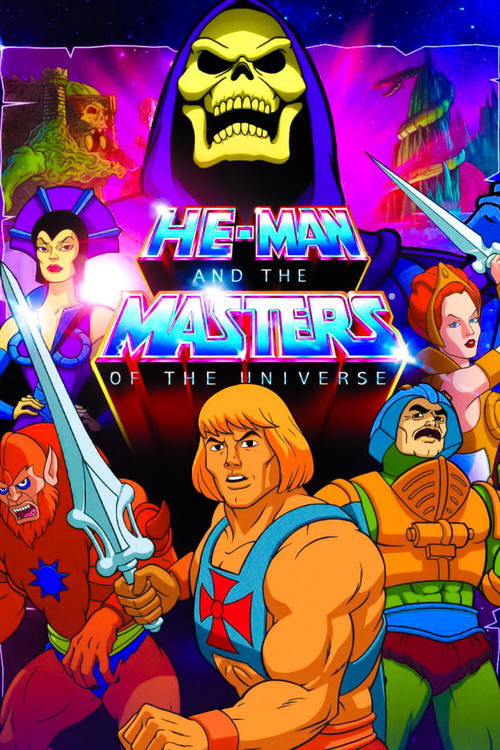
- 1983Filmation animated series premieres, defining the mythology for a generation He-Man and the Masters of the Universe
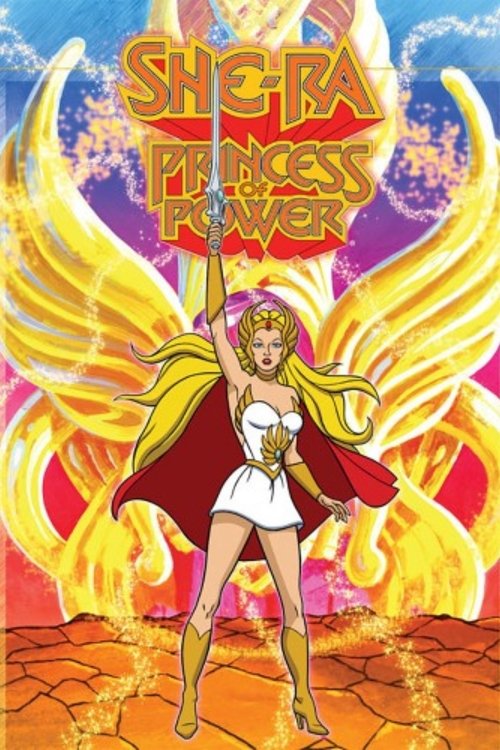
- 1985She-Ra spinoff series launches, expanding Eternia into Etheria She-Ra: Princess of Power
- 1987Live-action theatrical film with Dolph Lundgren and Frank Langella released Masters of the Universe
- 1990The New Adventures of He-Man attempts a science-fiction reboot; the toy line ends shortly after The New Adventures of He-Man
- 2002Mike Young Productions revives the animated series with a darker visual style He-Man and the Masters of the Universe
- 2018Netflix reboot of She-Ra begins, redefining the character for a new audience She-Ra and the Princesses of Power
- 2021Masters of the Universe: Revelation continues the original continuity with serious narrative ambitions Masters of the Universe: Revelation
- 2021A second Netflix animated series targets younger audiences under the same title He-Man and the Masters of the Universe
By the power of Grayskull, I have the power.He-Man, Masters of the Universe (1987)