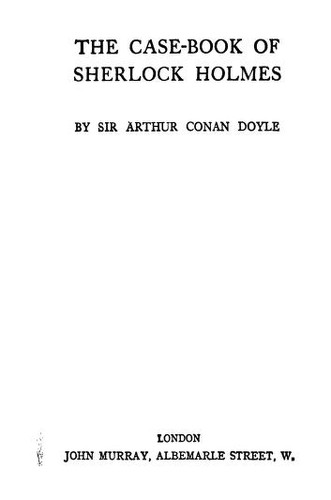

Published between 1921 and 1927, The Case-Book of Sherlock Holmes is the final collection Doyle wrote, and it is the one that refuses to behave. These twelve stories are looser, stranger, and more willing to let the detective fail or feel than anything that came before. Holmes himself is older, sometimes tired, occasionally fooled. Several cases end without a tidy resolution. One — "The Adventure of the Creeping Man" — edges toward science fiction. Another, "The Adventure of the Sussex Vampire," sets up the supernatural only to dismantle it with characteristic severity, but the discomfort lingers. The through-line fans chase is not the puzzle-box pleasure of The Adventures but something thornier: a great mind confronting the limits of reason, a Victorian certainty rubbing against a post-war world that no longer quite believed in order. If you finished the Case-Book and felt both satisfied and vaguely unsettled, this guide is built for you.
Essential Sherlock Holmes
The complete arc, from debut to farewell, in Doyle's own words


The Detective Novel at Its Most Unsettling
Books that share the Case-Book's taste for strange cases, aging detectives, and conclusions that leave residue


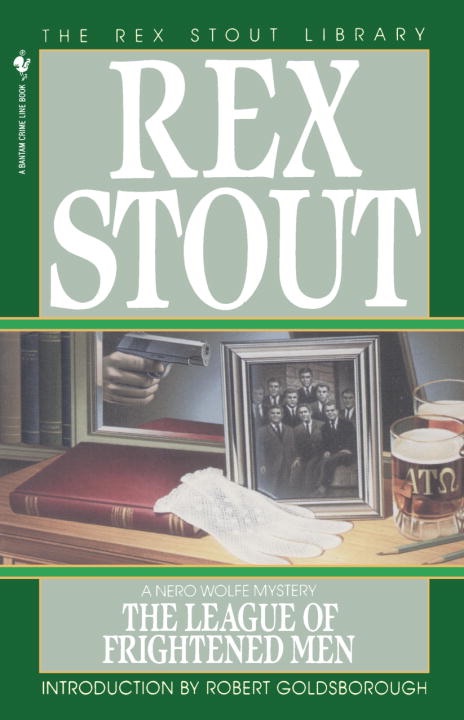


Holmes on Screen: The Cases That Get the Darkness Right
Films and series that capture the late-period strangeness, not just the pipe and the deerstalker
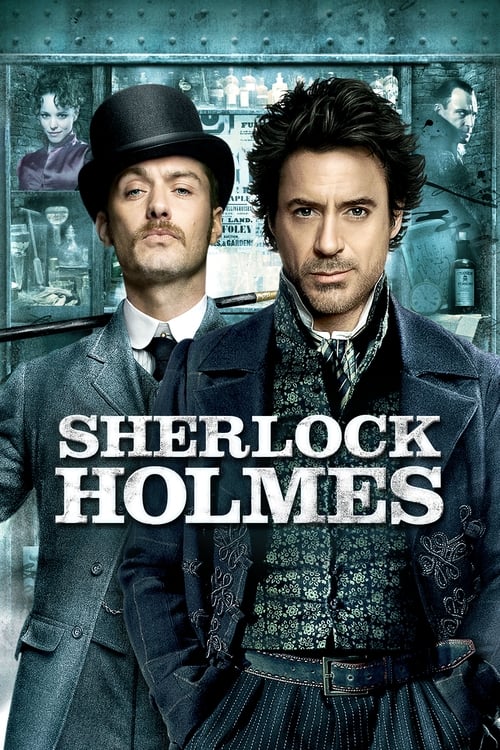
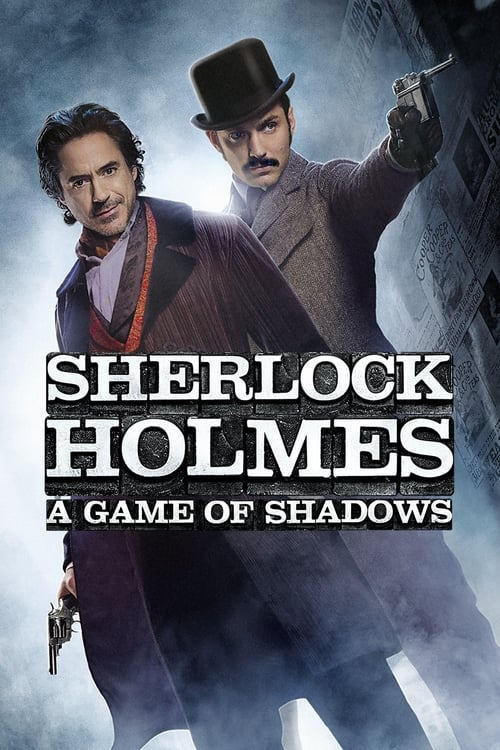



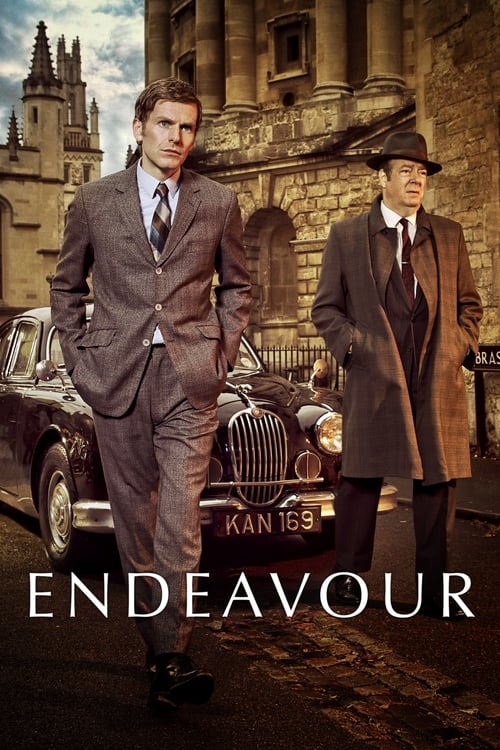
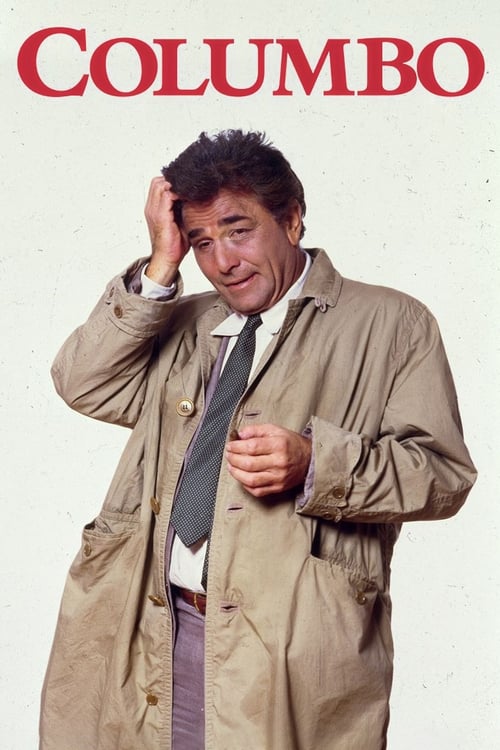
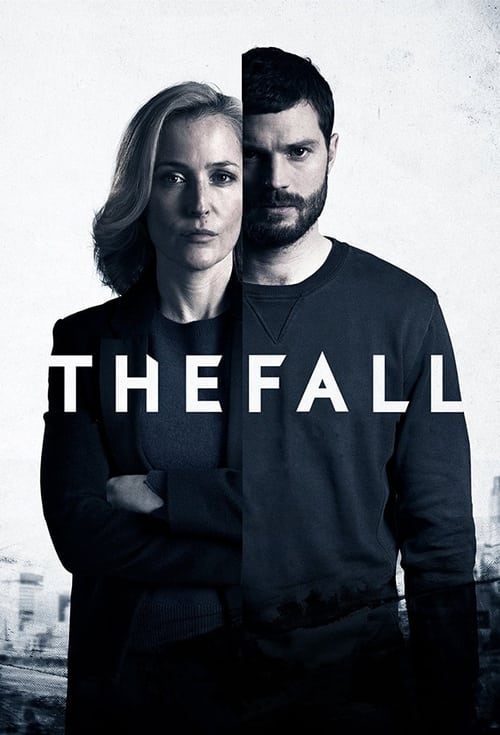
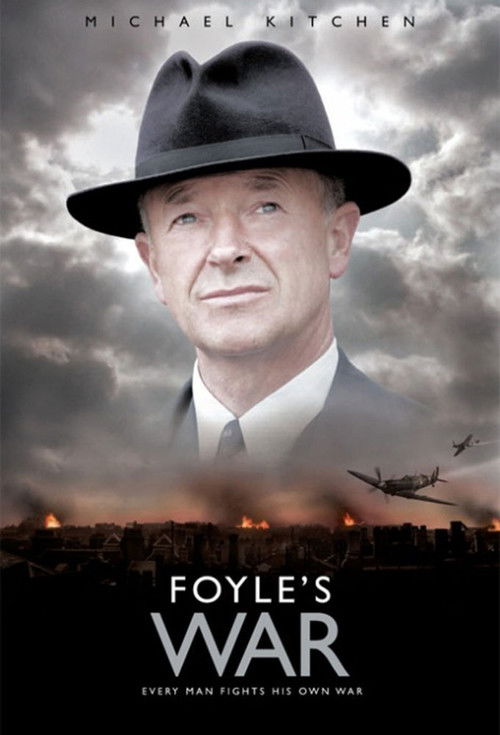
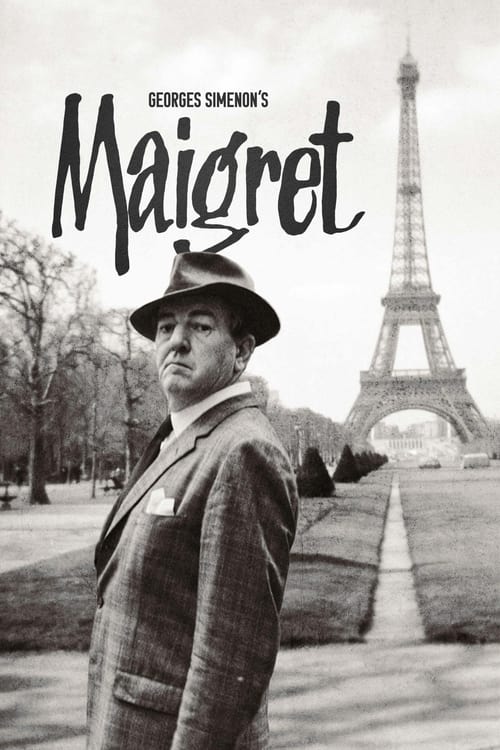
Cerebral Crime Series for the Long Haul
TV that rewards patience and builds a detective's world across many hours the way Doyle built Baker Street




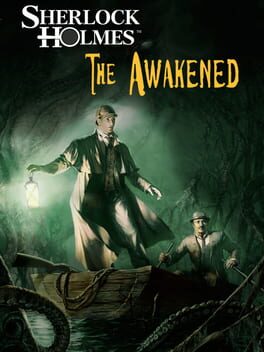
Games of Deduction and Hidden Motives
Games where the pleasure is reading a scene, not winning a fight


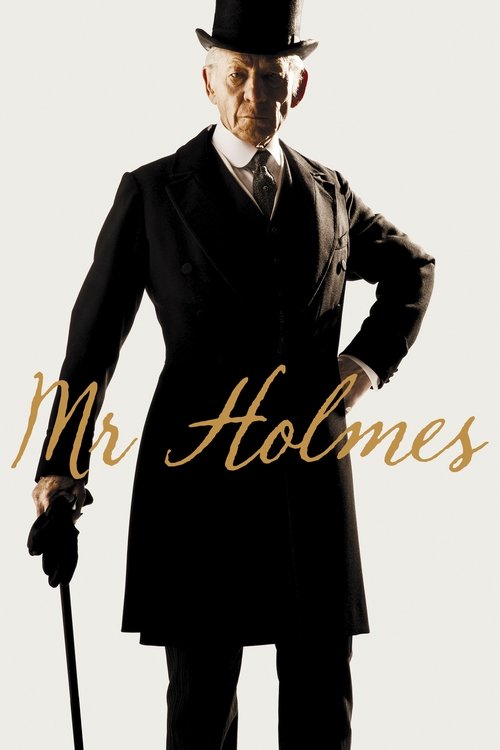
Mr. Holmes (2015) is the only adaptation that takes the late period seriously
Ian McKellen plays Holmes at 93, tending bees, losing his memory, and trying to reconstruct a final case he can no longer fully recall. The film is less interested in the puzzle than in what happens to a mind that was once a perfect machine. It is quieter and stranger than any other Holmes film and lands much closer to the spirit of the Case-Book than the more celebrated adaptations.
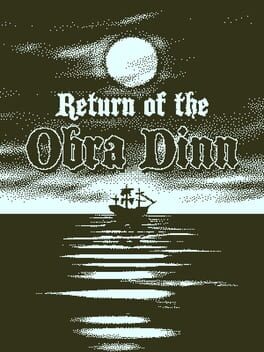
Return of the Obra Dinn is the truest deductive game ever made
You reconstruct the deaths of an entire ship's crew from frozen moments in time, with no handholding and no hint system. The game assumes you will think, and it makes you feel the specific pleasure of Holmes at his best: the moment when scattered evidence clicks into a single, terrible pattern. No other game has replicated that sensation as purely.
The Case-Book's real subject is the cost of being always right
Story after story shows Holmes cutting through sentiment and illusion to reach a truth that sometimes destroys the people it frees. By the late period, Doyle seems genuinely ambivalent about this. The detective who cannot stop noticing things is not always a comfortable presence to be around, and the Case-Book is the collection where that discomfort becomes the point.
Sherlock Holmes: From Debut to Final Case
- 1887Holmes and Watson meet; the detective method announced to the world A Study in Scarlet
- 1890The partnership deepens; the first locked-room in the canon
- 1892First short-story collection; the method at its most confident
- 1893Doyle kills Holmes at the Reichenbach Falls in the Memoirs, tired of his creation
- 1902The great gothic novel; Holmes at full power on the moor The Hound of the Baskervilles
- 1903Public pressure forces the resurrection; Holmes returns The Return of Sherlock Holmes
- 1915The American case; Holmes faces a villain who matches him structurally The Valley of Fear
- 1917Holmes's farewell to Watson before the war; the last classic-mode story
- 1921The Case-Book begins publication in The Strand Magazine; stories grow stranger
- 1927The Adventure of Shoscombe Old Place is published; Holmes retires for good The Case-Book of Sherlock Holmes
- 1984Jeremy Brett's definitive television Holmes begins; the character is permanently reshaped for screen
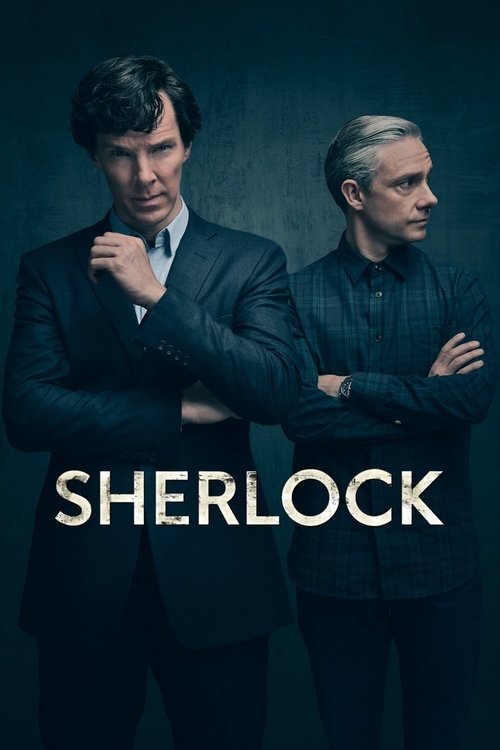
- 2010Sherlock relocates Holmes to contemporary London; the Case-Book's strangeness returns Sherlock
The world is full of obvious things which nobody by any chance ever observes.Arthur Conan Doyle, The Hound of the Baskervilles