More like War and Peace
Cross-media recommendations across film, TV, games, books & music — picked by taste.
War and Peace traces five Russian aristocratic families — the Bezukhovs, Bolkonskys, Rostovs, Kuragins, and Drubetskoys — through the upheaval of the Napoleonic era, from 1805 to Napoleon's invasion of 1812. Tolstoy weaves domestic entanglements, moral inquiry, and philosophical reflection through the larger sweep of history. Readers drawn to it tend to seek the same combination: intimate family drama set against catastrophic historical forces, moral seriousness without sentimentality, and the long pressures of war on private lives.
About War and Peace
War and Peace is an epic novel by the Russian author Leo Tolstoy. Set during the Napoleonic Wars, the work comprises both a fictional narrative and chapters in which Tolstoy discusses history and philosophy. An early version was published serially beginning in 1865, after which the entire book was rewritten and published in 1869. The novel has claims to be the greatest novel written. It is regarded, with Anna Karenina, as Tolstoy's finest literary achievement, and it remains an internationally praised classic of world literature.
From the Wikipedia article War_and_Peace, available under CC BY-SA.
Films like War and Peace
 Film
War and Peace
Film
War and Peace
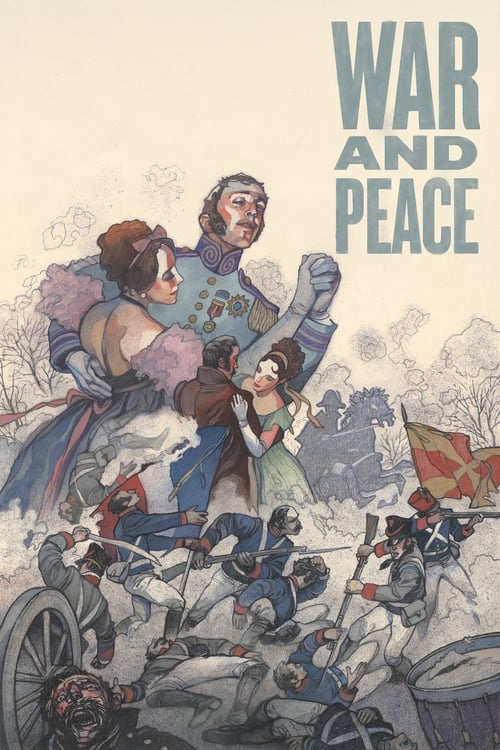
The Rostova–Bezukhov love story woven into the 1812 Patriotic War — the Soviet Oscar-winning film version.
 Film
War and Peace, Part I: Andrei Bolkonsky
Film
War and Peace, Part I: Andrei Bolkonsky
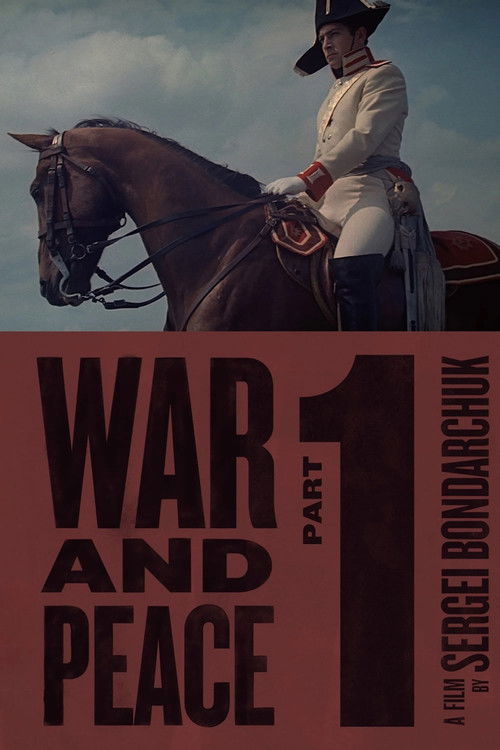
Opens in 1805 St. Petersburg tracing Pierre Bezukhov's entrance into society alongside Andrei Bolkonsky's military service.
 Film
War and Peace
Film
War and Peace
Natasha Rostova and Pierre Bezukhov's intertwined love story set against Napoleon's 1812 invasion — the 1956 Hollywood adaptation.
 Film
War and Peace, Part III: The Year 1812
Film
War and Peace, Part III: The Year 1812
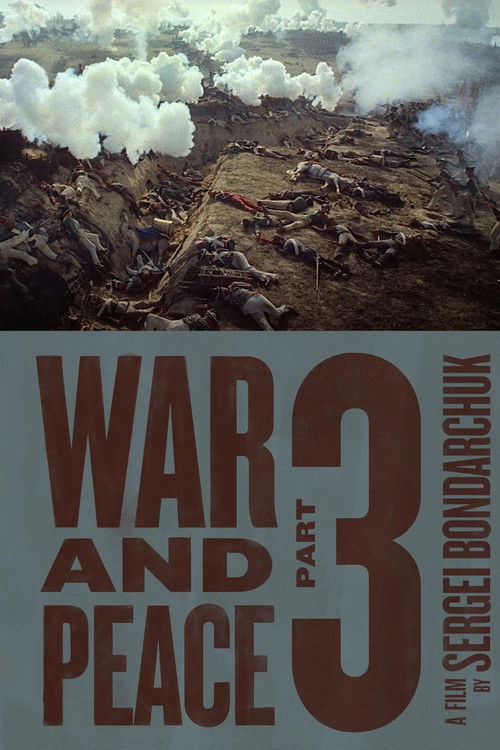
Centres on Borodino and Napoleon's 1812 invasion, with Bolkonsky and Pierre both caught in the battle's chaos.
 Film
War and Peace, Part IV: Pierre Bezukhov
Film
War and Peace, Part IV: Pierre Bezukhov
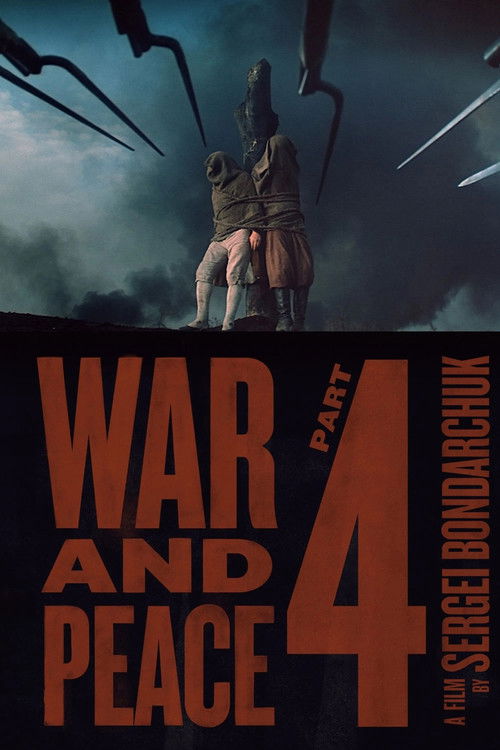
Moscow burning, the Rostovs fleeing, Pierre a prisoner — the novel's climactic catastrophe rendered in full.
 Film
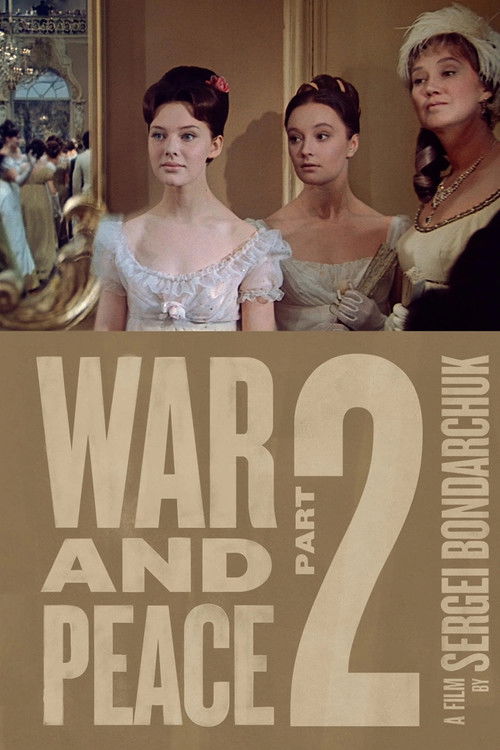
War and Peace, Part II: Natasha Rostova
Film
War and Peace, Part II: Natasha Rostova
Natasha's first ball, Andrei's declaration of love, and the ache of long separation drive this second part.
Series like War and Peace
 Series
War and Peace
Series
War and Peace
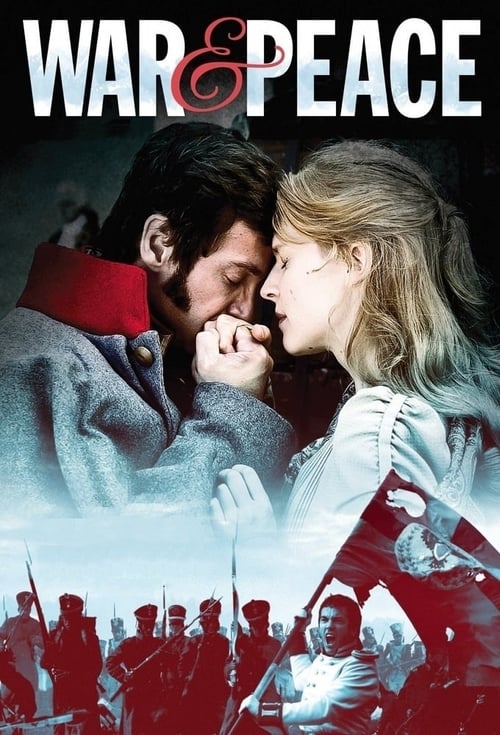
An international co-production retelling the same story through an ensemble of varied nationalities.
 Series
War and Peace
Series
War and Peace
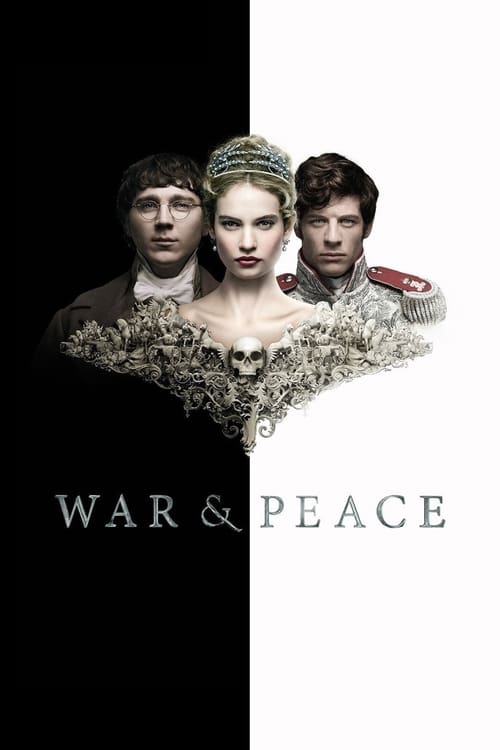
The Rostova–Bezukhov love story against the Patriotic War of 1812 — the BBC 2016 miniseries adaptation.
 Series
War & Peace
Series
War & Peace
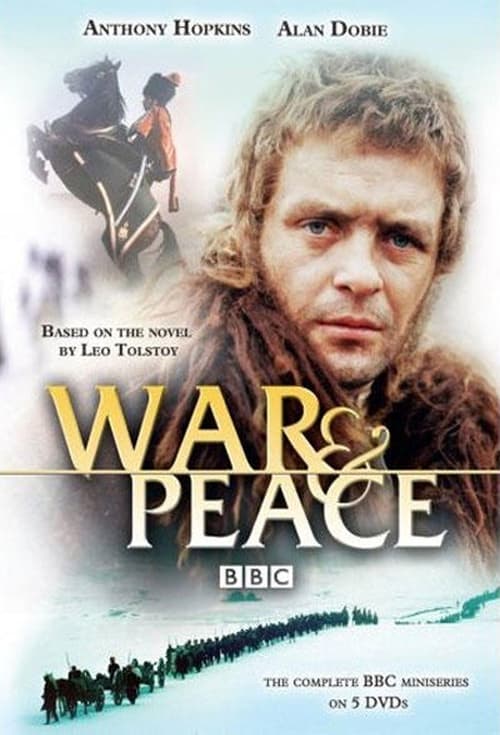
Natasha Rostova and Pierre Bezukhov's romance amid the 1812 war, adapted as a 1972 television drama.
 Series
War and Destiny
Series
War and Destiny
A prestigious family in a great city watches that city fall to an invading force, echoing the novel's domestic-meets-catastrophe structure.
 Series
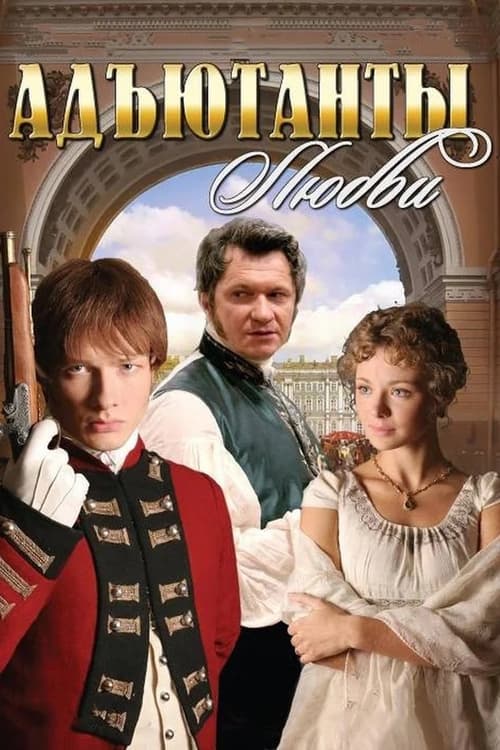
Adjutants of Love
Series
Adjutants of Love
A young man in early Russia forced to sacrifice personal happiness for his country's survival.
 Series
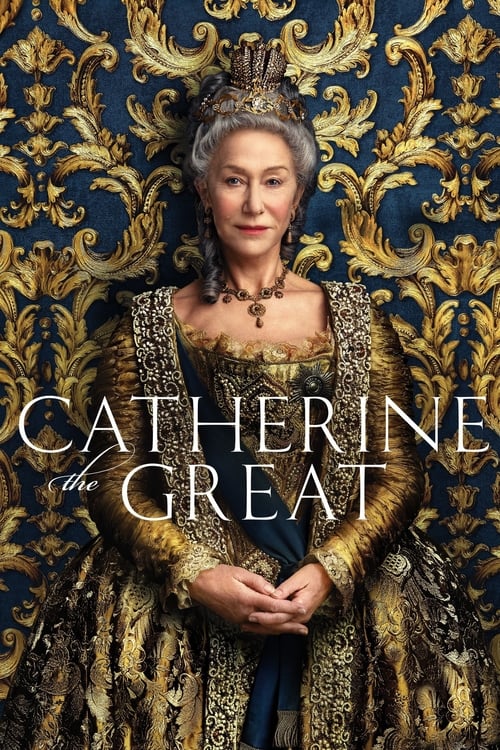
Catherine the Great
Series
Catherine the Great
A four-part drama tracing how the end of a reign and a powerful alliance shaped Russia's political future.
More books like War and Peace
 Book
War and Peace and War
Book
War and Peace and War
Uses evolutionary theory to argue that the rise and fall of empires follows patterns, engaging the same historical scope.
 Book
Taras Bulba
Book
Taras Bulba
A father and two sons fighting a patriotic war, where loyalty to nation strains bonds of family and love.
 Book
Les biens de ce monde
Book
Les biens de ce monde
A family's private loves and finances set against two world wars, where history deforms everyday life.
 Book
Testament français
Book
Testament français
A Russian childhood shaped by an elegant Frenchwoman grandmother, placing French culture at the heart of Russian identity.
 Book
Gospodi--spasi i usmiri Rossii͡u︡
Book
Gospodi--spasi i usmiri Rossii͡u︡
The end of a dynasty at the hands of revolution — the aristocratic world the novel depicts collapsing into history.
 Book
The diplomat's daughter
Book
The diplomat's daughter
Three young lives divided by war, tracing how conflict reshapes private fates across national lines.
Frequently asked
What should I watch after reading War and Peace?
Several film adaptations capture the epic scope beautifully — the Soviet War and Peace (1968) is the most ambitious, while the BBC's War and Peace (2016) miniseries is the most accessible modern retelling of Natasha and Pierre's story.
Are there TV series like War and Peace for fans of Russian historical drama?
Catherine the Great (2019) explores the imperial Russian court that directly shaped the world of Tolstoy's novel, and Adjutants of Love follows a young man sacrificing personal happiness for Russia during the same turbulent era.
Are there other books similar to War and Peace that blend family saga with wartime history?
Taras Bulba offers a shorter but equally patriotic Russian-flavored war story, while Les biens de ce monde traces a French family across two world wars with the same intimate domestic-amid-catastrophe feel.