Does It Matter Who Wrote Daggermouth?
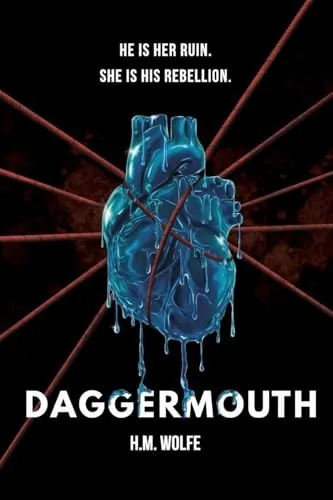
In December, an ebook nobody had heard of started moving the old way, one reader handing it to another. Daggermouth, H.M. Wolfe's enemies-to-lovers dystopian romance, was self-published and unpromoted, and for a while its entire marketing department was word of mouth. It has now debuted at number one in hardcover fiction on the back of a seven-figure two-book deal, and it is sitting on four bestseller lists at once.
Then The Atlantic published a piece accusing the book of being written by AI. Wolfe denies it. Be precise about what that leaves us with: there is no definitive proof either way. None for the accusation, none against it. Anyone telling you the question is settled, in either direction, is telling you something they do not know.
What an accusation actually does
The allegation is not the interesting part. What it does to readers is. Thousands of people read this book before they had ever heard the claim, and plenty of them loved it. The question they are sitting with now is whether that love is supposed to be withdrawn.
Our answer is no, and it is not a close call. The hours you spent inside the book happened. Whatever the pages did to you, they did before anyone told you what to suspect, which makes your own reaction the one piece of evidence in this whole affair that is not speculation.
The other side deserves better than a strawman, though. For a lot of readers a novel is a message from a person, and part of its value is knowing that someone chose every one of those words on purpose. If that turned out to be false, something real would be lost, and the loss would not be snobbery. That position is coherent. We just do not think you can act on it here, because acting on it means treating a claim as a fact, and this claim is not one yet. Suspicion is cheap. It costs nothing to hold, and unless someone produces proof it never resolves. Give it the authority to rewrite books you have already finished and you have handed a stranger the power to decide what you enjoyed.
So is it worth reading?
Yes, if the pitch is for you. Daggermouth is an enemies-to-lovers dystopian romance and makes no apology for being one, which is the first thing to know. If that subgenre leaves you cold, a number one debut will not convert you, and four bestseller lists will not either.
What earns it the shelf space is how it got here. There was no publisher behind this book when readers started passing it around. It found its audience before anyone had a budget to find one for it, which is the rarest thing on any bestseller list and the one part of the story the accusation does not touch. Whatever else is in dispute, readers picked this first, unprompted, with nothing pushing them.
One honest caveat. If you are the kind of reader for whom the person on the other side of the page is the whole point, this one will sit under a cloud you cannot clear by yourself, and no reading experience is good enough to fix that. Read something else with our blessing, and come back if the question ever gets a real answer.
For everyone else: start it, judge it, and let your own verdict be the one that counts.