Tupac Shakur died thirty years ago this week, and most new listeners still start with the wrong album
Thirty years ago this week, on Saturday, September 7, 1996, a white Cadillac pulled up beside a black BMW at a stoplight at East Flamingo Road and Koval Lane in Las Vegas, and somebody inside it opened fire. Tupac Shakur was hit four times. He died six days later, on Friday, September 13, at University Medical Center of Southern Nevada. He was 25 years old, and he had been famous for five of those years.
The anniversary lands with a peg nobody expected to get. Last Monday, August 31, a Clark County jury took less than three hours to convict Duane "Keffe D" Davis, 63, of first-degree murder with a deadly weapon for his part in the shooting. Prosecutors called him a "shot caller" in the South Side Compton Crips who got hold of a gun and "went hunting" for Tupac after his nephew was beaten in the MGM Grand lobby earlier that night. Nobody has ever been charged with firing the shots, and the three other men said to have been in the Cadillac are dead. The line that stuck from the courtroom was prosecutor Marc DiGiacomo's, about the collection of Tupac clippings Davis kept: "This guy's scrapbooking his murder, for God's sake." That is the whole of the true crime you will get from us. Tupac's mother Afeni Shakur died in 2016 and never saw a verdict, and the man himself would surely rather you spent this week with the records.
So here is the argument. Tupac is the rare artist whose work lives on four of our shelves at once: music, film, television and books, with a biopic on top. New listeners nearly always walk in through All Eyez on Me, because it is the famous one, the double album, the one with the hits. It is the wrong door. The right one is the record he made before prison and released from inside it.
Start here: Me Against the World
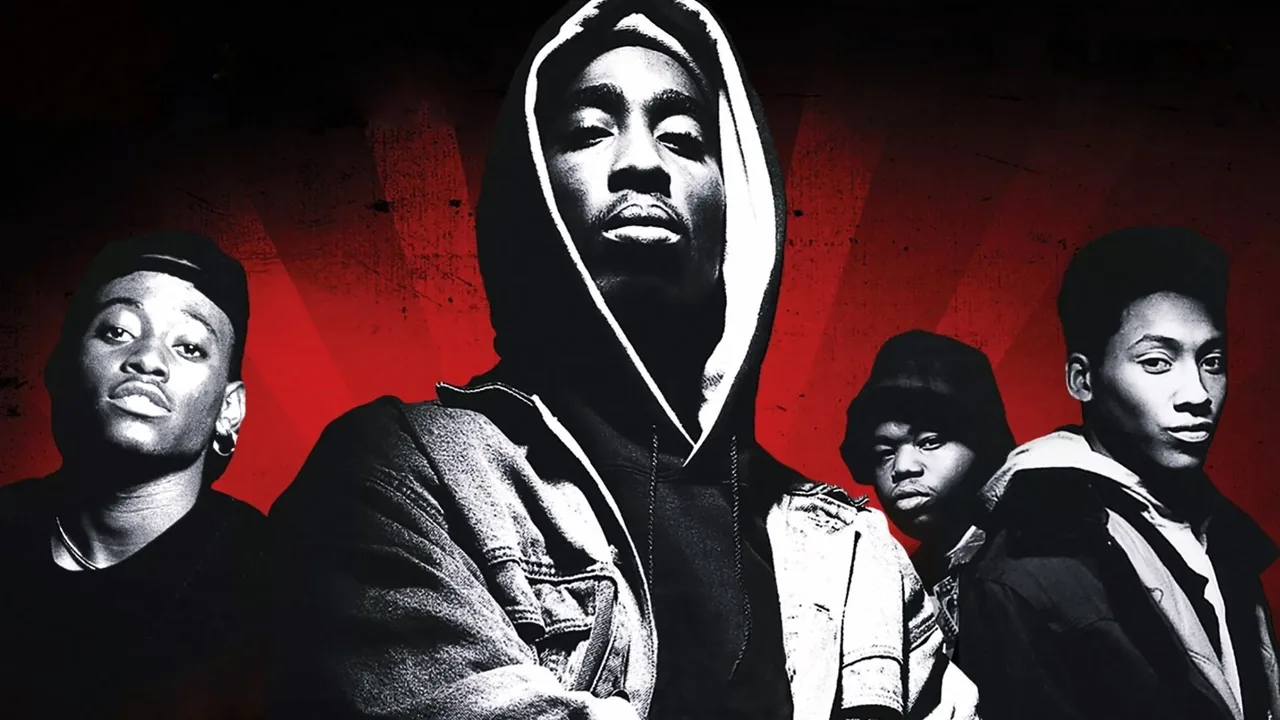
Me Against the World came out on March 14, 1995, while Tupac was serving a sentence on a sexual abuse conviction, and it went straight to number one on the Billboard 200 with 240,000 copies in its first week. He was in a cell when it got there. Good trivia, but the reason to start here is what is on the record. "Dear Mama", the song, is the one everyone knows, a thank-you letter to Afeni that the Library of Congress put in the National Recording Registry in 2010, only the third rap song to get there, and it is surrounded by a whole record in the same key: worried, tender, furious, funny, and mostly about death. He had been shot five times and robbed in the lobby of Quad Studios in Manhattan a little over three months before it arrived, on November 30, 1994. You can hear it.
This is also, for our money, his best album, and that is the fight we are picking. Wikipedia calls it his magnum opus; plenty of fans would say the same. The counter-argument is the double album, and it is a real counter-argument, so let us make it.
Why the double album goes second
In October 1995 Suge Knight visited Tupac in prison and posted a 1.4 million dollar bond, and Tupac walked out pending appeal. Four months later, on February 13, 1996, he delivered All Eyez on Me, the first double album in hip-hop, which sold 566,000 copies in its first week. "California Love" with Dr. Dre and "How Do U Want It" both went to number one on the Hot 100. Snoop Dogg is on it. It is the sound of a man who has been let out and intends to use every hour, and there is a reason it is the album people picture when they picture him: the bandana, the grin, the Death Row swagger.
But it is a party record with a monument's reputation, and at 27 songs it asks a first-timer to do a lot of wading. Take it second. The same year gave us the diss track "Hit 'Em Up", aimed at The Notorious B.I.G. and Bad Boy Records, which tells you where his head was by the summer.
Then there is The Don Killuminati: The 7 Day Theory, recorded that July and August under the name Makaveli, the lyrics written and recorded in three days, and released on November 5, 1996, two months after his death. It is the darkest thing he made and the most quoted, and it is a terrible place to start because it only makes sense as an ending. Fourth or fifth on your list, never first.
Where it began
2Pacalypse Now (November 1991) is the debut, a year on from his stint as a roadie and backup dancer for Digital Underground, and it is angrier and thinner than the records that followed: racism, police brutality, poverty, gang violence, laid out with a Baltimore School for the Arts theatre kid's ear for a scene. "Brenda's Got a Baby" is the track that shows what he could already do. The album drew the public wrath of the sitting Vice President, and Tupac's answer is the plainest description of his own project that exists.
Strictly 4 My N.I.G.G.A.Z... (February 1993) opened at number 24 and carries "Keep Ya Head Up", which is still the song people send each other when a friend is having a bad month. Those two early albums are for after you are hooked, not before.

The film performance that matters
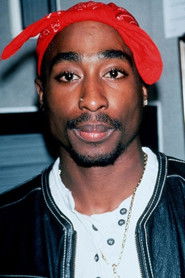
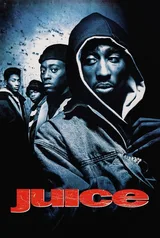
His first role is his best, and it is not close. In Juice (1992), directed by Ernest R. Dickerson, Tupac is Roland Bishop, one of four Harlem friends who decide to rob a convenience store, and the one holding the gun. Omar Epps plays Q, the friend who would rather be a DJ. Peter Travers in Rolling Stone called Tupac "the film's most magnetic figure", and thirty-four years later the film still turns on that face: Bishop is charming right up until the second he is not, and you never quite see the switch flip. If you only ever watch one Tupac film, this is it.
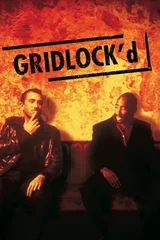
Poetic Justice (1993) is the tender one. John Singleton cast him as Lucky, the postal worker who ends up on a road trip to Oakland in a mail truck with Janet Jackson's grieving hairdresser, Justice, and it is the closest thing to a romantic lead he ever played. Above the Rim (1994) gives him Birdie, a gangster circling a high-school basketball prospect, which is the role that fed the public image. Gridlock'd (1997) is the one fans undersell: he and Tim Roth are Spoon and Stretch, two Detroit addicts trying to get into a detox program after a bandmate overdoses, and drowning in paperwork. It is a genuinely funny two-hander. Bullet (1996) and Gang Related (1997) round out the six; both are for completists.
One footnote that belongs here: Allen Hughes cast him as Sharif in Menace II Society (1993) and then dropped him after Tupac assaulted him on set over a script dispute. Hold that thought.
The book, the documentaries, the biopic
The Rose That Grew From Concrete (1999) collects the poems he wrote between 1989 and 1991, from the age of 18, with a preface by Afeni, and it is the shelf most fans never visit. Read it after Me Against the World and the album gets bigger; the poet and the rapper turn out to be the same person working in two speeds.
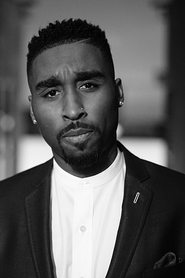
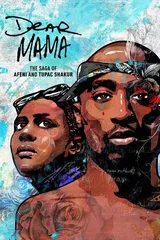
For the life, there are three screens. Tupac: Resurrection (2003), directed by Lauren Lazin, is narrated by Tupac himself, cut from his own interviews, so he tells his own story: the childhood, the poetry, the shooting, the feud. Dear Mama (2023) is the five-part FX docuseries, a portrait of Afeni and Tupac together, the Black Panther mother and the son, told by the people who knew them, and the name on it is Allen Hughes. The director who cut him from a film in 1993 spent decades getting him right. It is the best thing made about him since his death and the place to go once the music has you. The 2017 biopic casts Demetrius Shipp Jr. as Tupac and covers the rise, the prison term and the Death Row years; it is a serviceable dramatisation and the least essential thing on this list, so it goes last.
If you want the wider map, the West Coast, the East Coast, the whole G-funk decade, our hip-hop guide is where the neighbours live.
The order
Thirty years is long enough that a lot of people meeting him now were born after Friday, September 13, 1996. Here is the sequence, one work at a time, that turns a curious listener into a fan without the wading. Eight items, four kinds of shelf, no filler.

Play the first one on Monday, September 7, at whatever volume your neighbours can stand. By Sunday, September 13, you will understand why thirty years has not made a dent.