Which Star Trek Should You Start With?
Sixty years ago this Tuesday, September 8, NBC aired an hour of television called "The Man Trap," and nobody in the building expected to be discussing it in 2026. Star Trek ran three seasons and 79 episodes before the network let it go. Then it refused to stay gone: fourteen feature films, a shelf of series, and a current show, Star Trek: Strange New Worlds, that streams episode eight of its fourth season on Thursday, September 10. Paramount is throwing a big birthday. A theatrical run in more than 750 US cinemas began last Friday, September 4, one film and one original episode a night; it reaches Star Trek IV: The Voyage Home on Monday, September 7, and ends on Tuesday with all four pairings played back to back. Also on Tuesday, European Space Agency astronaut Sophie Adenot will wear the Strange New Worlds captain's delta aboard the International Space Station, and London's Science Museum hosts a Guinness World Records attempt for the most people performing the Vulcan salute at once.
All of which sharpens the question every newcomer asks and every fan answers differently. If you have never watched a minute of it, where do you start? We have a verdict, and it is not the one most fans will give you. It is one quarter of Tuesday's programme, the pairing that played last Saturday night, watched in the order the programmers chose.
The rivals, and why they lose
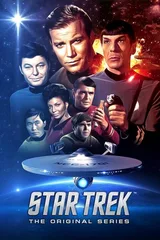
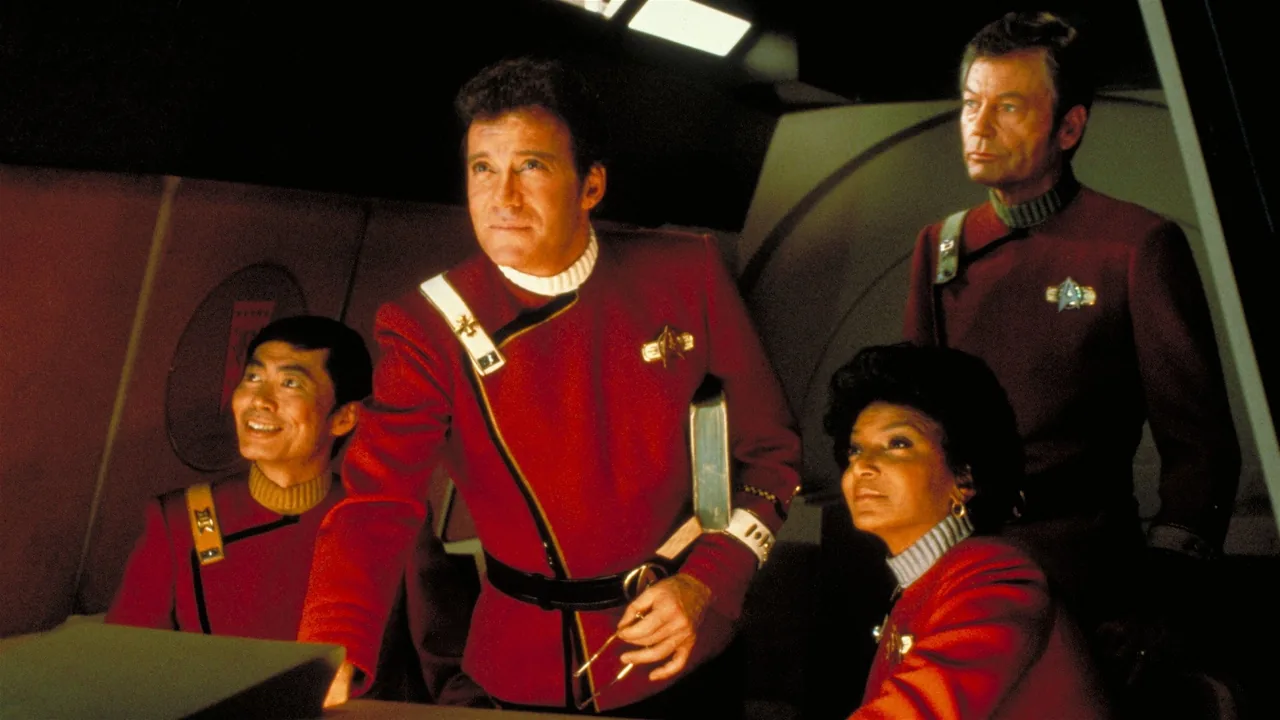
Start with the obvious candidate, the original itself. Star Trek is the source of everything, the 1966 series where Gene Roddenberry set the template and William Shatner, Leonard Nimoy, George Takei and Walter Koenig built the crew that every later crew is measured against. But "The Man Trap" is a good hour, not a great one, and it is followed by 78 more of wildly varying quality, shot on 1960s budgets with 1960s pacing. Telling a newcomer to begin at episode one is how you lose them by episode four. The original is a show you come back to, once you know which hours are the great ones. Three of them are in Tuesday's marathon, which is not a coincidence.
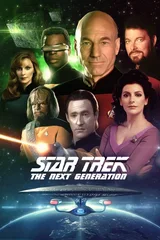
The default fan answer is Star Trek: The Next Generation. It is the answer for a reason: seven seasons, a cast that became a family, and the version of Starfleet most people picture when they hear the word. The problem is the homework. Season one is rough, everyone knows it is rough, and so the standard advice is to skip ahead. The moment your starting point comes with a list of episodes to avoid, it has stopped being a starting point.
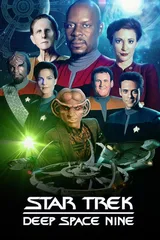
Star Trek: Deep Space Nine is, said with a straight face, the best thing the franchise has produced: a station rather than a ship, a war rather than a mission, characters allowed to be wrong for years at a time. It is also a serialised drama that rewards you most in its back half. That makes it a destination, not a doorway. Put it last on your list and mean it as a compliment. Star Trek: Voyager is comfort viewing that assumes you already like the shape of the thing, and Star Trek: Picard is a reunion, which means nothing if you never met the people the first time.
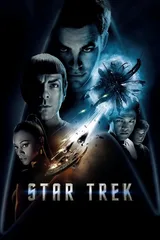
Then there is the reboot. Star Trek from 2009 is fast, funny, and built precisely for someone who has never seen an episode, and the numbers say fans are reaching for it right now: on CrossBinge's most-popular-movies chart, Star Trek Beyond climbed from No. 44 to No. 31 over the past week and the 2009 film moved from No. 40 to No. 35. The case for starting here is that it needs no context at all. The case against is that it is a remix. It plays the hits of a band you have never heard, Star Trek Into Darkness restages the most famous scene in the series without having earned it, and when Beyond, the best of the three, pauses to honour the late Leonard Nimoy, a newcomer registers a fact where a fan feels a loss. The reboots make a superb fourth stop and a thin first one.
The strongest rival
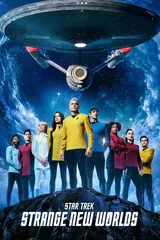
The real challenger is the show that is actually on right now. Strange New Worlds is the first series in decades built the way the original was built: an adventure a week, a bright ship, a captain worth following. Anson Mount's Pike is the most likeable commanding officer since the 1960s, Ethan Peck plays a younger, less settled Spock, and Rebecca Romijn's Number One finally gets the role the original pilot never let her keep. Season four is mid-run, "Orders of Magnitude" arrives Thursday, September 10, and the fifth season, already confirmed as the last, means the whole thing will soon be a finished, binge-sized object.
So why not crown it? Because it is a prequel written as a love letter, and a love letter reads differently when you do not know the person. Half of its pleasure is recognition: a name dropped, a uniform, a delta badge that an astronaut is now wearing in orbit. Come to it second, once those names mean something, and you will understand why the people around you are grinning at a costume. That difference decides the verdict.





Start here
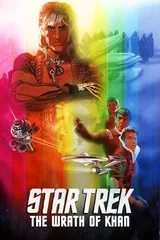
Watch "Space Seed," then, the same evening, Star Trek II: The Wrath of Khan. That is the pairing the anniversary programmers ran last Saturday, September 5, and bring back on Tuesday as the second leg of the marathon, and it is the best three hours of onboarding the franchise has ever offered.
"Space Seed" is the 1967 hour that introduces Khan Noonien Singh, a genetically engineered tyrant found asleep aboard a drifting ship, and it is the original series at full strength: a proper villain, a real moral argument, and the Kirk-Spock-McCoy triangle explained through action rather than exposition. You learn the crew in fifty minutes. Then the 1982 film picks up the thread fifteen years later, with an older Kirk, an old enemy, and the consequences of a decision that a younger man made casually. It is a movie about ageing, about the bill coming due, and about what one person owes the rest. Its ending is the emotional high point of sixty years of Star Trek, and you can tell because the franchise has been arguing with it ever since: Star Trek III: The Search for Spock exists to answer it, Into Darkness tried to remake it, and even Strange New Worlds keeps circling the family name.
That is the pitch. No homework, no skip list. One great hour of 1960s television, one great film, and afterwards every other door in the building is open. Your third night should be Star Trek IV: The Voyage Home, the one with the whales, which proves the same people can do comedy. Then Strange New Worlds, then The Next Generation from its third season, then Deep Space Nine when you are ready to commit a winter to it. Star Trek: The Motion Picture, the slow, gorgeous 1979 opener that launched the run last Friday and starts Tuesday's marathon, is for the day you decide you love this thing enough to sit through its most patient two hours.
The people who made the original are still here to see the birthday. William Shatner is 95. George Takei is 89. Walter Koenig turns 90 next Monday, September 14. Their best work is playing in 750 cinemas on Tuesday night, paired with the film that finally gave it a second act. Start there. Everything else in the Star Trek series is waiting, and it will make more sense once you have.