Seinfeld vs Frasier Comes Down to One Reunion
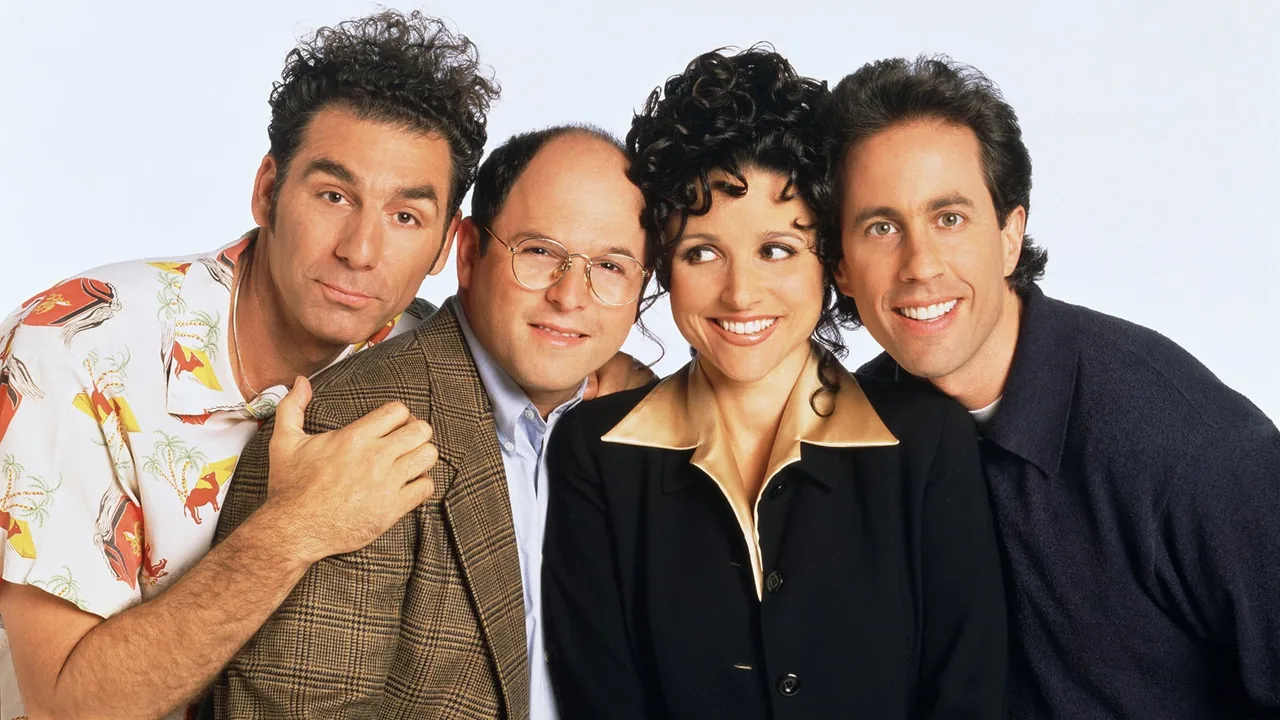
For five Septembers in a row the Television Academy answered this question the same way. Seinfeld took Outstanding Comedy Series in 1993. Then Frasier arrived that September and won it in 1994, 1995, 1996, 1997 and 1998, a streak only Modern Family has ever matched, while Seinfeld went home empty-handed each year. Their Thursdays first overlapped on September 16, 1993, when Seinfeld's fifth season and Frasier's first both premiered on NBC. For the rest of the decade they shared a network, a night, and an argument that has never stopped: which one is the best American sitcom ever made?
Start with the trophies anyway, because the voters were rewarding something real. What they could not see in 1998 was the experiment Frasier would run on itself twenty-five years later, and that is what settles this.
One bar, two children
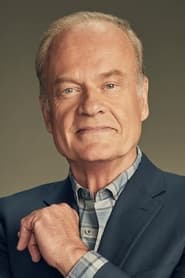
Both shows are descendants of Cheers, the Boston bar comedy that James Burrows created with Glen and Les Charles in 1982. Frasier is the child by blood. Kelsey Grammer first walked into that bar as Dr. Frasier Crane in 1984, a recurring psychiatrist in the third season, and was a permanent fixture by season five. When Cheers ended on May 20, 1993 in front of 93 million people, Grammer took the character to Seattle and a call-in radio show, and stayed there for eleven seasons and 264 episodes.
Seinfeld is the child by inheritance. NBC moved it to Thursdays in February 1993, at 9:30, directly behind Cheers, once the network knew the bar was closing. On the night Cheers signed off, Seinfeld's own season finale was the lead-in. That autumn it took the 9pm chair Cheers had vacated, and season five, its first full year in the slot, finished third in the Nielsen ratings.
The case for Seinfeld
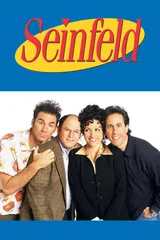
The famous rule was "no hugging, no learning," and people quote it as a joke when it was really a method: nobody on Seinfeld grows, so every episode can be built like a machine instead of a lesson. Watch "The Chinese Restaurant" from season two, aired May 23, 1991: three people wait for a table for the entire runtime and nothing else happens. NBC hated it. Executive Warren Littlefield thought pages were missing from the script, and Larry David threatened to quit if the network forced major changes. It aired late in the season, untouched, and every bottle episode since descends from it.
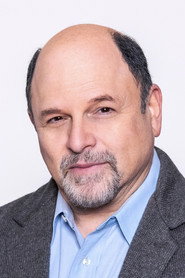
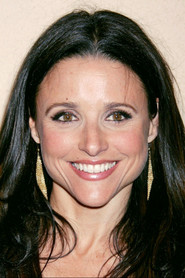
Eighteen months later David wrote "The Contest," the one about the bet nobody can name out loud, and won the Emmy for comedy writing for it. In 2009 TV Guide ranked it the greatest episode of anything, ever. Jerry Seinfeld has said what made it work was the "dovetailing" of the stories: four plots braided so tightly that the word the episode never says becomes the joke. That braiding is Seinfeld's real signature. By season five, in "The Marine Biologist," the show was landing a beached-whale monologue that David and Seinfeld wrote late the night before, unrehearsed, and Jason Alexander delivered in one take. "The Opposite," which closed the same season, gives George a whole philosophy in one line and lets Julia Louis-Dreyfus run the mirror-image decline as Elaine. Even a guest spot got an Emmy nomination: Larry Thomas as the Soup Nazi.
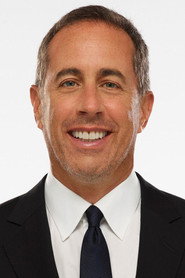
Then it quit. At the end of 1997, with NBC offering a record five million dollars an episode for a tenth season, Seinfeld told The New York Times why he was walking away.
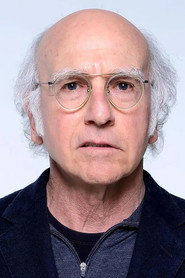
He added a line every long-running show should frame: "We've all seen a million athletes where you say, 'I wish they didn't do those last two years.'" The finale, on May 14, 1998, pulled 76.3 million viewers, and a large share of them were furious. The four of them end up in prison, convicted at a trial where everyone they ever wronged takes the stand. David, who had left the writers' room after season seven and came back to write the ending, was still defending it to Bill Simmons on Grantland's podcast in 2014: "No, I was not interested in an emotional ride, and neither was Jerry." He also learned something from the reaction, and said so.




The case for Frasier
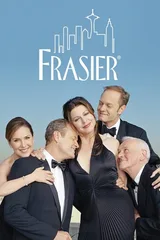
If Seinfeld is a machine, Frasier is a stage play that happens to be on television. Its writers, above all Joe Keenan and showrunner Christopher Lloyd, built farces in the old sense: doors, misheard sentences, a lie kept up across four rooms. "The Ski Lodge," written by Keenan and aired February 24, 1998, is the purest example anywhere on American TV, a single night in a chalet in which every character is in love with the wrong person and every door opens on the wrong pair. "Ham Radio," from the previous spring, has Frasier over-directing a live radio murder mystery until one actor walks out, then rewriting it on air as the broadcast collapses around him. One set, one show, as tight as "The Chinese Restaurant," only louder.
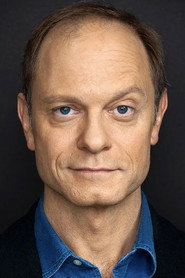
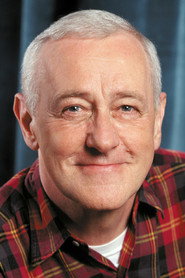
What Frasier had, and Seinfeld refused on purpose, was a heart, and it lived in the flat. John Mahoney as Martin, the ex-cop father with the ugly chair, and David Hyde Pierce as Niles gave the show a family to be embarrassed by, and the best episodes are embarrassment made into architecture. "Three Valentines," which Grammer himself directed in 1999 and which 25.83 million people watched, opens with Niles alone in the apartment, ironing his trousers before a date, and plays out for minutes with barely a word while the trousers catch fire, the couch follows and the extinguisher makes everything worse. Co-creator David Lee has said the idea was to give Pierce a Mr. Bean piece, that it was shot without a studio audience because of the fire, and that the producers withheld the footage from NBC until the day of broadcast so the promos could not give away the flames. It is silent comedy on a Thursday night. Pierce won four Emmys for Niles. So did Grammer for Frasier. The show took 37 in total.
And it ended properly. "Goodnight, Seattle," on May 13, 2004, was written by Lloyd and Keenan and watched by 25.3 million people. Frasier signs off his last broadcast by reciting Tennyson's "Ulysses," gets on a plane, and the final shot reveals he has chosen love over the job everyone assumed he was taking. Nobody goes to prison and nobody testifies. It is the ending Seinfeld refused on principle.
The revival is the evidence
The 2023 comeback ran the experiment for us. Frasier returned on Paramount+ on October 12, 2023, with Burrows directing the pilot as he had directed the first one thirty years earlier, and it closed the loop: Frasier leaves Seattle and goes home to Boston, the city of Cheers, to lecture at Harvard and repair things with his son Freddy, now a firefighter played by Jack Cutmore-Scott. Nicholas Lyndhurst plays his old friend and fellow professor. Peri Gilpin came back as Roz and Bebe Neuwirth as Lilith. Pierce said no.
He was candid about why. "I never really wanted to go back," he told the Los Angeles Times in December 2023, explaining that when the real talks started he had just begun Julia and had two musicals lined up, and thought: "They don't actually need me."
Grammer told The New York Times in September 2024 that "this show could last another decade," and that he wanted to close it the way the first one closed, with the same Tennyson line. It got two seasons and twenty episodes. Paramount+ cancelled it on January 17, 2025. The Rotten Tomatoes consensus, over 73 reviews and 60 percent positive, reached for the phrase "comfort viewing." Grammer blamed the platform.
Read the revival honestly and it tells you two things. The character is indestructible: Grammer has played Frasier Crane for four decades across three shows, and the performance is still funny, still precise. But the show was never the character. The show was Niles hovering at the edge of a room while Martin refused to leave his chair. Take those two away and you get what the reviews said: comfort viewing. Pierce, who knew the mechanism from inside, was right that they did not need him to make the show. He was wrong that it would be the same show without him.
Seinfeld never had to run that experiment, and could not have: nothing in it was built to be missed. When Larry David finally put himself in front of a jury, it was inside Curb Your Enthusiasm, whose own finale on April 7, 2024 restaged the Seinfeld trial, Larry in the dock and old characters testifying, and had Jerry turn up at the cell with a mistrial and the scripted line "this is how we should've ended the Seinfeld finale." Seinfeld's ending was so unresolved that David spent a second series' finale on it, and the joke still lands because the attitude never aged.
The verdict
Frasier is the better-made show, episode for episode, and it has the better ending by a distance. If the question were which single half hour to show a stranger, "The Ski Lodge" against "The Contest" is a coin flip, and I might call it for Seattle. But the question is which is the best American sitcom, and a sitcom is a way of looking at the world that you can live inside for 180 episodes. Frasier's world needed everyone in that apartment to work, and the moment two of them were gone it became comfort food. Seinfeld's world is an attitude, and attitudes do not need reunions. The Emmy voters spent five years rewarding craft, and Frasier deserved every one of those statues. Best sitcom is a different prize.
Seinfeld is the best American sitcom. Frasier is the one you will rewatch more often, a consolation Niles would accept with a sniff. Start both from the five episodes ranked above, in that order, and you will know which side you are on by the end of a weekend.