Stevie Wonder's Songs in the Key of Life Needs Only Four Tracks to Win You Over
On September 28, Songs in the Key of Life turns 50, and it still carries the reputation of a record you have to clear an afternoon for. Two LPs and a bonus 7-inch, 21 songs, an hour and 44 minutes with the extra disc. Even Wikipedia's entry on Stevie Wonder hedges: "Sprawling in style and sometimes lyrically difficult to fathom, the album was hard for some listeners to assimilate."
Last week the album got a fresh reason to be heard. On Tuesday, September 8, Wonder announced an 18-date tour on which he will play the album in full, opening in Birmingham on October 13 and closing at the Intuit Dome in Los Angeles on December 19. A lot of people are about to meet the monument, in an arena or on headphones first, and we want to argue with its reputation before they do.
This is the friendliest masterpiece of its size in pop. The length is generosity, and nothing on it is homework. Four songs will get you through the door, and once you are inside, the rest of the house opens on its own. We will get to the four. First, the four years that came before it, because they explain how a 26-year-old made something this big and this warm.
Four years that earned the room
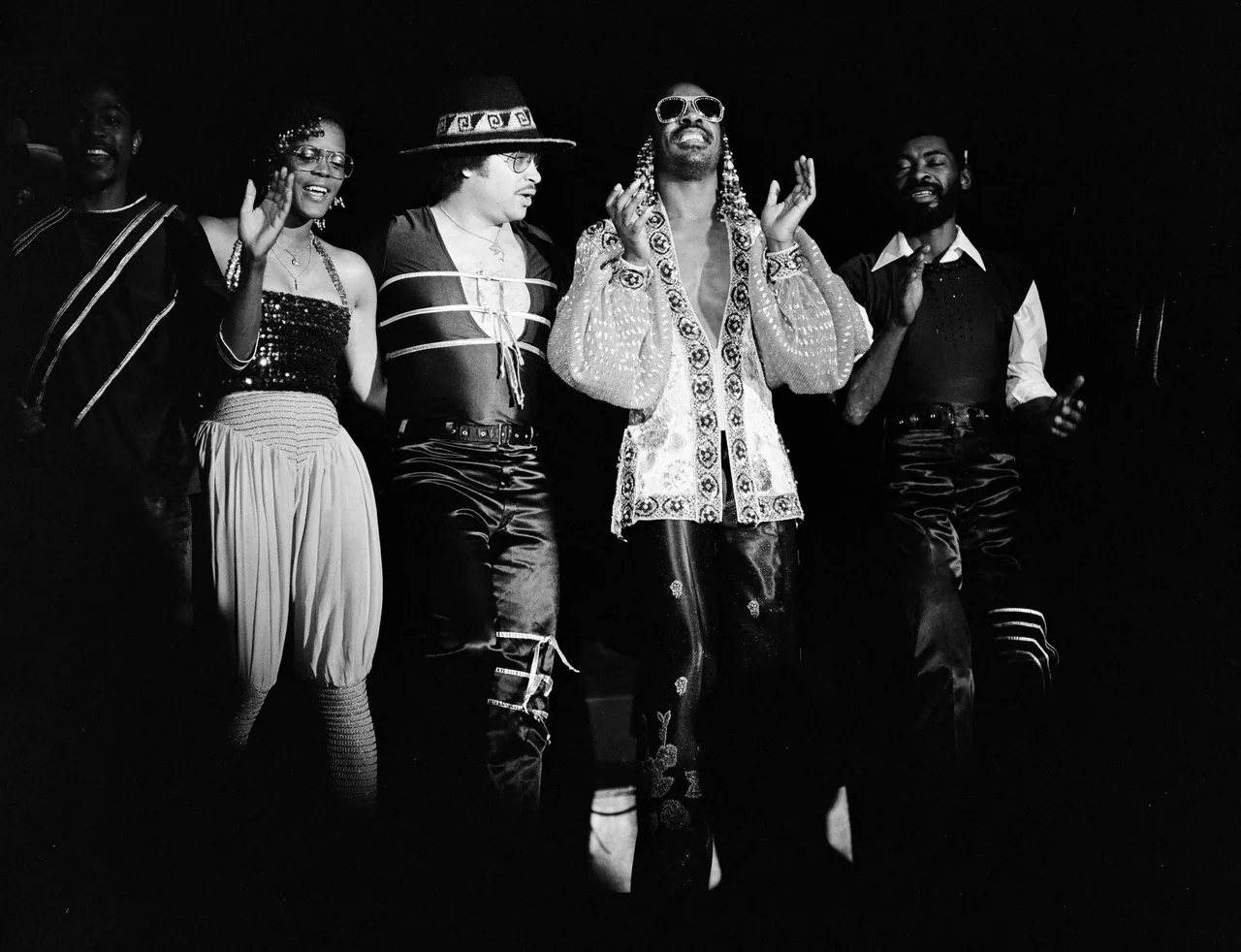
Wonder had been a star for half his life by 1976. Motown's Tamla label signed him at 11, and at 13 "Fingertips" made him the youngest artist ever to top the Billboard Hot 100. The turn came on his 21st birthday, May 13, 1971, when he let his Motown contract expire. The new one he signed that July was unusually liberal by Motown standards.
Music of My Mind, released in March 1972, was his first album under a contract that gave him full artistic control, and he used it to play almost every instrument himself. He had become interested in synthesizers after hearing the electronic group Tonto's Expanding Head Band, so he brought in its Malcolm Cecil and Robert Margouleff as associate producers, along with their custom synthesizer, TONTO. They stayed for the next three albums.
Then it came fast. Talking Book arrived that October with "Superstition", which began as a drum beat Jeff Beck came up with between sessions. Wonder told him to keep playing and improvised over the top, and the result was his first No. 1 since 1963. "You Are the Sunshine of My Life" went to No. 1 as well. Innervisions followed in August 1973: nine tracks, Wonder playing all or virtually all of the instruments on many of them, and "Living for the City", seven minutes and 22 seconds that made it one of the first soul songs to deal explicitly with systemic racism. Three days after the album came out, a car crash just outside Durham, North Carolina, left him in a coma. He recovered, and the album won Album of the Year.
Fulfillingness' First Finale, in July 1974, turned inward, with a more reflective and somber tone, though it still found room for "You Haven't Done Nothin'", a No. 1 single aimed at the Nixon administration, with a cameo from the Jackson 5. It won Album of the Year too. At the next year's ceremony, Paul Simon, accepting that same award himself, said: "I'd like to thank Stevie Wonder, who didn't make an album this year."
He nearly did not make another one. In 1975, angry at the way the US government was running the country, Wonder became serious about quitting music and emigrating to Ghana to work with children with disabilities. A farewell concert was considered. He changed his mind, and on August 5, 1975, he signed a new seven-year, seven-album Motown contract with full artistic control.
"We're almost finished"
What he did with that freedom was take his time. Recording ran from 1974 into 1976, primarily at Crystal Sound in Hollywood, and 130 people worked on it, among them Herbie Hancock, George Benson, Minnie Riperton and Deniece Williams. Wonder was barely eating or sleeping, and everyone around him struggled to keep up. His own explanation, as Rolling Stone reported it, was simple: "If my flow is goin', I keep on until I peak." Bassist Nathan Watts remembered getting home at 3 a.m. only for Wonder to phone and ask him to come straight back to work on "I Wish". "There were times," Watts said later, "when he'd stay in the studio 48 hours straight." Motown printed T-shirts that read "We're almost finished."
When it finally landed on September 28, 1976, it came as a double LP with a bonus 7-inch EP, A Something's Extra. It debuted at No. 1 on the Billboard album chart, only the third album ever to do that and the first by an American artist, and it stayed there for 13 consecutive weeks. "I Wish" and "Sir Duke" both became No. 1 singles. It won Album of the Year, which made Wonder the only artist to win that award with three consecutive album releases.
Those are the credentials of a monument. Put the record on and it behaves like the opposite: a crowded, happy room where somebody keeps handing you another plate.
The four-song door
Do not start at side one. "Love's in Need of Love Today" is a gorgeous, unhurried seven-minute opener, but it asks for patience before the album has earned any. Take these four, in this order, and let them teach you how the record works.
Start with "Sir Duke". Wonder wrote it for Duke Ellington, who died in 1974, and widened it into a thank-you to the musicians who shaped him: Count Basie, Glenn Miller, Satchmo and Ella all get named alongside the Duke. It is the album's thesis in one horn line. Music is the language everybody already speaks, and Wonder wants you to know who taught him his accent.
Then "I Wish". "The day I wrote it was a Saturday, the day of a Motown picnic in the summer of '76," he later told Musician magazine. "God, I remember that because I was having this really bad toothache." He went from the picnic to the studio, and the song is his childhood, played as the funkiest nostalgia ever put on tape. He tried heavier, more spiritual lyrics and let them go, because he "couldn't come up with anything stronger than the chorus, 'I wish those days [claps] would [claps] come back once more.' Thank goodness we didn't change that."
Then "Isn't She Lovely", six and a half minutes for his newborn daughter, Aisha. It opens with a baby's first cry, recorded during an actual birth, and it closes with a recording of Wonder bathing her as a toddler, under a long chromatic harmonica solo. It was never released as a single, because Wonder would not shorten it to fit a 7-inch 45. The whole album is long for the same reason: he would not cut the good part.
Finish with "As", seven minutes with Herbie Hancock on Fender Rhodes, a vow of love that runs through a list of impossible things that would have to happen before it ends, and keeps climbing the whole way. George Michael and Mary J. Blige took it to No. 4 in the UK in 1999. The original is still the one that makes a room sing along.
Four songs, about a fifth of the running time, and by the end you know the album's secret: the long songs are the most generous ones. From there, wander. "Pastime Paradise" is the one you may already know without knowing it, since Coolio built "Gangsta's Paradise" on it in 1995; the original sets a Yamaha GX-1 synthesizer, sounding like a full string section, against a Hare Krishna chanting group and a gospel choir from West Angeles Church of God. When you are ready, play all four sides in order, then the EP.
Fifty years on, in full
Wonder has played the album front to back before. In December 2013 he performed all of it at the Nokia Theater in Los Angeles, at his 18th annual House Full of Toys benefit concert, and in November 2014 he took it on the road across the US and Canada. This time the run starts in Europe: Birmingham on October 13, Paris on October 15, Copenhagen on October 18, then Oslo, Stockholm, Hannover, Cologne, Amsterdam, Dublin, London's The O2 on November 3, Manchester and Glasgow. The US leg opens at Madison Square Garden on November 19, moves through Chicago and Washington, stops for two nights at the Fox Theatre in Detroit on December 8 and 9, and ends at the Intuit Dome on December 19. UK and European tickets went on general sale last Friday, September 11, and most US dates the day before. The two Detroit nights go on sale this Tuesday, September 15.
Elton John, writing about Wonder for Rolling Stone in 2003, said he takes a copy of the album with him wherever he goes in the world. "For me, it's the best album ever made," he wrote. We will stop just short of that and call it the best album ever made about being glad to be alive, which is rarer.
Where to start with the classic run
Our order puts the summit first, because the four-song door makes it the easiest way in, and then heads straight for Innervisions, the tightest record Wonder ever made: nine tracks and no slack, and the album to play if you only have one evening. Talking Book comes third, for "Superstition" and the pleasure of hearing him work out what those synthesizers could do. Fulfillingness' First Finale is the quiet one, best heard once you know how loud the others get.
Hotter Than July is the underrated coda. Released in September 1980, it reached No. 3, and its lead single, "Master Blaster (Jammin')", was inspired by the reggae of Bob Marley, whom Wonder had met in 1979. It also carried "Happy Birthday", written to honor Martin Luther King Jr. and used in Wonder's campaign to make January 15 a national holiday. The gatefold printed his own written appeal for it, and the holiday was declared in 1983.
Save Music of My Mind for last. It is where the classic period begins, and it sounds like a 21-year-old hearing his own freedom for the first time, which lands hardest once you know everything it led to.
So here is the plan. Before September 28, play the four songs. On the 28th, play the whole thing, EP included, and notice how little of it feels like a monument.