Phantom Blade Zero's Smartest Promise Looks Boring
The swords are doing their job. Phantom Blade Zero has airborne opponents, rain-soaked duels and a doomed assassin with an urgent appointment. Getting our attention was never going to be the difficult part. Keeping it after a dozen fights is a tougher proposition.
The action RPG arrives on PS5 and PC next week, October 29, with the US and some other regions getting it October 28. You play Soul, framed for the murder of his order's patriarch and left with sixty-six days to live. S-Game mixes Chinese martial-arts fantasy with machinery and the supernatural. It is an extravagant setting for a game whose director, Soulframe Liang, has been arguing for restraint.
We have not played it. This is a look at the developer's demonstrations and Epic Games Store's published hands-on. Among all their promises, one unglamorous feature makes the strongest case for giving this adventure your time. It concerns what happens when you change your mind.
Give the detour a reason
In S-Game's original announcement, Liang described several manageable maps instead of one enormous landscape filled with repeated scenery. His newer interview argues for fewer, deeper side quests. He has stayed with that idea as release approaches, which gives us something more substantial to judge than a succession of spectacular trailers.
The appeal is easy to understand if you have ever spent an evening clearing markers and struggled to remember any of it afterwards. An optional journey ought to leave you with something: a person you care about, a surprise, a fight you approached differently. Merely reaching the far edge of a map does not make the journey worthwhile.
A crowded world can be just as tiring as a big one, though. We want room to notice a place before it starts issuing instructions. A quiet walk can make the next ambush matter. A conversation can give you a reason to return through a familiar area. Those are the qualities worth looking for in reviews of the later chapters. The opening area has had years to look impressive; the rest of the adventure has to hold up its end.
The best detail is a refund
The August demonstration lists more than thirty main weapons and twenty-five supplementary Phantom Edges. More interestingly, reforging returns the materials spent upgrading a weapon. You can put them into something else. Side quests can also open story routes, and certain defeated enemies contribute weapons to the arsenal.
That refund deserves more attention than the weapon count. Picture finding a blade you love after pouring your resources into a perfectly serviceable one. Without a way back, the practical choice can be to ignore the new discovery. A game has handed you a toy and given you an excellent reason to leave it in the box.
Returning the materials makes experimentation a sensible choice. An awkward opponent could send you back through your collection, trying something with a different reach or rhythm. You might learn more by changing tools than by grinding through another attempt with the weapon you chose five hours earlier.
Of course, an arsenal can look varied while offering much the same answer in every fight. That remains unproven here. The encouraging part is that S-Game has described a system that lets you find out without treating your first preference as a binding contract. Our advice, if you buy it, is to use that freedom early. Try something you would usually leave alone.

Dying should teach you something
Epic's preview reports no resource loss on death and checkpoints close to bosses. During The Hunt, its writer died after reaching the second phase and was able to resume there. That is an observation about one preview encounter, not a promise covering every boss. Heavy attacks and guarding also draw on a resource called Sha-Chi.
Quick retries can make a difficult fight more inviting. You have just spotted the move that caught you; getting back to it promptly gives that observation a chance to become a useful habit. A long walk back mostly gives you time to become annoyed. We would happily trade some ritual punishment for another attempt while the mistake is still fresh.
There is an easier Wayfarer setting, while Hellwalker promises opponents that adapt to your habits. The limited-death Sixty-Six Days challenge is reserved for New Game Plus. Those options suggest room for several kinds of player, including someone who loves elaborate fights but cannot spend the whole evening on one.
Pick the setting that keeps you interested in the opponent. If you are no longer watching what they do, the difficulty is failing you. There is nothing to prove to a menu. A victory feels better when you can explain how you earned it.
Look past the famous face
Donnie Yen serves as creative consultant and performs Mó Yuan, Soul's father, through his likeness and motion capture. For a game selling the pleasure of kung fu cinema, that is a reason to pay attention to how characters move.
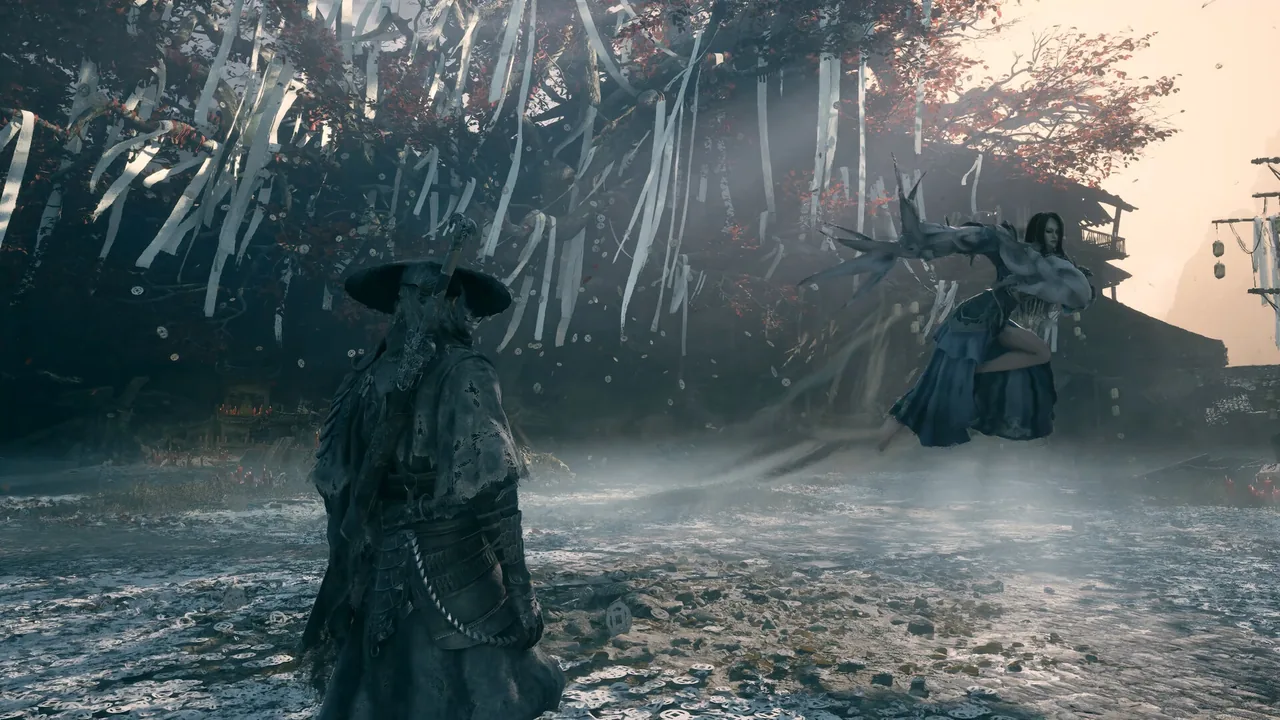
The official images show extravagant exchanges: bodies in the air, blades crossing, opponents moving through busy scenery. What we want to see in motion is intention. Can you tell when somebody is committing to an attack? Does a shift in stance make you suspicious? A fight becomes more interesting when you can read the other participant, rather than simply wait for a signal to press a button.
Yen's involvement makes that ambition credible. It cannot settle how the controls will feel. The attractive possibility is that Soul can look accomplished while the player is still learning, so a modest success feels like part of a well-staged scene. That is a better invitation than being told to admire an animation from the floor.
Interested, with one condition
Put Phantom Blade Zero on your list if you want to learn fights and keep changing how you approach them. The weapon refund is its most convincing promise because it backs that invitation with something practical. Compact maps and less punishing retries could make the same case for the rest of your evening.
We would still wait for launch reviews before paying. Look for accounts of later areas, performance and whether the weapons stay meaningfully different. Those answers matter more than another glowing report of the opening chapter.
When you do start, choose a difficulty you can enjoy and experiment before you become attached to a build. Soul may be running out of time. There is no reason your free evening should feel like an obligation too.