Never Seen a Scorsese Film? Start Here
Picking a first Martin Scorsese film ought to be easy. Goodfellas is right there, full of movement and confidence, ready to carry you through an evening. You could start there and have a terrific evening. But begin with its gangsters and you risk treating everything else as a detour. Our route starts with a man you would dread meeting at a party.
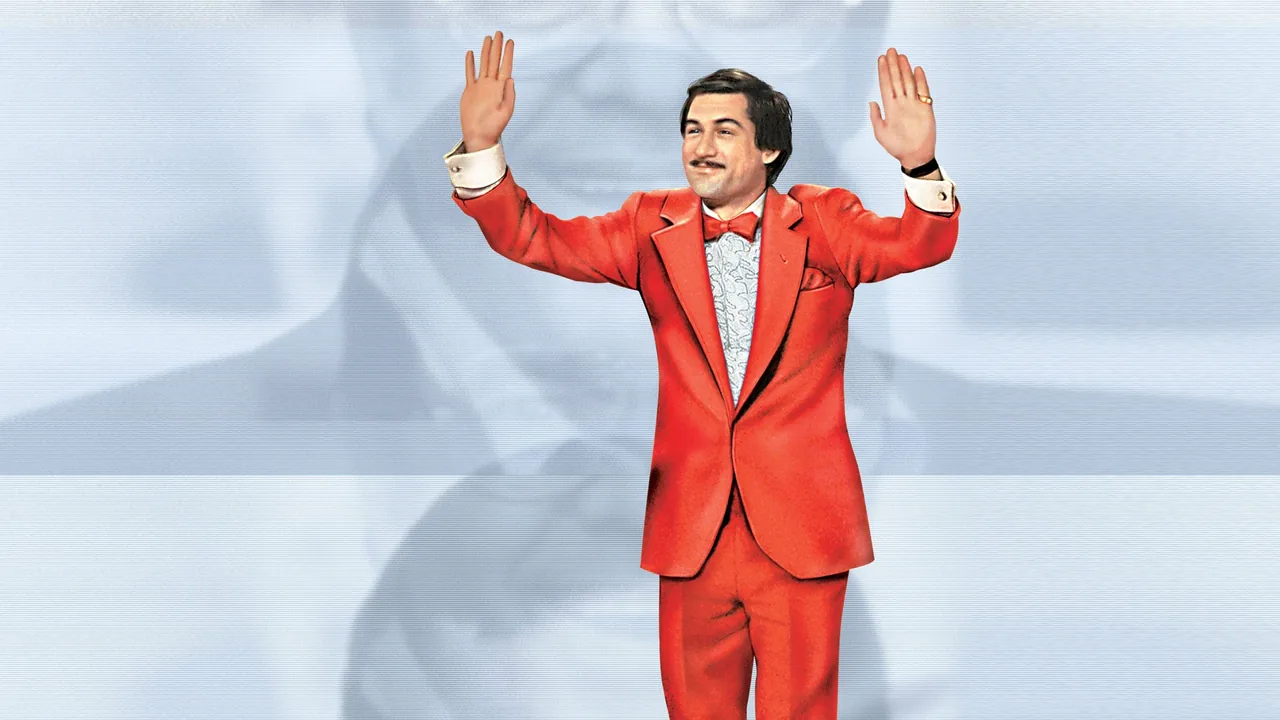
Start with The King of Comedy. Robert De Niro plays Rupert Pupkin, an aspiring comedian determined to get onto the talk show hosted by Jerry Lewis's Jerry Langford. Rupert wants recognition so badly that ordinary conversation becomes a rehearsal for receiving it. His confidence is funny until you realise how little room it leaves for another person.
That is a useful introduction to Scorsese. The attraction is the close attention he pays to somebody you would cross the street to avoid. He makes the person comprehensible without asking you to approve. You can enjoy the performance, dread the next decision and recognise something embarrassing about yourself, sometimes in the same scene.
The film is also a reassuring place to begin for anyone who finds the director's reputation intimidating. You do not need a history of American cinema or a taste for gangster stories. You need only to have wanted somebody important to notice you. Rupert takes that ordinary desire somewhere appalling. You can laugh at him, then wish the film would let you look away.
Sit with the embarrassment
Rupert rehearses his imagined success among cardboard celebrities. When access to the actual host remains out of reach, he resorts to kidnapping. The comic premise is blunt; the discomfort comes from how completely he has prepared a life that nobody else has agreed to share.
Scorsese explained the film's stillness in a Sight and Sound interview. He saw its characters as fixed in place, unwilling to give ground, and chose camera positions that suited them. For a newcomer, that stillness is a relief. You can watch the awful conversation unfold without feeling you ought to be taking notes on the camerawork. Rupert is quite enough to deal with.
In a later Vanity Fair interview, Scorsese described the production as an opportunity to start over. That admission is more inviting than the usual portrait of an artist who always knows exactly what he is doing. A long career becomes more interesting when you can see a filmmaker reconsidering his habits.
We would resist watching this as a prediction of social media. That comparison is easy and can let the viewer off the hook: those people over there are the Ruperts. The better question is closer to home. How often have you imagined that getting the right audience would make you into the person you want to be? The film is funny enough to ask that without becoming homework.
Go back to the neighbourhood
Mean Streets comes second. Harvey Keitel plays Charlie, a young man whose ambitions and loyalties keep pulling him in different directions. De Niro's Johnny Boy is the friend who makes those loyalties hard to defend. The film's Little Italy setting draws on the world Scorsese knew, but the problem travels: what do you owe somebody who keeps making your life worse?
The setting feels intimate, with favours, debts and friendships constantly crossing one another. Watch the way Charlie tries to reconcile his religious conscience with his conduct. He wants a rule that will make his choices bearable. The people around him keep making the rule difficult to apply.
Put it after The King of Comedy and the contrast does useful work. Rupert isolates himself inside a fantasy of acceptance. Charlie is already surrounded by people and struggles to work out which obligations matter. Both want a place in a world they cannot control. One film makes solitude feel unbearable; the other makes company almost as bad. After those two evenings, the prospect of belonging to Henry Hill's world has a dangerous appeal.





Now take the famous invitation
Goodfellas belongs third. Ray Liotta's Henry Hill finds the status and access that those earlier characters crave. The Copacabana entrance is such a thrilling piece of persuasion because it makes belonging feel effortless. Doors open. People know who you are. You get to skip the queue.
Enjoy that persuasion. A viewer who keeps a stern moral distance from the glamour misses some of the film's power. The appeal is part of the argument, and the violence makes that appeal increasingly hard to separate from fear. Joe Pesci's Tommy can turn a social exchange into a test nobody knew they were taking.
The earlier films give you something to bring into this one beyond admiration for its technique. You have watched people trying to acquire a public identity. Now watch Henry narrate his own. Ask what he finds exciting, what he treats as normal, and how his explanation changes as the world closes around him. That is a much richer evening than ticking off famous scenes.
Change the clothes, keep watching
For the fourth film, choose The Age of Innocence. Daniel Day-Lewis, Michelle Pfeiffer and Winona Ryder inhabit a New York society where manners do much of the work that threats perform elsewhere. Newland Archer's attraction to Ellen Olenska runs against his engagement to her cousin May and the expectations of their circle.
This is where someone who only wants another Goodfellas may be tempted to bail out. Stay. If the previous films have taught you to notice who belongs, who is excluded and who gets to decide, the elaborate social rituals become easy to read. A quiet conversation can contain a struggle over somebody's entire future.
It is also a lovely corrective to the idea that a great director has one recognisable surface. You can admire the costumes and rooms while attending to the pressure inside them. We would watch this before seeking another crime film. It broadens your sense of what Scorsese finds dramatic, and makes the return to his criminal world feel less automatic.
Leave time for the last film
Finish with The Irishman. De Niro, Pesci and Al Pacino carry a story that makes time itself difficult to ignore. The film gives its ageing characters space that a more impatient version might have cut away. Stay with that space. The losses accumulate there.
The pleasure of placing it last is the conversation it starts with Goodfellas. What looked like enviable access in the earlier film becomes harder to value once you consider what a life devoted to those relationships leaves behind. You do not need to call one a correction of the other. Watching them close together allows their different temperatures to register.
Scorsese's reflections in an Associated Press interview about The Irishman emphasised mortality and the need to take time. That is sound viewing advice as well. Give the film a proper evening, with room to sit after it ends. If its length makes that impossible this week, wait for an evening when you can.
The route is The King of Comedy, Mean Streets, Goodfellas, The Age of Innocence, then The Irishman. Watch one a week if that suits you. Stop after the first if that is the time you have. The man rehearsing fame in his basement will give you plenty to think about, and a much better introduction to Scorsese than his reputation alone.