Which Ghibli Film Should You Watch First?
Choosing a first Studio Ghibli film has become an oddly intimidating assignment. Someone recommends a masterpiece. Someone else insists that a different masterpiece explains the first one. Soon an evening with a film has turned into a syllabus. You do not need that. You need one story that makes you want another.
My choice is Kiki's Delivery Service. Kiki makes the studio’s gift unusually easy to see. A young witch leaves home, tries to earn a living and loses confidence in the talent she thought would carry her. The worry is recognisable before a broom leaves the ground, which gives the magic somewhere to land.
That combination is the invitation. Start with a problem you understand, then let the drawings make it strange. You can take this route slowly. There is no prize for finishing the list in a weekend.
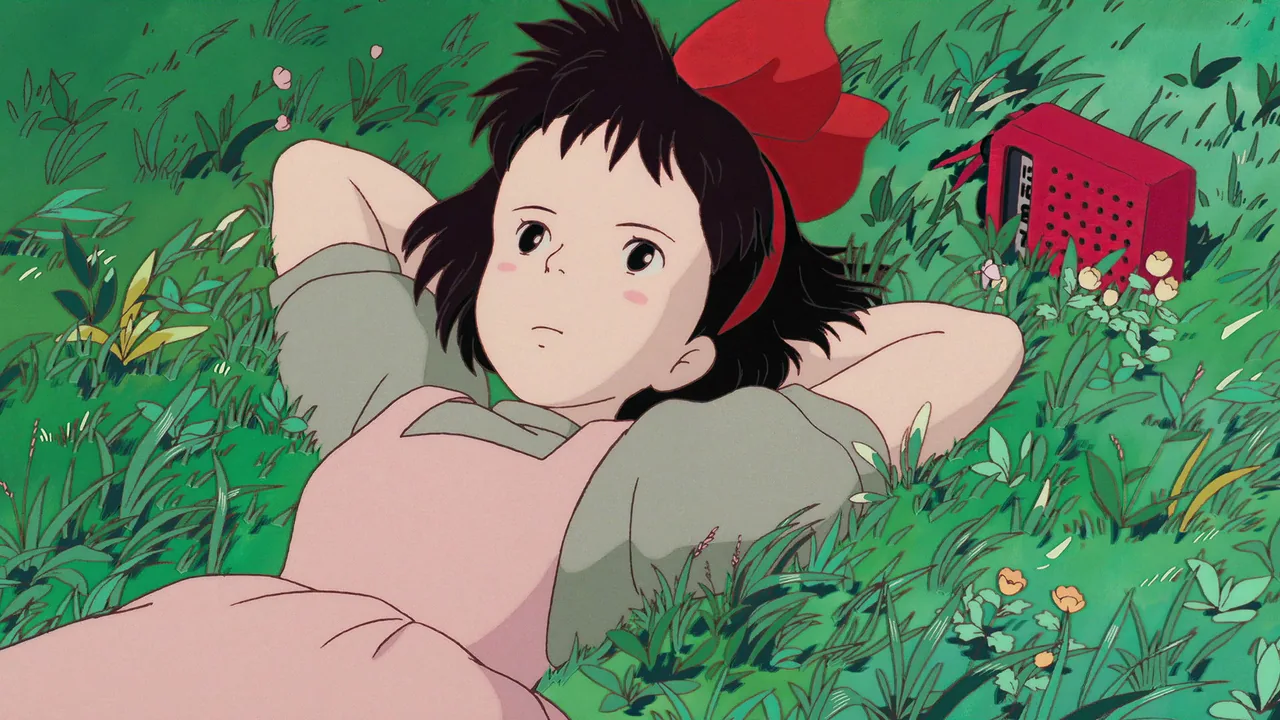
Start small enough to notice
Hayao Miyazaki could make an ordinary errand feel worth an entire film. In Kiki, delivery work gives flight a purpose beyond showing off. She has somewhere to get to, someone waiting and a reason to worry about getting it wrong. That is a lovely way to introduce a filmmaker whose images are so often detached from their stories and circulated as attractive scenery.
The film's seaside town is appealing, but it is also a place where a newcomer has to find her feet. Watching it as an adult, the question of how to keep doing something you once loved may land harder than the adventure. Watching it with a child, the fear of arriving somewhere unfamiliar may be enough. Neither response needs an explanation of Japanese animation.
Give it an unhurried evening. It runs 102 minutes, and its quieter stretches deserve the same attention as the flight. The delivery business gives you a reason to settle into the town: it turns scenery into somewhere a person has to work. That matters more to the film’s appeal than how many spectacular sights it can show us.
Then try the bathhouse
Spirited Away is the obvious rival for the first slot. If its imagery is what brought you here, watch it first without apologising. No guide should talk someone out of the film they actually want to see. But for the undecided viewer, I prefer it second: Kiki establishes the studio's interest in a young person making a place for herself, and the bathhouse gives that interest a stranger, less comfortable setting.
Chihiro's uncertainty is the way in. You do not have to understand every creature before you can understand the pressure she is under. Trying to decode the film as you watch can become a distraction from watching a child learn how to act when the adults cannot help her.
Miyazaki discussed the film at a Paris press conference in December 2001. His concern for the children watching it is a useful corrective to the solemnity that sometimes gathers around his work. These films invite attention, but they do not ask children to pass an entrance exam.

Make room for the quiet one
Next, choose My Neighbor Totoro. The easy mistake is to sell it as a sequence of famous images: the creature, the bus stop, the shape you have seen on a bag. Those images are delightful. They become more moving when you let the film establish the family around them.
Its gentleness is a different pleasure from the anxiety of the bathhouse. It asks less of your appetite for incident and more of your willingness to spend time with a child's attention. That can make it a perfect first choice for some families. For an adult who worries that animation means constant noise and explanation, it may be the most persuasive choice of all.
This is where a viewing order should loosen up. If Kiki made you want more everyday life, go straight here. If you wanted a larger, more dangerous world, move to the next pair. A useful viewing order should let you change your mind after each film. Follow the curiosity the previous one left you with.
When you want the bigger canvas
Princess Mononoke expands the scale and makes the comfort harder to find. Its conflicts are worth watching because the human settlement and the forest cannot be reduced to a neat division between people you should cheer and people you should boo. My reason for saving it is practical: it is a different evening from Kiki. Choose it when you want a film that will leave an argument in the room afterwards.
Do not assume that a familiar studio name guarantees the same tone for every age. This is the point in the route to check the film's local classification and decide who is watching with you. Ghibli is a studio with range, and range includes work that makes very different demands on an audience.
For adventure rather than that moral pressure, try Castle in the Sky. Its movement and sense of discovery make it a useful answer to the person who admired the quieter films but wanted them to get somewhere faster. It also demonstrates why treating Ghibli as a single mood does the films a disservice. Wonder can be contemplative, but it can also be a reason to run.
There is another director in the room
A route through the studio should not end with Miyazaki. Isao Takahata offers a different pace and a different relationship between an image and a memory. Only Yesterday follows an adult woman whose journey into the countryside brings her childhood back into focus. The question is not simply what happened then. It is what those memories have made possible, or difficult, now.
I would put it here because it changes the terms of the evening. After flying machines and creatures, remembering yourself can be enough to sustain a film. The movement between adult life and childhood gives small incidents room to grow in significance. This is an especially good choice for the viewer who has liked the craft of the earlier films but wanted a story closer to their own adult life.
Then watch The Tale of the Princess Kaguya. A girl discovered inside bamboo becomes the centre of a story whose drawing is as expressive as its events. Notice the feeling of the lines rather than asking whether the images are as polished as another film's. The apparent simplicity is part of the force. You are watching animation choose how a feeling should look.
Start with Kiki if you are still undecided. Then choose your next film by what you missed or wanted more of: another ordinary life, a bigger adventure, a world harder to understand. A good first film makes those choices inviting. It gives you a reason to come back without turning the return into a duty.