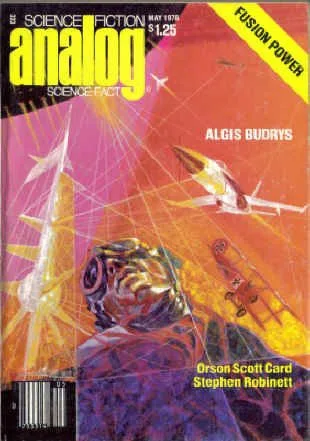
Analog Science Fiction, May 1978 (1978)
Analog Science Fiction, May 1978 is a 1978 book written by Algis Budrys and Orson Scott Card.
A single issue of Analog Science Fiction and Fact from May 1978, the long-running magazine that helped define the genre's harder, idea-driven wing. This number gathers short fiction and features from a strong bench of contributors, among them editor Ben Bova, Charles Sheffield, Algis Budrys, and a young Orson Scott Card. Cover and interior art come from Richard Powers. As with any Analog issue, the appeal is the mix: stories that lead with a scientific or technological premise, alongside essays and columns, captured as a snapshot of late-1970s science fiction.
A few thoughts on Analog Science Fiction, May 1978
A period Analog issue rewards readers who like short science fiction that turns on a single sharp idea. For that same premise-first pleasure at book length, try the anthologies and novels its contributors went on to write.
Other anthologies collecting the same golden age of magazine fiction
This single Analog issue is a snapshot of a whole era of magazine science fiction, and these anthologies gather more of the same period. The Science Fiction Hall of Fame and The Golden Years of Science Fiction collect the genre's own consensus classics, The Second IF Reader draws from Analog's closest rival, and Asimov's Best Science Fiction Firsts rounds up landmark stories from across the field.
New Wave novels that warp identity and time
The same era that produced this Analog issue also produced a stranger, more literary wing of science fiction. Zelazny's This Immortal and The Dream Master bend myth and psychology into new shapes, Silverberg's The Masks of Time toys with a messiah who may be a fraud, and this four-novel 1960s collection gathers more of that same restless, boundary-pushing decade.
Grandmaster-era science fiction from the same magazine circle
Orson Scott Card appears in this very issue as a young writer, and these works trace the wider circle he was stepping into. Heinlein's Assignment in Eternity and Asimov's The Gods Themselves represent the genre's reigning names, Ellison's The Beast That Shouted Love and Bloch's This Crowded Earth carry the era's darker edge, the 1956 film World Without End imagines the same postwar future on screen, and Card's own Earthfall extends that lineage forward.