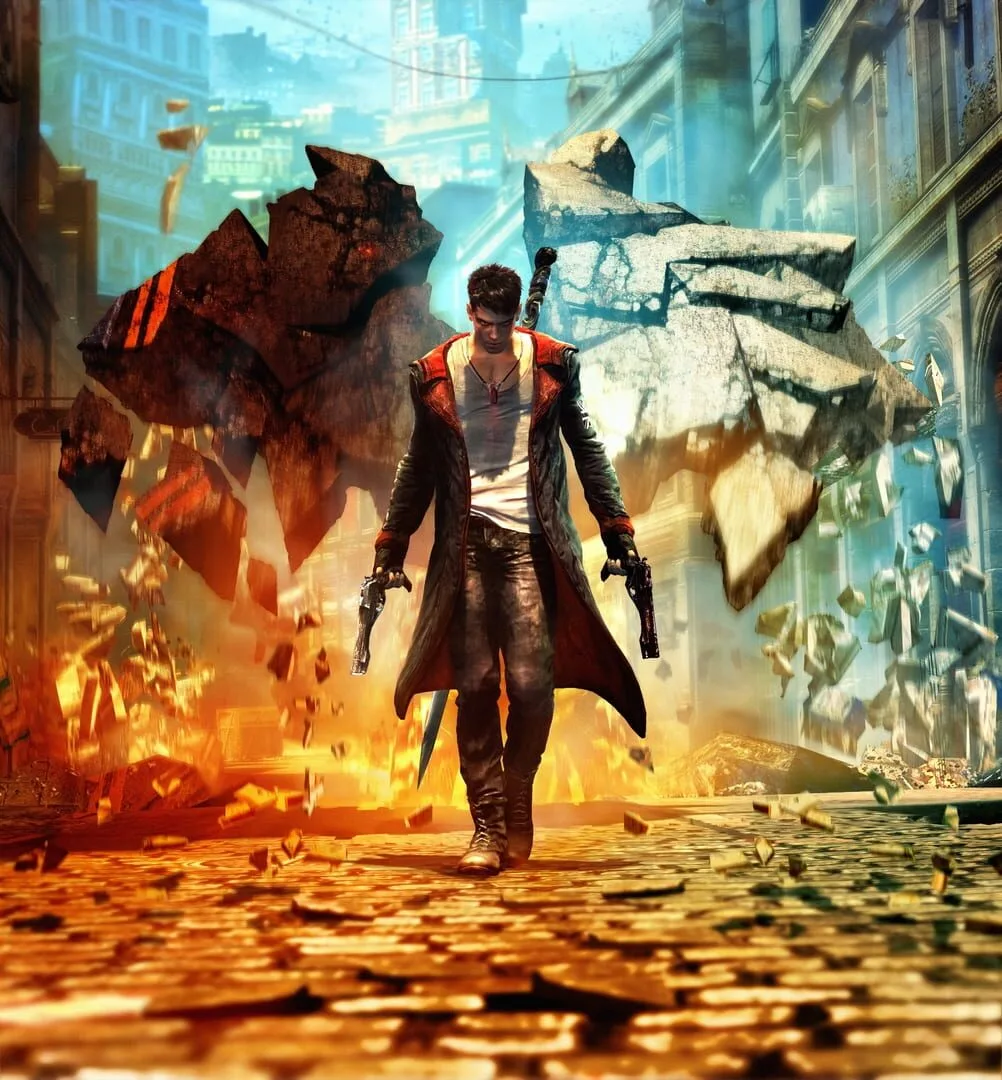
DmC: Devil May Cry (2013)
DmC: Devil May Cry is a 2013 puzzle video game made by Ninja Theory.
This 2013 reboot hands Dante to British studio Ninja Theory and an alternate universe where demons quietly control human society through a news network, a central bank, and a soft drink laced with something that keeps the population pliable. The Dante here is younger, angrier, and less polished than the original, and the game's color-coded combat system asks players to switch between demonic and angelic weapon sets on the fly. The aesthetic is more industrial and politically pointed than the main series, and it divides fans precisely because it commits fully to being its own thing.
Similar games
Explore DmC: Devil May Cry guides
A few thoughts on DmC: Devil May Cry
Devil May Cry is the most direct companion, though its Dante is the classic version, so the contrast is instructive. Dante's Inferno: An Animated Epic shares DmC's interest in a young, furious protagonist descending through layers of the demonic with something personal at stake.
Half-demon heroes who fight the very thing they're made of
DmC's Dante is half demon and half angel, uneasy in both worlds and weaponizing that split instead of resolving it. The Devil May Cry anime follows the same lineage on screen, Dante's Inferno: An Animated Epic sends its Dante through the underworld's hierarchy, Inuyasha's title character is a half-demon belonging fully to neither side, and Saint Seiya's warriors fight gods with power drawn from the same myths that made them.
Music heavy and theatrical enough to score a demon uprising
DmC leans harder into industrial noise and confrontational aesthetics than any other game in its series, and these records share that theatrical heaviness. Judas Priest's Painkiller is a defining thrash-adjacent metal landmark, Cradle of Filth's IX Equilibrium goes full symphonic extremity, Savatage's The Spectre Within brings operatic doom, and King Crimson's In the Court of the Crimson King opens with as apocalyptic a statement as rock has ever made.
Stories where the company controlling everyone hides in plain sight
DmC's demons don't hide in shadows, they run the news networks, the banks, and a soft drink brand outright, controlling humanity by keeping it comfortable. Fullmetal Alchemist reveals a state built on secrets its own military doesn't fully know, Portal's Aperture Science treats test subjects as disposable, The Boys turns a superhero franchise into a corporate weapon, and Smallville centers a company town that answers to one family's ambitions.