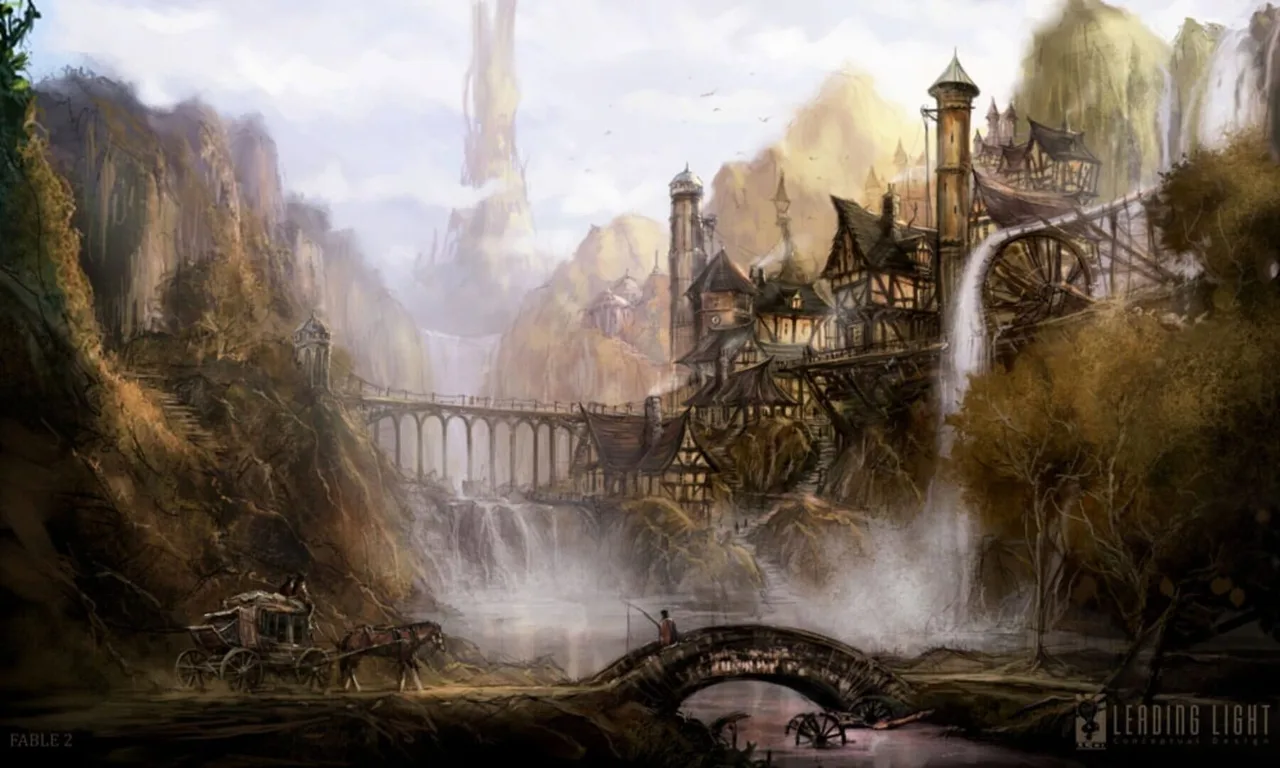
Fable II (2008)
Fable II is a 2008 role-playing (rpg) video game made by Lionhead Studios.
Albion is a storybook England of muddy villages, redcoat guards, and gypsy caravans, and you grow up inside it from street urchin to legend. A tyrant named Lucien threatens the land, and gathering the heroes who can stop him is the spine of the tale. Around that spine runs an unusually loose life: buy property, take a spouse of either sex, raise a child, and watch the world read your choices in the glow or the scars they leave on you. A loyal dog trots at your heel throughout. Lighthearted, morally playful, and gently satirical of the fantasy it inhabits.
Similar games
Explore Fable II guides
A few thoughts on Fable II
Terry Pratchett's Discworld novels share Fable's affection for a fantasy world that keeps winking at itself. Kelly Barnhill's The Girl Who Drank the Moon carries the same fairy-tale warmth, witches and small folk and moral fables included. For a screen equivalent, Stardust turns a wandering-hero quest into cozy comic adventure.
Storybook fantasy that pokes fun at its own tropes
Albion plays fairy tale logic mostly straight, but Fable II never forgets to wink at the genre's stock heroes and villains. The Colour of Magic turns fantasy cliches into outright comedy, The Girl Who Drank the Moon and Redwall keep the storybook warmth without the irony, and Stardust splits the difference with a whimsical romance that still takes its own magic seriously.
Fantasy worlds big enough to just wander
Albion rewards drifting off the main quest to buy a house, get married or just walk the roads, and these share that sense of a world worth living in rather than rushing through. Skyrim and The Witcher 3 hand over whole continents to explore, Avatar: The Last Airbender treats its world with the same lived-in warmth, and the Return of the King score gives it all an epic hum.