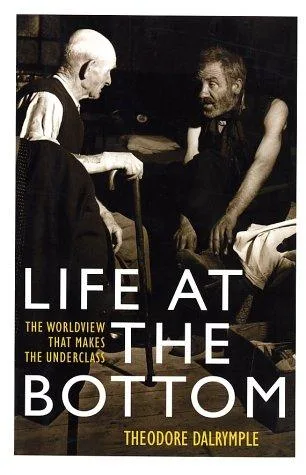
Life at the Bottom (2001)
Life at the Bottom is a 2001 poor book written by Theodore Dalrymple.
Drawn from years treating patients in a British slum hospital and a prison, Theodore Dalrymple's essay collection turns a clinician's cold eye on the underclass. Writing as a physician and psychiatrist, he argues that poverty here is driven less by material want than by a worldview: a set of beliefs about responsibility, victimhood, and fate that keeps people trapped. First published in the Manhattan Institute's City Journal beginning in 1994 and gathered into book form in 2001, the pieces are pointed, controversial, and unsentimental. Readers drawn to social criticism will find bleak reportage and blunt argument in equal measure.
Similar books
A few thoughts on Life at the Bottom
For the same unflinching look at entrenched poverty on screen, Ken Loach's film I, Daniel Blake follows an ordinary man ground down by the welfare system. David Simon's series The Wire dramatizes how institutions and individuals both fail in a decaying American city, wrestling with the same questions of responsibility and circumstance that drive Theodore Dalrymple's essays.