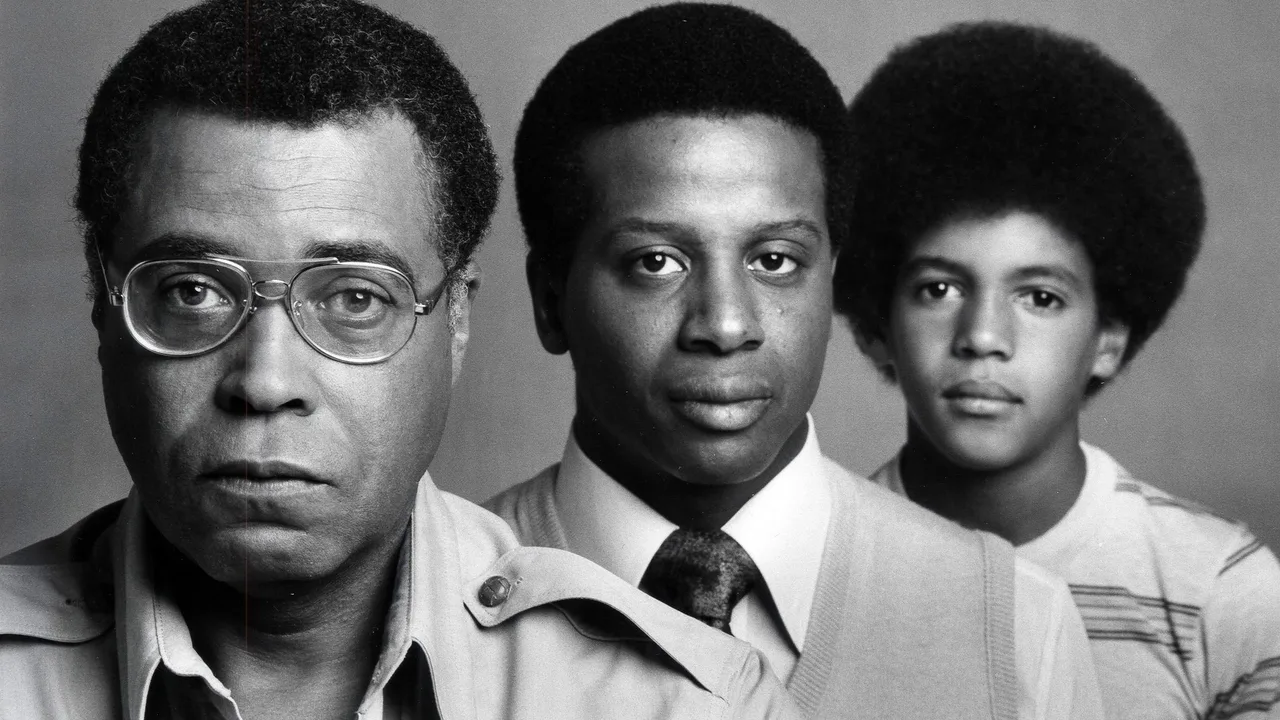
Roots: The Next Generations (1979)
Roots: The Next Generations is a 1979 drama series created by Alex Haley. It stars Debbi Morgan, Dorian Harewood and Stan Shaw.
The first Roots ended with emancipation. This one begins with the question of what emancipation was worth in the American South, and it takes eight decades to answer.
Roots: The Next Generations picks the family up in 1882, where the 1977 miniseries left them, and follows Kunta Kinte's descendants in Henning, Tennessee, through to 1967. Alex Haley supplied the material: the last seven chapters of his 1976 novel Roots: The Saga of an American Family, plus additional writing done for the screen. ABC ran it in February 1979.
The money shows. At $16.6 million the production cost close to three times the original, and most of that went into holding a long stretch of period ground, from the post-Reconstruction South hardening into Jim Crow to the middle of the twentieth century. Olivia de Havilland, Harry Morgan, Greg Morris, Marc Singer, Debbi Morgan and Paul Koslo appear across an ensemble that keeps handing the story forward as one generation gives way to the next.
The register is sober rather than stirring, and that is the point. Each era arrives with its own rules about what a Black family in Tennessee can own, say, marry into and expect, and the series sets those rules down in order so you can see how slowly they moved. For viewers who came to the 1977 miniseries for the story of one man taken from Africa, this is the longer account of what his line inherited.
Where to watch Roots: The Next Generations
Rent: Google Play
Buy: Amazon, AppleTV, Fandango at Home, Google Play
Cast
- Debbi Morgan as Elizabeth Harvey
- Dorian Harewood as Simon Haley
- Stan Shaw as Will Palmer
- Paul Koslo as Earl Crowther
- Marc Singer as Andy Warner
- Lynn Hamilton as Cousin Georgia Anderson
- Irene Cara as Bertha Palmer Haley
- Fay Hauser as Carrie Warner
- Bever-Leigh Banfield as Cynthia Palmer
- Georg Stanford Brown as Tom Harvey
- Lynne Moody as Irene Harvey
- Henry Fonda as Colonel Frederick Warner
Similar series
Explore Roots: The Next Generations guides
A few thoughts on Roots: The Next Generations
Read Alex Haley next if the family record is what held you. It is a biography of the author whose search through his own lineage produced the source novel, and it fills in the research and the arguments that surrounded the book. Gordon Parks wrote The learning tree out of his own Kansas boyhood in the 1920s, which places a single Black family inside the same span of American history at ground level rather than across generations.
Two comics carry the same work. Bitter Root puts a Black family in 1920s Harlem and treats American race hatred as something monstrous and literal. Barefoot Gen comes from Keiji Nakazawa's childhood in Hiroshima and shares the method: one family's survival, drawn plainly, set down as testimony.
Long miniseries worth giving a week of nights to
Roots: The Next Generations ran across seven nights on ABC in February 1979 and cost $16.6 million, close to three times the original. These ask for the same commitment: a network betting a week of prime time on one long story. Start with the 1977 Roots, since this one picks the family up in 1882 where that ended.
Tracing a family line back through the records
Alex Haley spent years in archives, census pages and ships' manifests before Roots: The Next Generations could follow Kunta Kinte's descendants through to 1967. The research carries as much weight as the drama. These share that impulse: people reading parish books and listening to elders to put names on relatives nobody bothered to write down.
Jim Crow in the American South, on screen and on the page
Roots: The Next Generations opens in 1882 in Henning, Tennessee, and takes eight decades to work out what emancipation actually bought a Black family in the South. These cover that ground from other positions: a photographer's Kansas boyhood, a white Mississippian's memoir, a Memphis church dynasty, and a comic set among Harlem's Black families.
Family sagas that hand the story down three or four generations
Roots: The Next Generations carries one Tennessee family across eighty-five years, passing the story from Chicken George's children to a grandson with a tape recorder. These run on the same engine: a single bloodline, several decades, the property and the grudges moving down the line. The Forsytes take it through Edwardian London, The Son through two centuries of Texas.