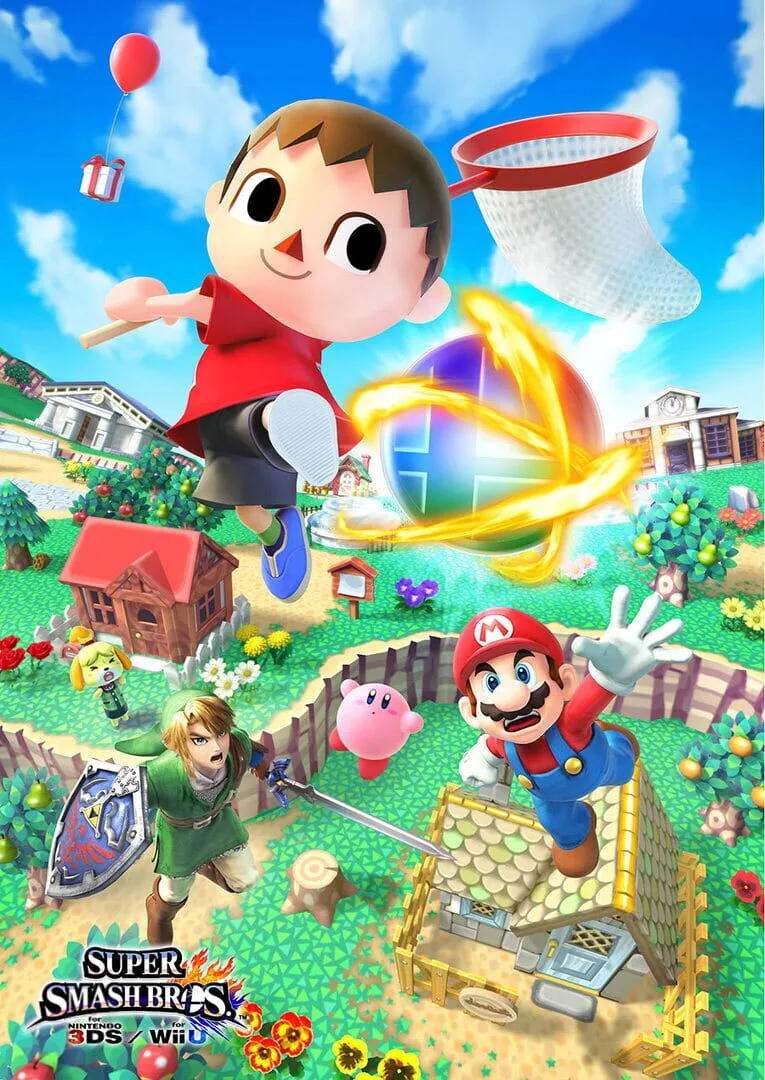
Super Smash Bros. for Wii U (2014)
Super Smash Bros. for Wii U is a 2014 fighting video game made by Sora and Bandai Namco Studios.
Super Smash Bros. for Wii U is the fourth home console entry in the series, arriving in 2014 with the largest roster the franchise had assembled to that point. Eight-player Smash is its signature addition, turning the familiar formula into organized chaos on larger stages. The game prioritizes refined competitive mechanics alongside its breadth, adding Amiibo support and a variety of modes that range from the intensely casual to tournament-legal. It is the direct precursor to Ultimate and the last major Smash title before the Switch generation.
Similar games
Explore Super Smash Bros. for Wii U guides
A few thoughts on Super Smash Bros. for Wii U
Super Smash Bros. for Wii U is best understood as the immediate stepping stone to Ultimate. Its roster, mechanics, and stage design form the foundation that the Switch entry built on, making it essential context for competitive players.
Team rosters where every fighter gets a signature move
Super Smash Bros. for Wii U built its appeal on a huge roster where every fighter keeps a different moveset and playstyle. These stories share that same idea: a big cast where nobody fights the same way. My Hero Academia's quirks, Sailor Moon's Guardians, Saint Seiya's Bronze Saints, the four turtles' distinct weapons, Hunter x Hunter's Nen abilities, and Avatar's four bending styles all give every member a signature move.