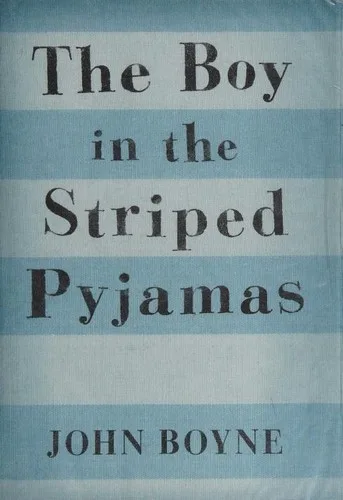
The Boy in the Striped Pyjamas (2006)
The Boy in the Striped Pyjamas is a 2006 teen & young adult fiction book written by John Boyne.
Bruno is nine, and the book never lets him understand what he is looking at. His family leaves a comfortable Berlin house because his father, a Nazi commandant, has been posted to Auschwitz. Bruno cannot read the name on the sign and calls the place Out-With. He cannot make sense of the people beyond the wire either, and settles on describing them by their striped clothing.
Bored and friendless, he follows the fence line until he meets Shmuel, a Jewish boy his own age sitting on the other side of it. John Boyne writes the entire novel from inside Bruno's narrow view, so nearly every important fact arrives over the narrator's head. The prose is deliberately plain and the whole effect rests on dramatic irony: what Bruno reports and what the reader knows never quite meet.
It has sold more than eleven million copies and been translated into over fifty languages, and it is taught widely, which has also made it argued over widely. Holocaust educators and historians have criticised the premise as implausible and the child's innocence as a way of softening what happened at Auschwitz. That criticism is worth reading alongside the book rather than instead of it, particularly with younger readers, and it is part of why the novel is still discussed at all.
Similar books
Explore The Boy in the Striped Pyjamas guides
A few thoughts on The Boy in the Striped Pyjamas
If the child's-eye framing is what holds you, go next to the works that do it with firsthand authority. Art Spiegelman's Maus is a survivor's account drawn as mice and cats, and it is equally honest about the son sitting there transcribing it. Barefoot Gen is Keiji Nakazawa drawing what he lived through as a child in Hiroshima, and it spares the reader nothing. Europa Europa follows a Jewish teenager who survives the war by passing as the thing hunting him, which is a true story.
The Diary of Anne Frank is the one to take in a real voice rather than an invented one. The Boy in the Striped Pyjamas is the film if you want to see the fence.
Stories where children face horror they don't have words for
Bruno never gets the vocabulary to understand what's happening past the fence, and that gap between innocence and horror runs through these picks. Lord of the Flies strands children with no adult left to soften what they become. Gunslinger Girl turns young girls into weapons for an institution that trained away their choices. The 'Nam tells its war from ground level, through eyes too young for it.