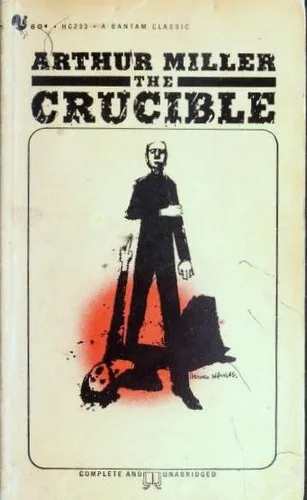
The Crucible (1953)
The Crucible is a 1953 fiction classics book written by Arthur Miller.
Salem, 1692. A group of girls is caught dancing in the woods, and to escape punishment they begin naming names. Witchcraft, they say, and the accusations spread like fever through a town primed to believe them. Arthur Miller stages the panic through John Proctor, a plain-spoken farmer carrying a private guilt, and Abigail Williams, whose word can end a life. Miller wrote the play in 1953 as an answer to the McCarthy hearings, and the parallel is deliberate: a community turning on itself, where a confession buys safety and holding to the truth costs everything.
Similar books
Explore The Crucible guides
A few thoughts on The Crucible
For the same study of guilt and a community devouring itself, Naoki Urasawa's Monster follows a doctor hunted for a choice he made and the moral rot that spreads outward from it. Tezuka's Ayako buries a family secret under postwar political fear and watches it fester across decades. Both trade in accusation, complicity, and the price of silence.
When fear turns a whole community into a mob
The Crucible watches a handful of accusations in Salem spread until the town is convicting neighbors on a girl's word. These pick up the same contagion: communities and families that turn on their own once suspicion takes hold, where naming someone buys safety and staying silent makes you part of it.
Holding to the truth when a lie would save your life
John Proctor can end his ordeal in The Crucible by signing a confession he knows is false, and refuses. These stories put the same choice to their subjects: trials and reckonings where a person could buy safety by lying and instead stakes everything on the truth, whatever it costs them.