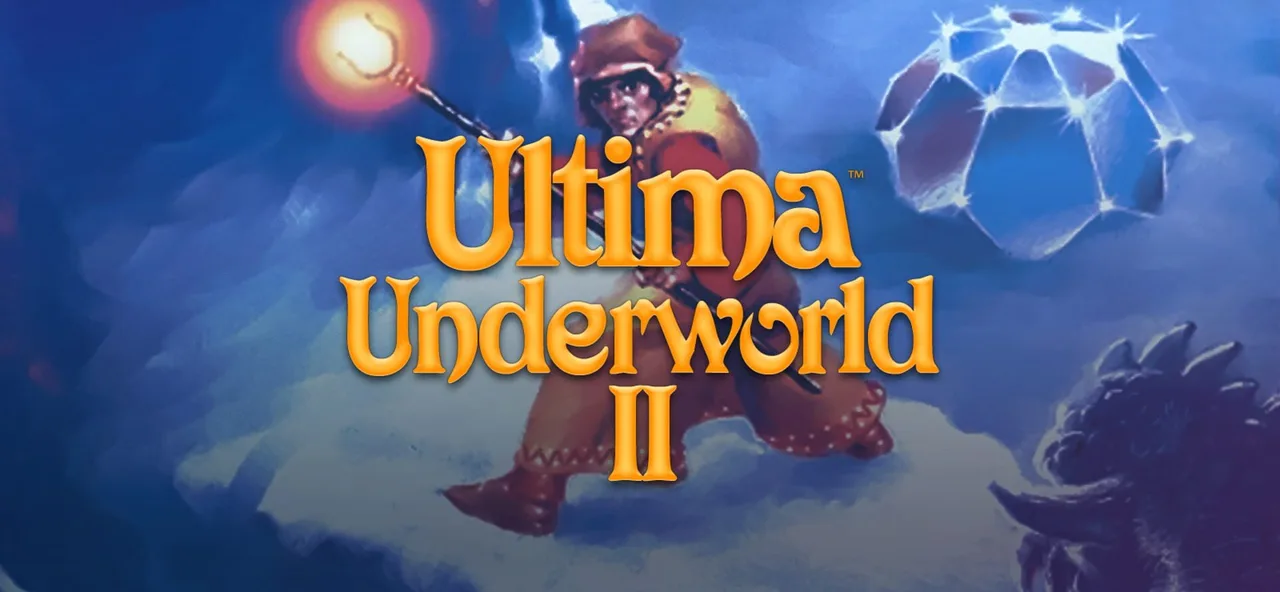
Ultima Underworld II: Labyrinth of Worlds (1993)
Ultima Underworld II: Labyrinth of Worlds is a 1993 role-playing (rpg) video game made by Looking Glass Software, Inc..
During a feast at Castle Britannia celebrating the defeat of the Fellowship, the Guardian strikes again. A massive blackrock gem descends over the entire castle, sealing the Avatar and Lord British's court inside. Escape requires navigating a portal network beneath the castle sewers, where another blackrock gem connects to eight radically different worlds, each under the Guardian's shadow. Labyrinth of Worlds expands Underworld's first-person engine into something structurally unusual: a hub-and-portal RPG where each pocket world has its own culture, its own political crisis, and its own rules for survival.
Similar games
Explore Ultima Underworld II: Labyrinth of Worlds guides
Ultima Underworld II: Labyrinth of Worlds in our writing
- Companion guide: The Golden Age of the CRPG: 1981 to 1999
- Companion guide: The Dungeon Crawler: Grid by Grid Through Gaming's Oldest Genre
- Companion guide: Origin Systems: We Create Worlds
A few thoughts on Ultima Underworld II: Labyrinth of Worlds
Lara Croft: Tomb Raider shares the structural premise of a protagonist moving through portal-accessed spaces against the clock, navigating each environment for its own logic and traps. Both reward patience and spatial awareness over raw combat, and both stage their confrontations in architecturally distinct, self-contained worlds.
Real-time fantasy RPGs that never pause for a menu
Ultima Underworld II keeps its dungeon crawling live, no turn queue, just spellcasting and swordplay while the portal network shifts beneath your feet. The Witcher 3, Skyrim, Darkstone, Torchlight III and GreedFall all trade menus for that same real-time combat, dropping you into a fantasy world where every swing and dodge happens on the clock, not on a turn order.
Fantasy sagas where every kingdom is fighting its own war
Each of the eight pocket worlds behind Ultima Underworld II's blackrock gem runs on its own government, its own quarrel, its own rules for survival. Game of Thrones, House of the Dragon, Avatar: The Last Airbender, Jade Empire and Oathbringer all build the same kind of layered political fantasy, where every kingdom or nation is already carrying a crisis long before you show up.
Portal stories where the door leads somewhere the rules don't apply
The portal network under Castle Britannia drops the Avatar into eight worlds, each running on its own physics and politics. Stranger Things sends its kids through a door to the Upside Down, Half-Life 2 opens on an Earth remade by invasion, Portal turns a doorway into the entire puzzle, Wizard and Glass slips between parallel worlds, and Inuyasha's well drops a modern girl into feudal Japan.
Survival adventures where the terrain is the real enemy
Escaping Castle Britannia means crossing eight hostile worlds where the ground itself can kill you before anything else does. Red Dead Redemption 2, The Last of Us, God of War, Borderlands 3 and Immortal: Unchained all put survival ahead of plot momentum, forcing you to read unfamiliar terrain, scavenge what you can, and adapt before the next threat finds you.