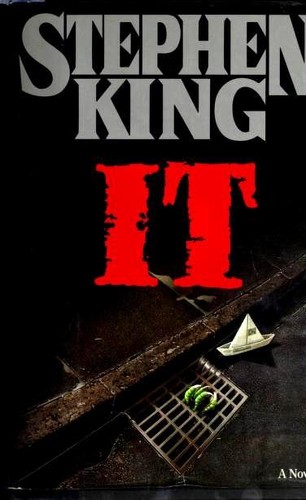

Where It Began
Stephen King published It in 1986, a novel that runs over a thousand pages and does something almost no horror story attempts: it tells the same story twice, intercutting between a group of twelve-year-olds in 1958 Derry, Maine and the same people as adults in 1985, returning to face what they thought they had buried. The monster, most often appearing as Pennywise the Dancing Clown, is ancient, shapeless, and feeds on fear. The real subject is childhood itself: the sharpness of that fear, the solidarity of outcast kids, and what you lose when you grow up and stop believing the worst things are real.
King drew on his own childhood in Maine, on years of thinking about the nature of evil as something civic and structural (Derry is a town with a history of looking away), and on the monster-movie serials he grew up watching. It is also, explicitly, about memory: the Losers Club forgets Pennywise almost completely once they leave Derry. The forgetting is the curse.
The story has been adapted twice in dramatically different eras. A 1990 TV miniseries caught the early wave of King adaptations, was constrained by network television, and produced one of the most iconic villain performances in the genre. Nearly thirty years later, a two-part theatrical remake split the novel's two timelines into separate films, became the highest-grossing horror movie ever made at the time, and reintroduced Pennywise to an entirely new generation.
Every Version of It
The source novel plus every screen adaptation

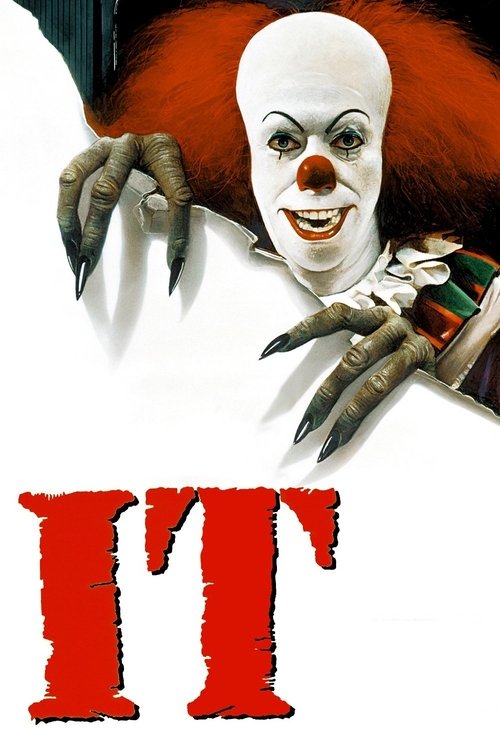
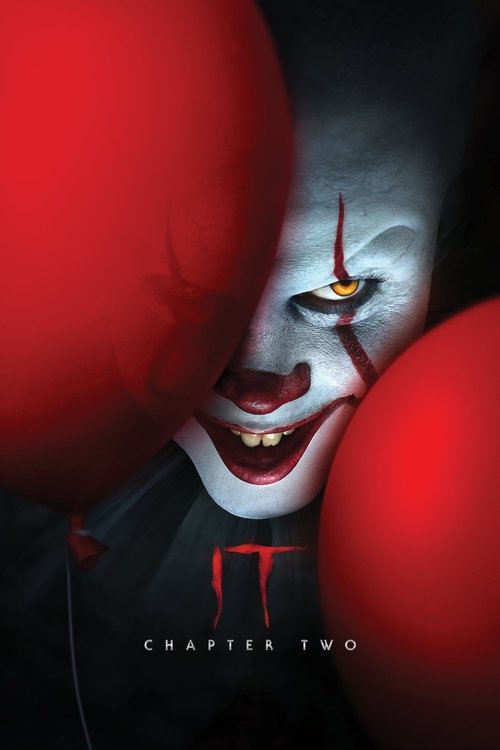
Pennywise Through the Decades
- 1986Stephen King publishes the novel It
- 1990ABC two-part TV miniseries; Tim Curry as Pennywise It
- 2017Theatrical Part One: the Losers as children (1988 setting) It Chapter Two
- 2019Theatrical Part Two: the Losers return as adults It Chapter Two
The definitive version is the 2017 film
Andy Muschietti's It Chapter One gets the balance exactly right: it is genuinely frightening and genuinely moving in the same scenes, which is what the novel demands. The child cast is exceptional, the 1980s Derry feels lived-in rather than nostalgic wallpaper, and the film understands that the horror works only because you care about these kids. Bill Skarsgard's Pennywise is a different creature from Tim Curry's, more physically wrong, less campy, and entirely its own thing.
The underrated version is Tim Curry's miniseries
The 1990 miniseries is uneven, especially in its adult half, which suffers from the budget constraints and content restrictions of network television. But Tim Curry's performance stands on its own as acting: he modulates between comic menace and something truly off, and he does it with almost no visual effects support. The child half of the miniseries, shot partly on location in Vancouver standing in for Derry, holds up far better than its reputation suggests.
The one that disappoints is It Chapter Two
The second theatrical film has the harder job: the adult half of King's novel is the weaker half, and the film compounds the problem with a repetitive structure (each Loser fetches a token, has a setpiece scare, returns) and a runtime that outstays its welcome by forty minutes. The adult cast is excellent and there are individual scenes that work. But Chapter Two confirms that the adult story is where every adaptation of It struggles.
If You Love the Child Chapters
Coming-of-age horror where friendship is the weapon

If You Love the Monster
Shape-shifters, psychic predators, and ancient evil

If You Love Derry: Small Towns Hiding Big Sins
Places where the evil is as civic as it is supernatural
More Stephen King and Small-Town Horror
For Fans of Stephen King
Explore the For Fans of Stephen King guide →The town knew about the children who disappeared or were found dead in the spring. Knew, and chose not to see.Stephen King, It (1986)