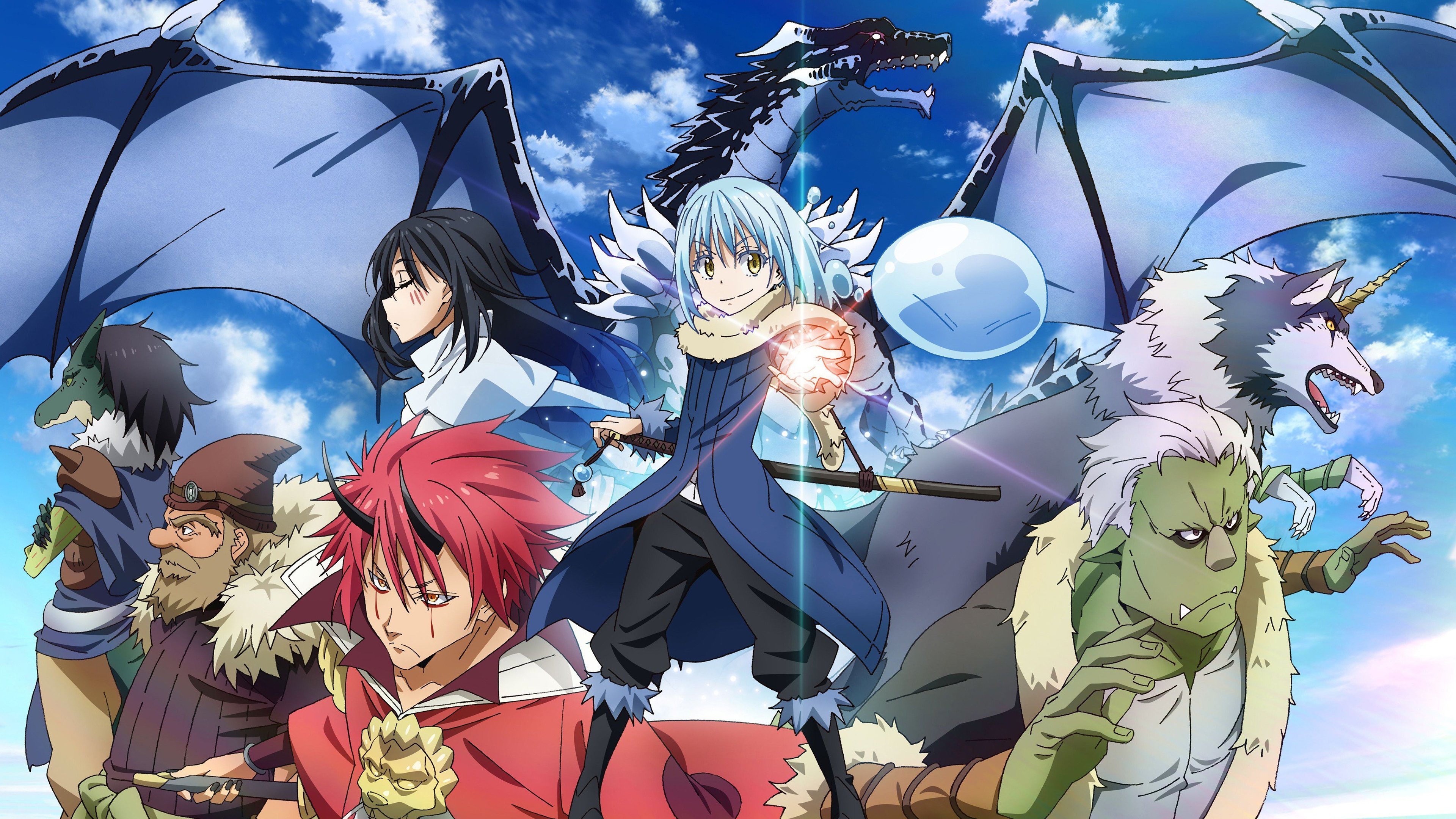

From a salaryman's last thought to a fantasy empire
That Time I Got Reincarnated as a Slime began as a web novel by Fuse, serialized from 2013 on Shosetsuka ni Naro, the Japanese self-publishing platform that became the engine of the modern isekai boom. The premise is deliberately absurdist: a 37-year-old corporate drone named Satoru Mikami is stabbed on the street and wakes up in a fantasy world as a slime, one of the weakest monsters imaginable. The hook is the inversion. The protagonist has no power-fantasy body; instead he builds an empire through negotiation, administration, and the patient accumulation of skills. The web novel drew enormous readership, which led publisher Micro Magazine to license it as a light novel series (illustrated by Mitz Vah) in 2015. Manga artist Taiki Kawakami began the manga adaptation that same year. By 2018 the franchise had reached studio 8bit, who produced the first anime season for Bandai Namco. Since then the property has expanded across multiple anime cours, two theatrical films, a dedicated slice-of-life spinoff anime, manga spinoffs, and mobile games, making it one of the more thoroughly adapted isekai properties of the 2010s and 2020s.
Every version of That Time I Got Reincarnated as a Slime
The source work and every major adaptation, in the order you should care about them

The Slime timeline
- 2013Web novel begins serialization on Shosetsuka ni Naro
- 2015Light novel adaptation launches with Mitz Vah illustrations
- 2015Manga adaptation by Taiki Kawakami begins in Monthly Shonen Sirius
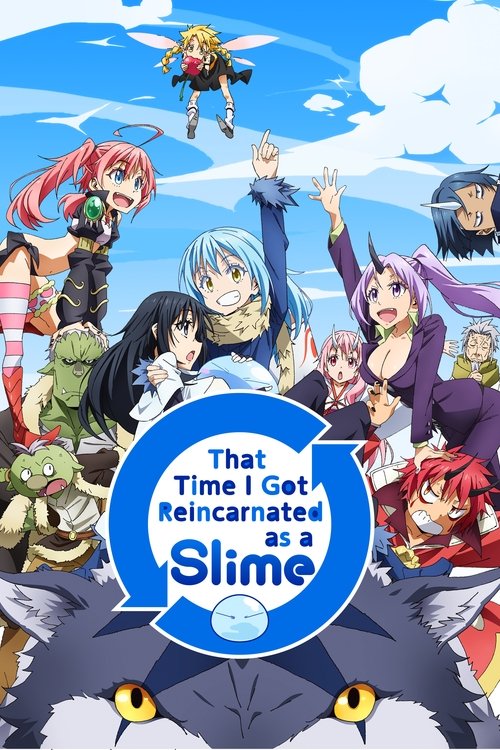
- 2018First anime season premieres at studio 8bit; 24 episodes plus 2 OVAs That Time I Got Reincarnated as a Slime
- 2019Spinoff manga Tensura Nikki (Slime Diaries) begins publication
- 2021Second anime season (Parts 1 and 2) airs; Slime Diaries anime adaptation follows as a slice-of-life spinoff The Slime Diaries
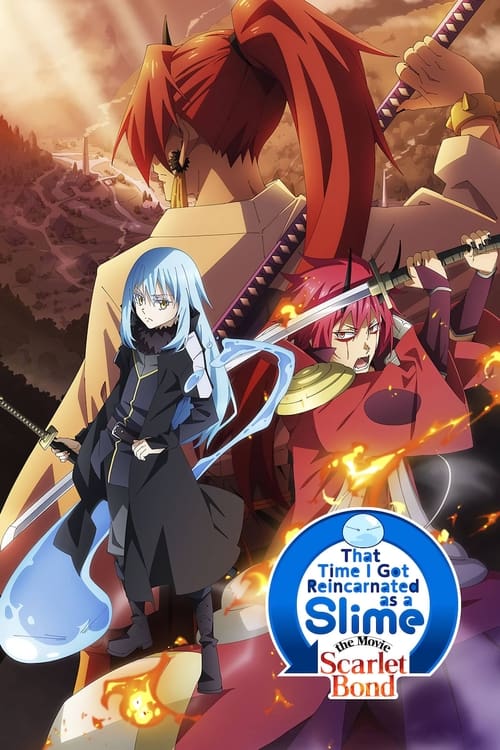
- 2022Theatrical film Scarlet Bond opens in Japanese cinemas That Time I Got Reincarnated as a Slime the Movie: Scarlet Bond
- 2023Third anime season begins airing That Time I Got Reincarnated as a Slime
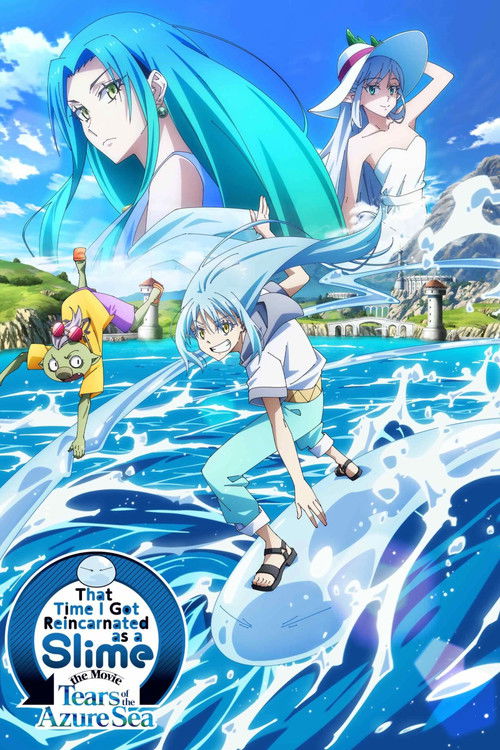
- 2026Second theatrical film Tears of the Azure Sea releases That Time I Got Reincarnated as a Slime the Movie: Tears of the Azure Sea
If you love the monster-nation building
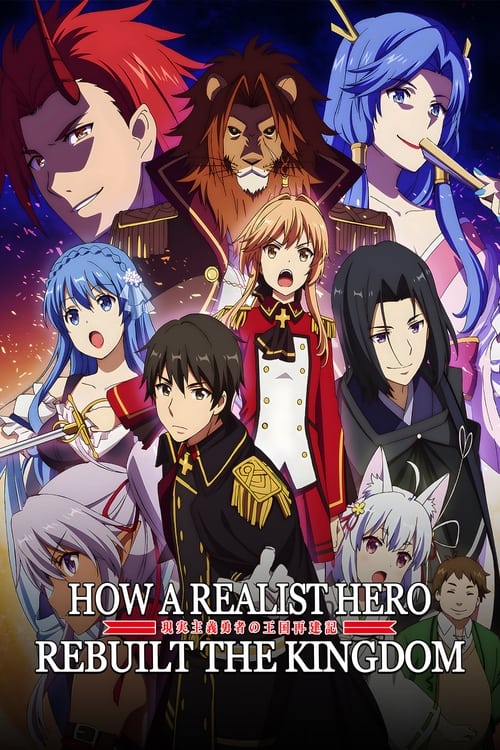
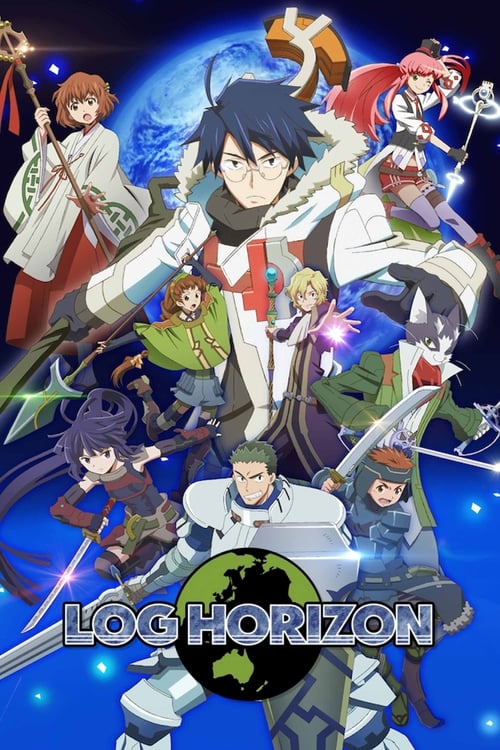
Isekai and fantasy stories about building something from nothing, through cleverness rather than brute force
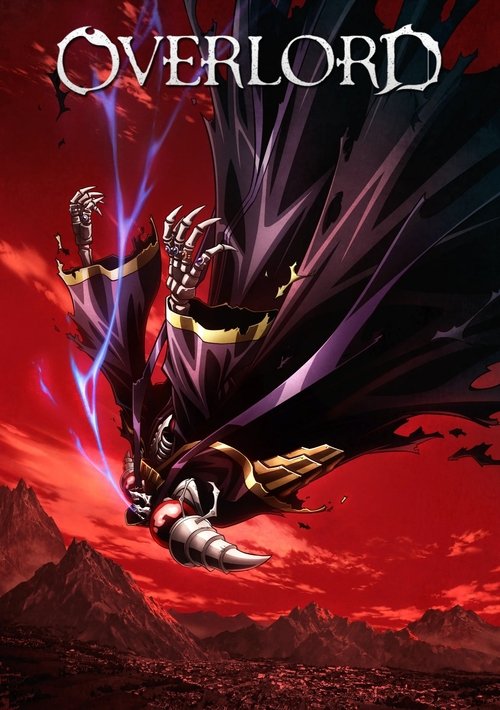
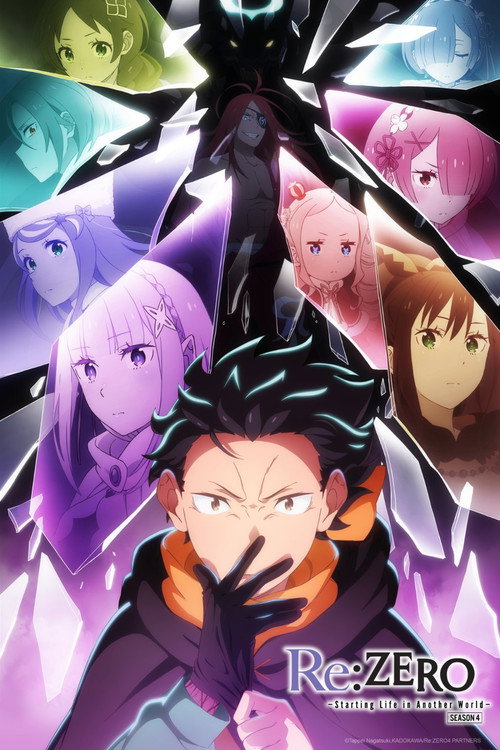
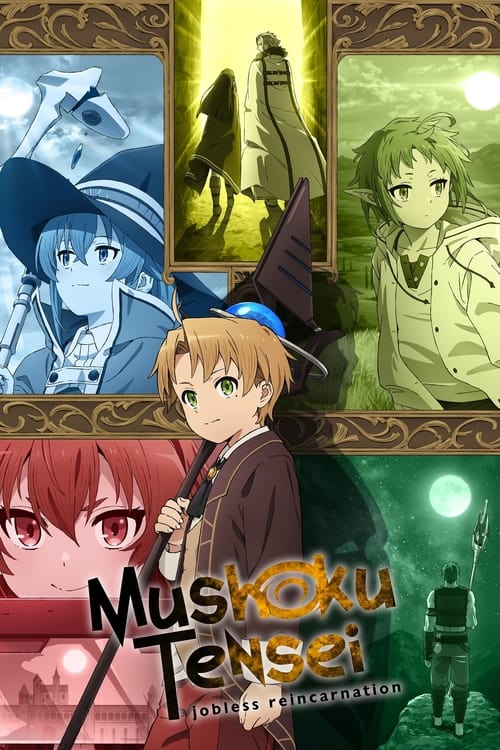
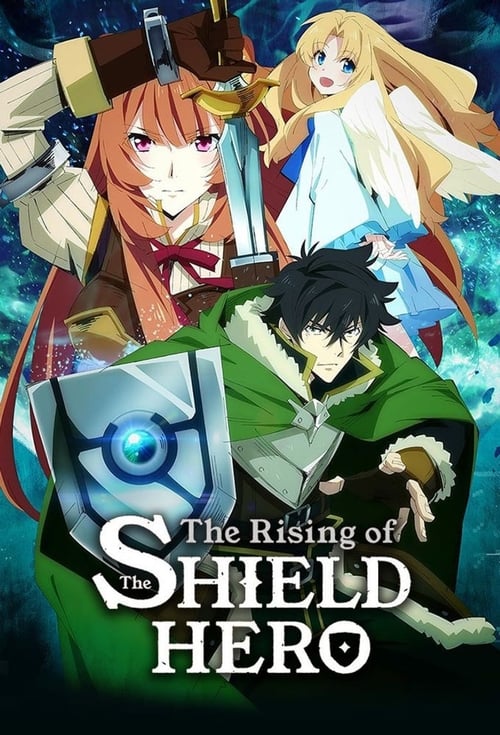
If you love the absurdist power-accumulation premise
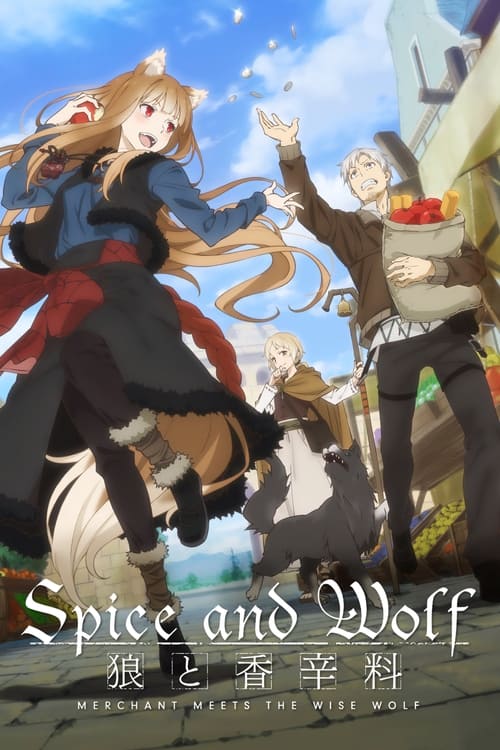
Stories where the protagonist's strength comes from an unexpected source and keeps snowballing
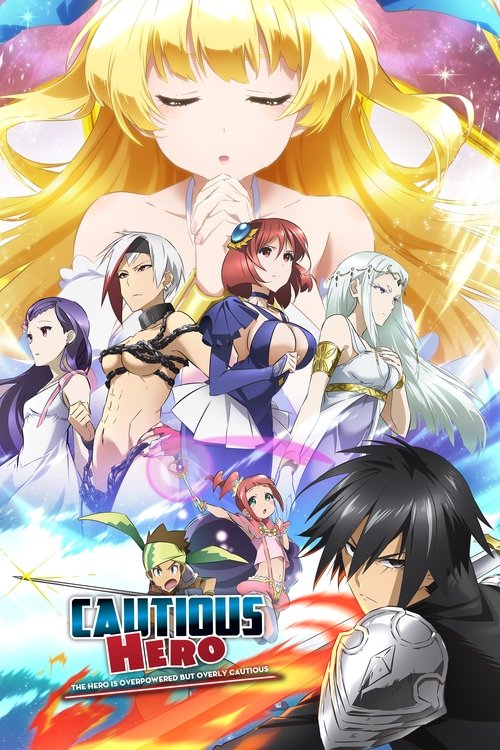
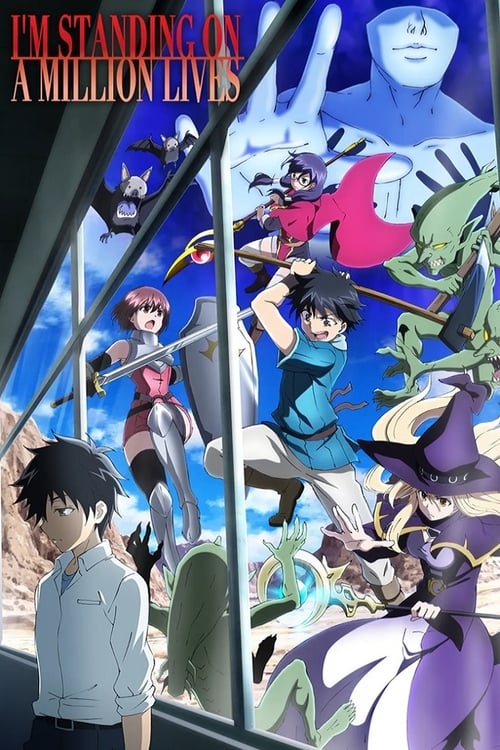
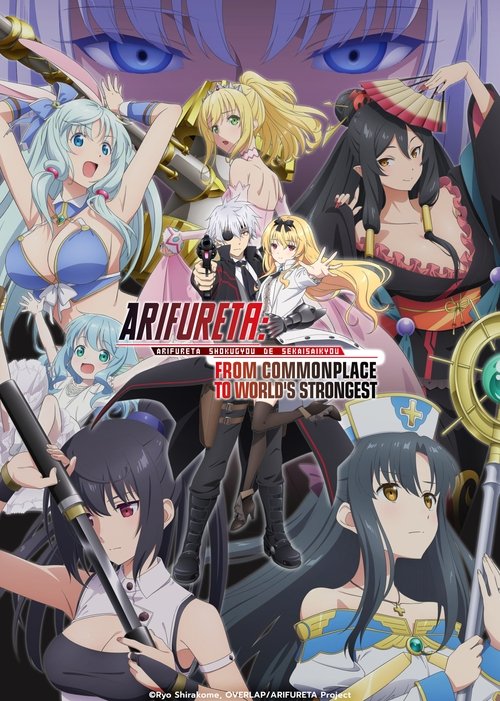
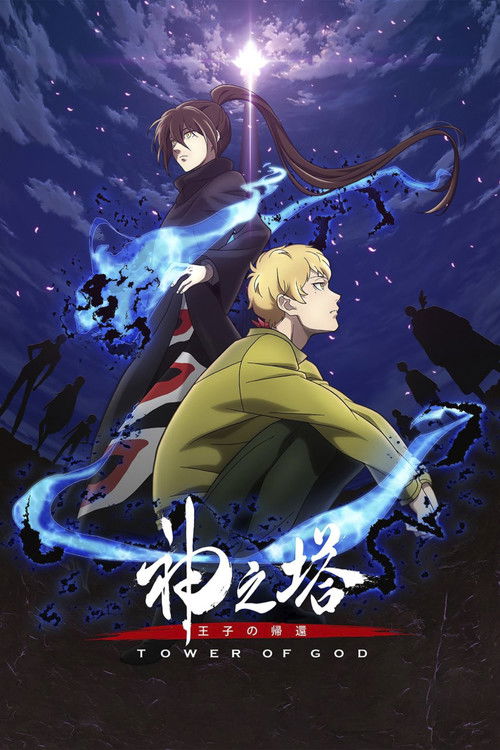
If you love stories about outcasts building chosen families
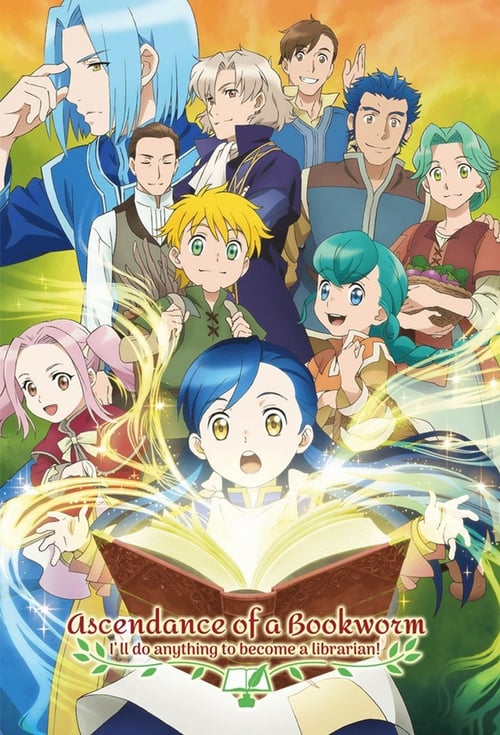
Found-family fantasy across every medium, where loyalty is earned rather than given
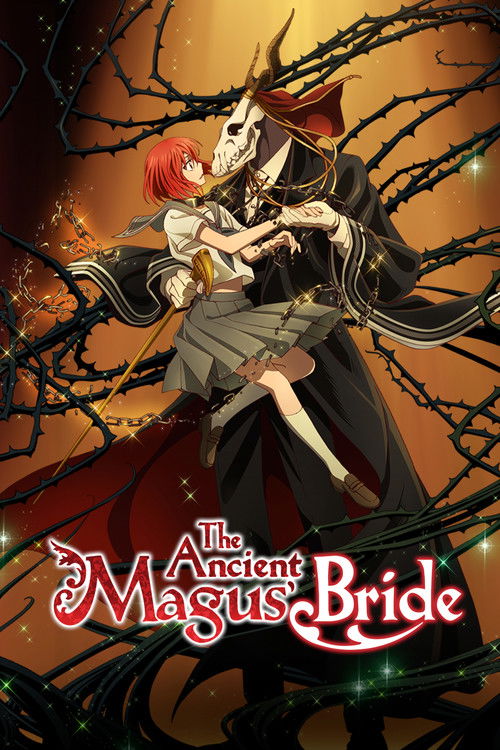
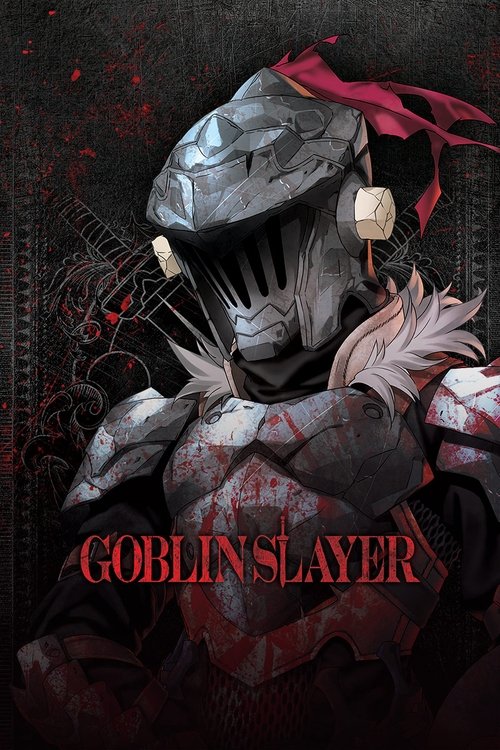
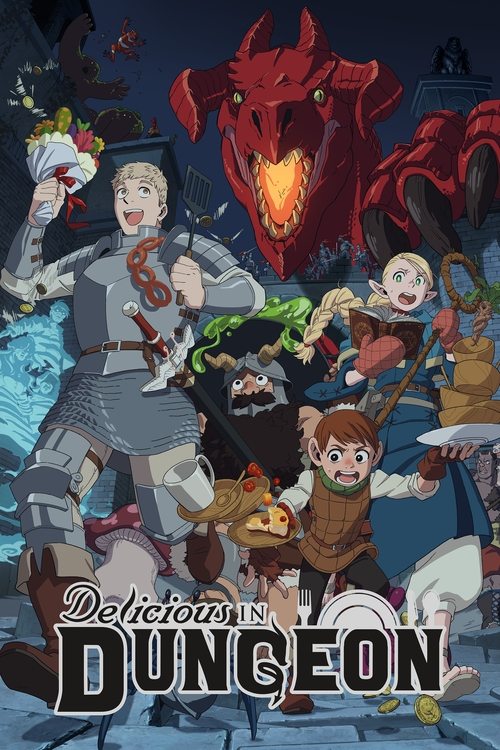
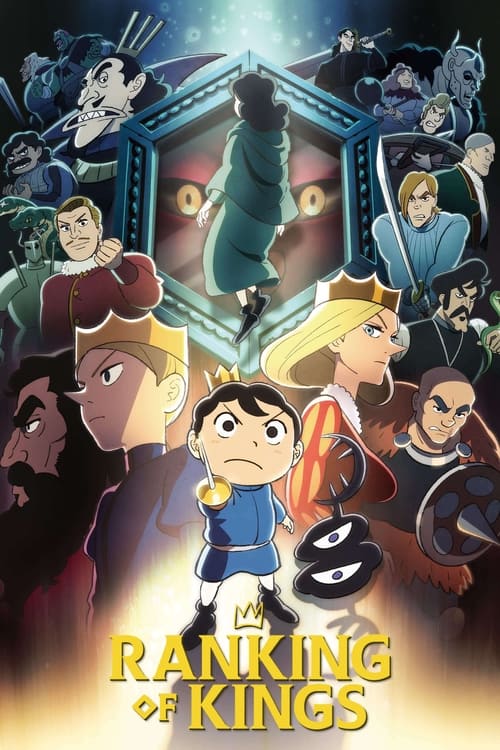
The definitive version: the anime, Season 1
The first season of the anime (2018) is where the story lands best. The pacing is relaxed enough to let the nation-building breathe, the production by 8bit is clean and confident, and the core arc, from Rimuru's first friendships in the forest through the founding of Tempest, pays off in a genuinely satisfying way. If you come through the light novel, you get more interiority; through the manga, you get Kawakami's expressive character work. But for most people, the anime's first season is the clearest path in, and the one that does the most with the premise.
The underrated one: The Slime Diaries
The Slime Diaries (2021) is consistently passed over because it is, by design, low stakes. There are no battles, no political crises, just Rimuru and the citizens of Tempest doing seasonal chores, celebrating festivals, and bickering about vegetables. That is exactly what makes it the best version of this franchise for character work. It is the only entry that slows down long enough to show why anyone would actually want to live in the world Rimuru is building. Fans of the main series who skip it miss more warmth and personality than anything in the later cours.
The one to approach with lowered expectations: Scarlet Bond
The 2022 theatrical film Scarlet Bond is not bad, but it exists primarily for viewers already deep in the lore. The original story it tells is serviceable, and the animation is a step up from the TV budget, but the film does not work as an entry point and offers little to casual viewers who found the TV pacing slow. Treat it as a bonus episode for committed fans, not as a standalone film experience. The same caveat applies to the 2026 film Tears of the Azure Sea, which continues the pattern: higher production values, lower narrative stakes, made for the converted.