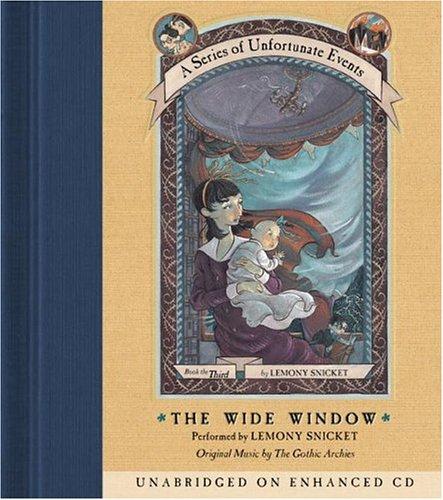

From page to screen, three times over
The Wide Window arrived in 1999 as the third installment of Lemony Snicket's A Series of Unfortunate Events, written by Daniel Handler under his pen name. It sent the Baudelaire orphans to Lake Lachrymose, to the rickety cliffside home of their terrified Aunt Josephine, and into another encounter with Count Olaf in disguise. The book was compact and dread-soaked, its villain posing as a nautical conman named Captain Sham, his scheme dependent on a forged, grammar-riddled note. Handler's series was a publishing phenomenon: thirteen books over nine years, sold in more than forty languages, built on the premise that children's fiction could be genuinely bleak and genuinely funny at the same time.
The story's first screen life came in 2004, when Paramount and Brad Silberling condensed the first three books into a single feature film. Jim Carrey played Olaf as a rubber-faced grotesque, and the movie earned solid box office while satisfying almost nobody who loved the books. The real adaptation came later: Netflix's A Series of Unfortunate Events (2017 to 2019) gave each book two full episodes, cast Neil Patrick Harris as a more theatrically sinister Olaf, and ran all thirteen books to their conclusion. The Wide Window got Episodes 5 and 6 of Season 1. It remains the only story in the series with three distinct adaptations: the source novel, the omnibus film, and the streaming series.
Every version of The Wide Window
The source and every screen adaptation, in order

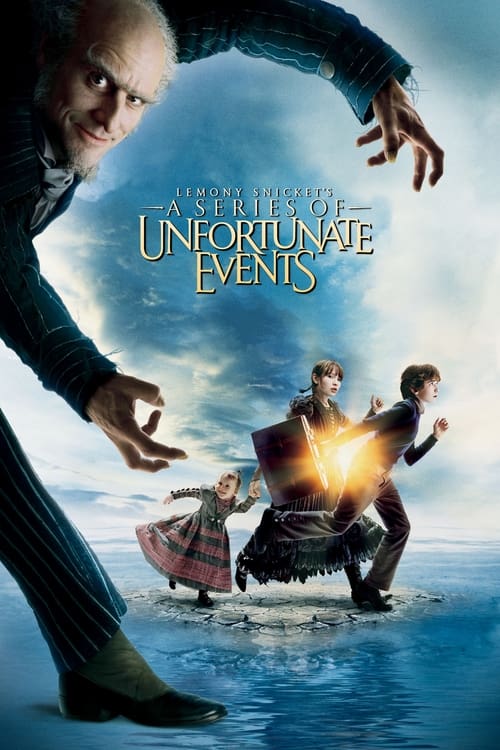
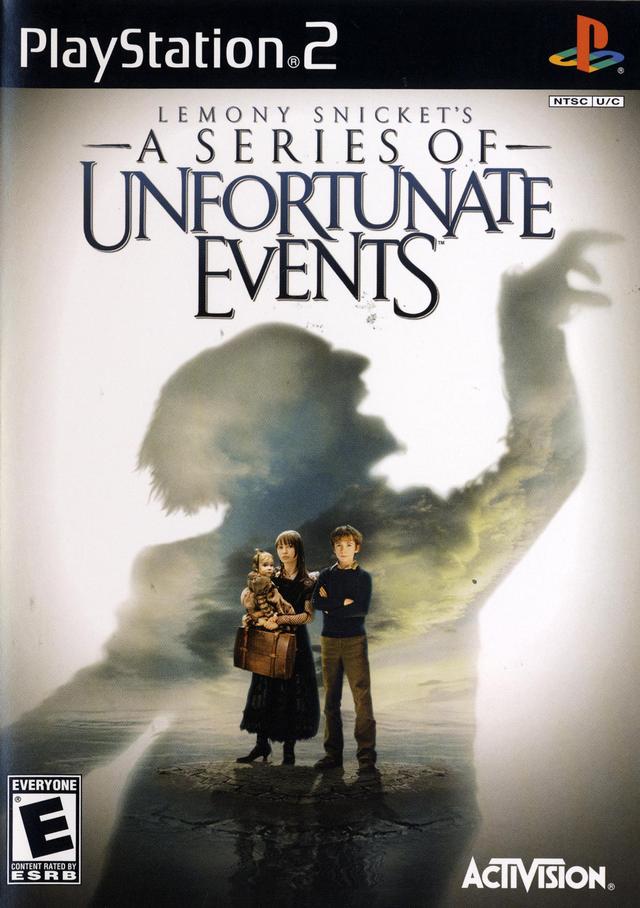
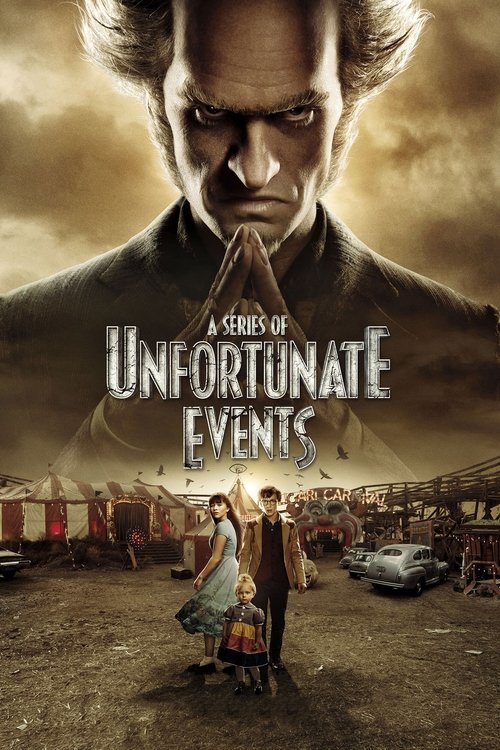
The Wide Window across the years
- 1999Novel published by HarperCollins The Wide Window
- 2004Feature film covers Books 1-3 Lemony Snicket's A Series of Unfortunate Events
- 2004Tie-in video game released Lemony Snicket's A Series of Unfortunate Events
- 2017Netflix Season 1, Episodes 5-6 A Series of Unfortunate Events
The Netflix series is the definitive version
The 2017 Netflix adaptation directed by Barry Sonnenfeld earns its place as the standard by doing the one thing the 2004 film could not: giving the story space. Episodes 5 and 6 of Season 1 follow the Wide Window plot faithfully, preserve Aunt Josephine's phobia-ridden characterization, and let the Lake Lachrymose atmosphere settle. Neil Patrick Harris plays Olaf with a theatrical menace that fits Handler's vision better than Carrey's mugging. The production design is purposefully artificial, the series knows where the whole thirteen-book story is going, and it gets to show you. Two episodes devoted to one slim novel is, it turns out, exactly what The Wide Window needed.
The novel remains the sharpest version
Handler's prose voice, the fictional Lemony Snicket narrator who addresses child readers with condescending sympathy, is genuinely difficult to carry into any screen medium. On the page, the running commentary on vocabulary, the fictional footnotes, and the narrator's own grief threading beneath the comedy are all intact and working at full strength. The 1999 novel is the only version that fully delivers the book's central joke: that it is instructing you in how terrible the world is while refusing to let you look away. Every adaptation softens this, by necessity. The novel does not.
The 2004 film is the one to approach with low expectations
Brad Silberling's 2004 feature has real visual charm. Rick Heinrichs's production design is inventive, and there are sequences that capture Handler's gothic-comedy register. But cramming three novels into ninety-eight minutes means The Wide Window gets perhaps twenty minutes of screen time: Aunt Josephine is barely sketched, and Olaf's Captain Sham disguise lands as a quick gag rather than a sustained piece of misdirection. It is a movie that wanted to be a franchise starter and ran out of road before it could become one. Watch it knowing what it is, and it works on its own modest terms.
If you love The Wide Window: gothic children's stories
Dark, funny, and unafraid to be genuinely bleak


If you love The Wide Window: villains in disguise
Stories built on an antagonist hiding in plain sight



If you love The Wide Window: orphans in peril
Children navigating adult worlds that keep failing them


More gothic orphans and dark whimsy
For Fans of Lemony Snicket
Explore the For Fans of Lemony Snicket guide →The story is not a happy one. It is in fact so dreadful that if you have not yet read it you may wish to put it down and read something more pleasant instead.Lemony Snicket (Daniel Handler), framing device used throughout A Series of Unfortunate Events