
A cinema that whispered
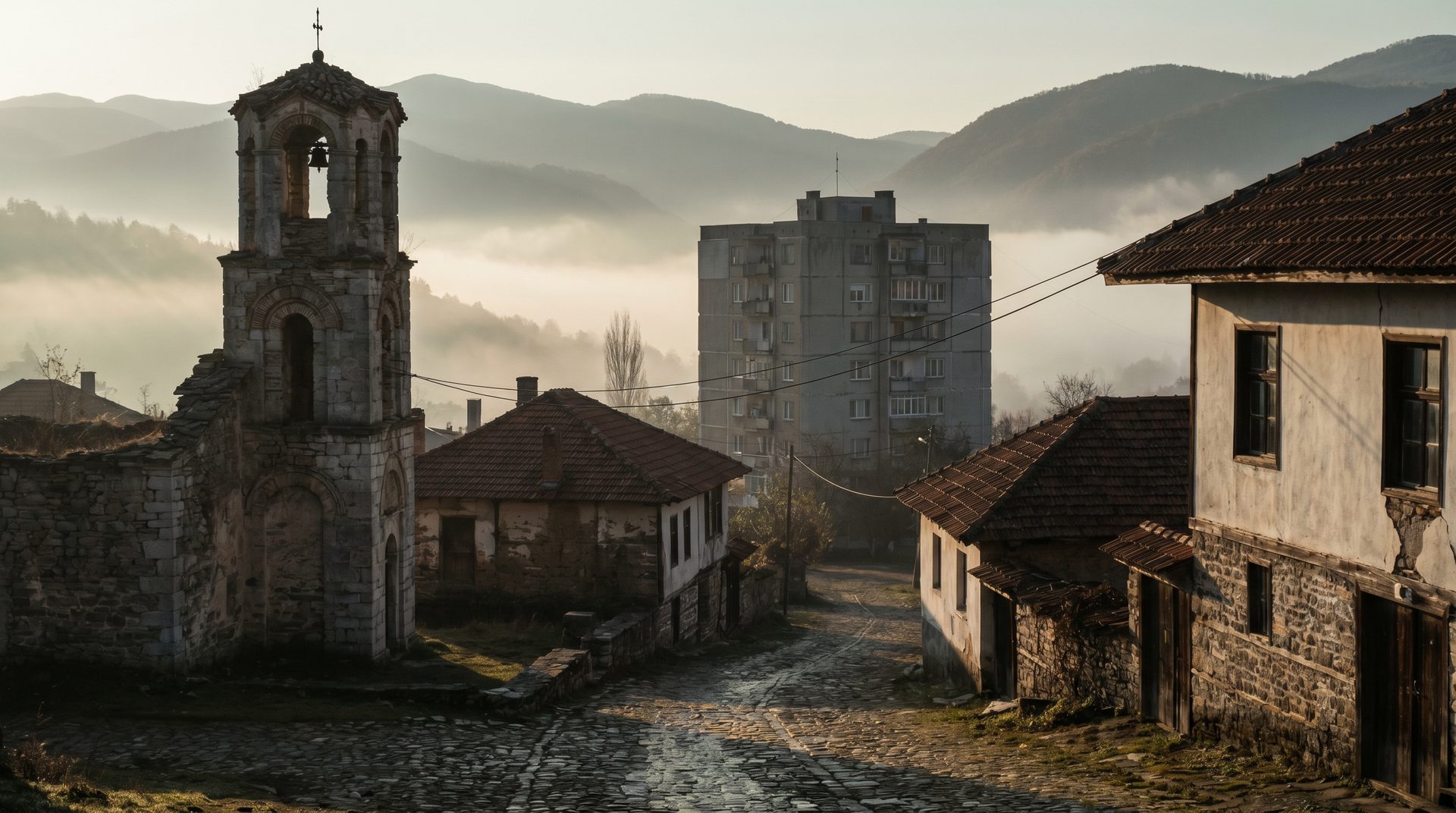
Bulgaria is a small country with an outsized habit of irony, and its cinema carries that habit like a birthmark. For most of the twentieth century Bulgarian film was state film: produced, funded, and censored through the studios in Sofia, first as a propaganda instrument and then, slowly, as a place where directors learned to say one thing on the surface and another underneath. The best Bulgarian movies are not loud. They work through allegory, through the deadpan endurance of ordinary people, through a kind of fatalistic comedy that treats history as weather, something you survive rather than direct.
The milestone that opened the door internationally was Rangel Vulchanov's The Peach Thief (1964), a doomed wartime love story between a Bulgarian woman and a Serbian prisoner that announced a poetic, humane register far from the socialist-realist template. Around it gathered a generation: Binka Zhelyazkova, one of the few women directing serious features anywhere in the Bloc; Vulo Radev, whose The Longest Night brought widescreen lyricism to the partisan genre; and later Georgi Dyulgerov and Hristo Hristov, who pushed the form toward formal ambition and quiet political risk.
Allegory as survival skill
The 1970s and 80s are the rich seam. With the studios humming and censorship a permanent fact of life, directors developed an oblique language. Georgi Dyulgerov's Advantage (1977) is a portrait of a petty con man and informer that doubles as a study of how a whole society learns to lie. Hristo Hristov's literary adaptations carried real weight, none more austere than The Last Summer. Lyudmil Staikov's vast Time of Violence (1988), drawn from Anton Donchev's novel about the forced Islamization of the Rhodope mountains under Ottoman rule, was an enormous historical fresco that arrived loaded with contemporary subtext, made during the regime's own campaign of pressure against Bulgarian Turks.
Comedy carried just as much freight. Bulgarian satirists skewered bureaucratic absurdity head-on, and no one did it sharper than Eduard Zahariev. His The Hare Census (1973) and Villa Zone (1975) are small masterpieces of social satire, treating the apparatchik mind as a comic subject precisely so they could survive saying it out loud.
The studio years: allegory, satire, and the historical epic
1970s and 80s, the peak of the socialist studio system

Bulgarian directors did not fight the censor so much as out-wait him. The patience in these films, the willingness to hold on a face until it tells the truth, is itself the politics.CrossBinge editors
A chronology of Bulgarian film
- 1915Bulgaria's first feature, a comedy short by Vasil Gendov, marks the birth of national production
- 1948The film industry is nationalized; the Boyana studios in Sofia become the engine of state cinema
- 1964The Peach Thief signals the poetic thaw and Bulgaria's first real international notice
- 1973Eduard Zahariev's satire The Hare Census sharpens the comic-allegorical mode
- 1977Dyulgerov's Advantage anatomizes the informer society Advantageous
- 1988Time of Violence, a sweeping Ottoman-era epic, becomes a late-socialist landmark
- 1989The regime falls; state funding collapses and production craters through the 1990s
- 2008Zift, a Bulgarian noir, wins a festival prize and signals a new generation
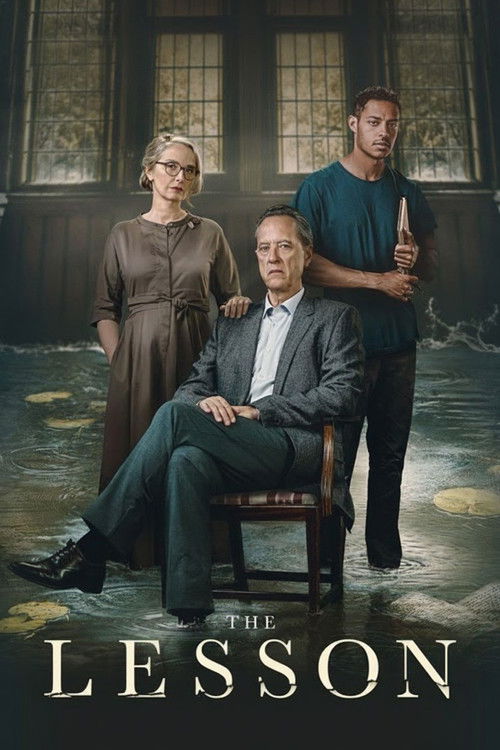
- 2014The Lesson launches the Grozeva and Valchanov duo, the face of the new Bulgarian realism The Lesson
- 2018Milko Lazarov's Yakut-set Aga confirms Bulgaria's small but respected art-house presence Sagaran
The cold new wave
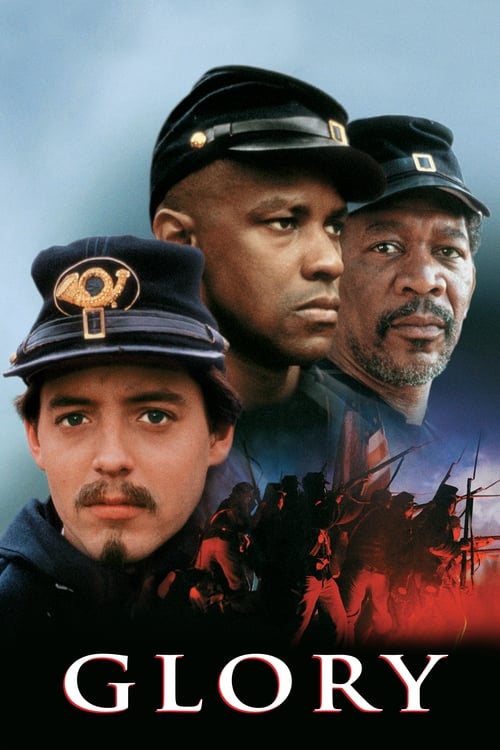
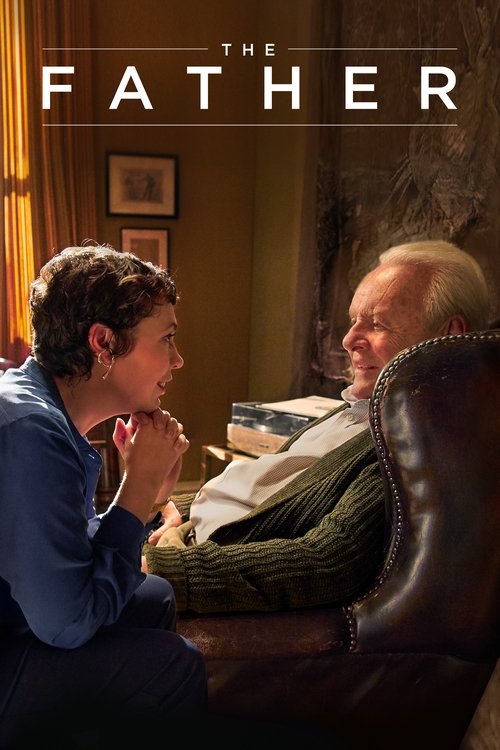
The 1990s nearly killed Bulgarian cinema. State money vanished and output dropped to a trickle. What came back, from the mid-2000s on, was leaner and angrier. Javor Gardev's Zift (2008) reinvented the country's past as pulp noir, shot in luminous black and white. Then came the husband-and-wife team Kristina Grozeva and Petar Valchanov, whose The Lesson (2014), Glory (2016), and The Father (2019) form a loose trilogy of ordinary Bulgarians ground down by an indifferent state and a corrupt economy. Their style is unsentimental to the point of cruelty, and very funny in the way only true despair can be.
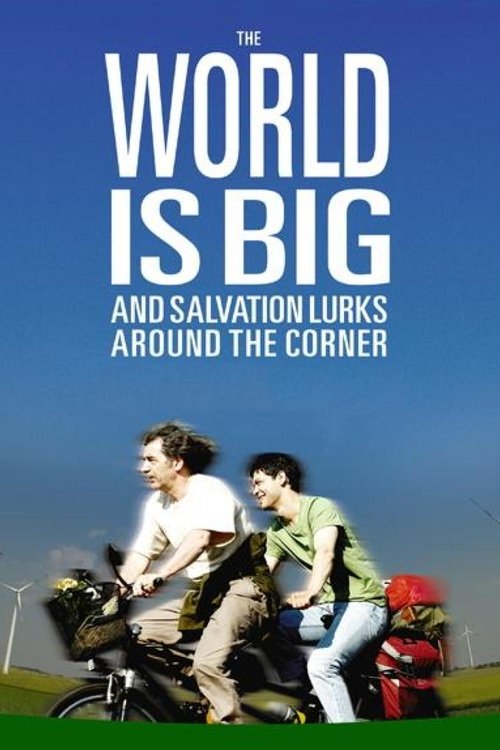
Around them sit other distinct voices: Stephan Komandarev's social dramas (The World Is Big and Salvation Lurks Around the Corner, Directions), Ralitza Petrova's harsh Godless (2016), and Milko Lazarov's austere, almost wordless Aga (2018), set among the Yakut in the far north. This is a cinema of restraint, hard light, and moral discomfort, and it punches well above the size of the industry behind it.
After the fall: the new Bulgarian realism
Post-2000, lean, ironic, internationally awarded