
The smallest national cinema that keeps showing up
Slovenian cinema is the work of a country that only became independent in 1991, made by a language community of roughly two million speakers. That scale shapes everything. There is no industrial machine here, no genre factory, just a handful of films a year carried by public funding (the Slovenian Film Centre) and the stubbornness of directors who keep working between television, theatre, and the festival circuit. The wonder is how often this tiny output punches into Cannes, Berlin, and Venice.
The first Slovenian feature with sound, Na svoji zemlji (1948), set the early template: World War II, the Partisan resistance in the Primorska region, a people defending their own soil. For decades, financed inside Yugoslavia, Slovenian production leaned on literary adaptation and historical drama, with a Ljubljana studio culture orbiting Viba Film. What changed the conversation was the late-1990s arrival of a sharp, melancholic, ironic generation, often grouped loosely as a Slovenian new wave, who traded heroism for the gray comedy of ordinary post-socialist life.
Janez Burger, Damjan Kozole, and the deadpan turn
If one film opened the door, it was Janez Burger's Idle Running (V leru, 1999), a black-and-white study of a perpetual student stalling out in a Ljubljana dorm. It was funny, broke, and emotionally exact, and it became a touchstone for a whole generation. Burger has kept reinventing himself since, most strikingly with the unsettling Ivan.
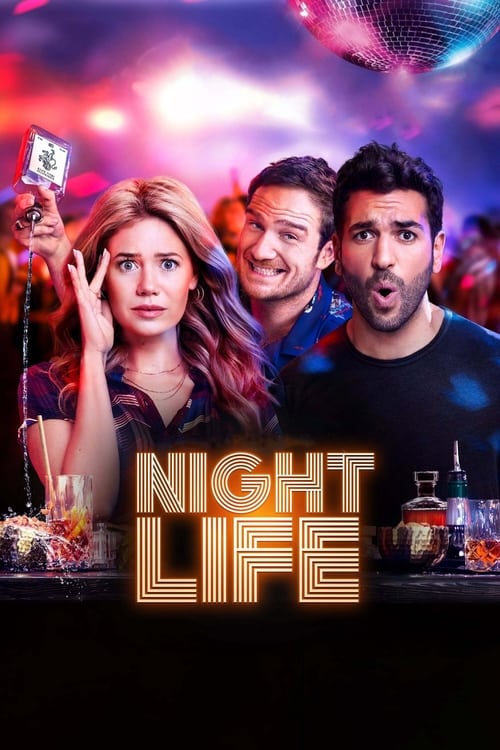
Damjan Kozole is the closest thing Slovenia has to a state-of-the-nation chronicler. Spare Parts (Rezervni deli, 2003) follows people-smugglers ferrying migrants across the border in a dying industrial town, and it competed at the Berlinale. He stayed with the same clear, unsentimental gaze in the chamber drama Nightlife (Nocno zivljenje). Alongside him, Jan Cvitkovic (Bread and Milk, the cult favourite Gravehopping) brought a poetic, morbidly comic touch, and Marko Nabersnik's Rooster's Breakfast (Petelinji zajtrk) became a rare domestic box-office phenomenon.
A cinema of two million people should not keep landing in Cannes. Slovenia's does, because it stopped trying to be epic and got honest instead.CrossBinge editors
Auteurs of the new century
Burger, Kozole, Cvitkovic and the directors carrying it now
A century of Slovenian film, briefly
- 1948First Slovenian sound feature, a Partisan-resistance drama set in Primorska
- 1991Slovenia declares independence; production must now stand on its own and finds new public funding
- 1999Janez Burger's black-and-white debut becomes a generational touchstone
- 2003Damjan Kozole's people-smuggling drama competes at the Berlinale Spare Parts
- 2007Marko Nabersnik's literary adaptation becomes a domestic box-office hit
- 2016Ziga Virc's pseudo-documentary about a faked space programme charms the festival circuit
- 2019Gregor Bozic's painterly Soca-valley fable premieres at Toronto
On the page: the literature behind the screen
Slovenian cinema is unusually literary, partly because the language's identity has always lived in its books. The national poet France Preseren and his Sonetni venec (Wreath of Sonnets) sit at the centre of the culture the films keep circling. Ivan Cankar, the great modernist of short fiction and drama, supplied generations of adaptations and the moral seriousness that even the comedies inherit. In the modern era, Drago Jancar (The Tree with No Name, I Saw Her That Night) is the most internationally translated novelist, and Tomaz Salamun reinvented Slovenian poetry for a global readership. Marko Nabersnik's Petelinji zajtrk came straight from Feri Lainscek's novel, the strongest recent case of book feeding screen.
The Slovenian sound
From the avant-garde provocation of Laibach to a folk-jazz icon
Beyond film: Laibach, and the limits of a small market
Slovenia's loudest cultural export is not a film at all but Laibach, the confrontational industrial band and visual-art collective born in the mining town of Trbovlje in 1980, the engine of the Neue Slowenische Kunst movement. Their deadpan totalitarian theatre is the same irony that runs through the new-wave films, just turned up to a roar. On the screen-game side, honesty matters: Slovenia has a respected studio scene (Outfit7's Talking Tom is the obvious example), but there is no canon of Slovenian-language narrative games the way there is for films and books, so this guide does not pretend one exists. The center of gravity stays where it has always been: a few unforgettable films a year, made against the odds, in a language almost nobody outside the country speaks.