Nobody Can Prove Jamir Nazir Wrote His Prize Winner, Including Jamir Nazir

Jamir Nazir won the 2026 Commonwealth Short Story Prize for "The Serpent in the Grove," a story about a farmer whose plot to kill his wife falls apart. Nazir comes from a rural sugarcane village in Trinidad, which made the win a good story in its own right. Then the AI detector Pangram flagged the entire text as artificial, and the good story curdled. Commenters went further than the software: some now claim Nazir himself, along with two other finalists, may be a fabrication.
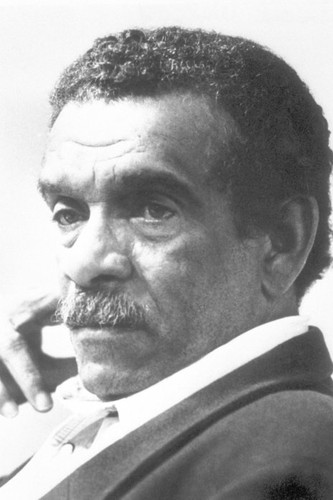
This week Nazir answered, and the answers made everything stranger. Speaking to Will Oremus at The Atlantic, he said he uses AI for research only and compared it to a typewriter. He dictates his fiction into an Android phone, he explained, because neuropathy from diabetes and cancer treatment has damaged his hands. That account is plausible and sympathetic. It also sprang leaks. He named Derek Walcott as a major influence on his work, then could not name a single Walcott poem. Influence leaves fingerprints. A writer shaped by a poet can usually quote him.
The case against the case is real too. AI detectors misfire, and one tool's verdict is thin ground for unmaking a man's reputation. There is also something sour in the reflex itself. A polished story arrives from a rural Trinidadian village, and the literary internet's first instinct is that no one from there writes like this. That suspicion has a class smell and a geography smell. Neither survives scrutiny any better than the story does.
The institutions are not waiting for a resolution. Granta published "The Serpent in the Grove" with an addendum attached, the literary equivalent of a warning label. Separate reporting says the magazine will stop publishing Commonwealth Prize winners going forward. Not this winner. All of them, indefinitely.
The real casualty is trust, and not the soft kind. The prize cannot demonstrate that its winner wrote his story. Nazir cannot demonstrate it either; no interview answer settles the question, and every stumble deepens it. Literary culture ran for centuries on an unspoken warranty, that a byline meant a person, and that warranty is now void with nothing behind it. Our verdict: whatever Nazir did or did not do, the arrangement we are left with, a prize that cannot vouch for its winner and a winner who cannot vouch for himself, is the new standard one. Everyone loses under it. Writers from the margins, who now get suspicion as a welcome gift, lose most of all.