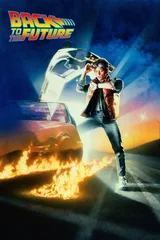
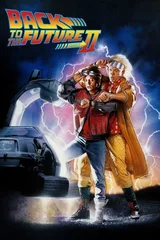
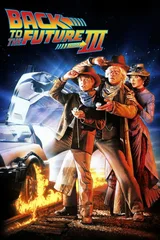
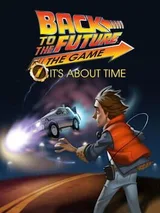
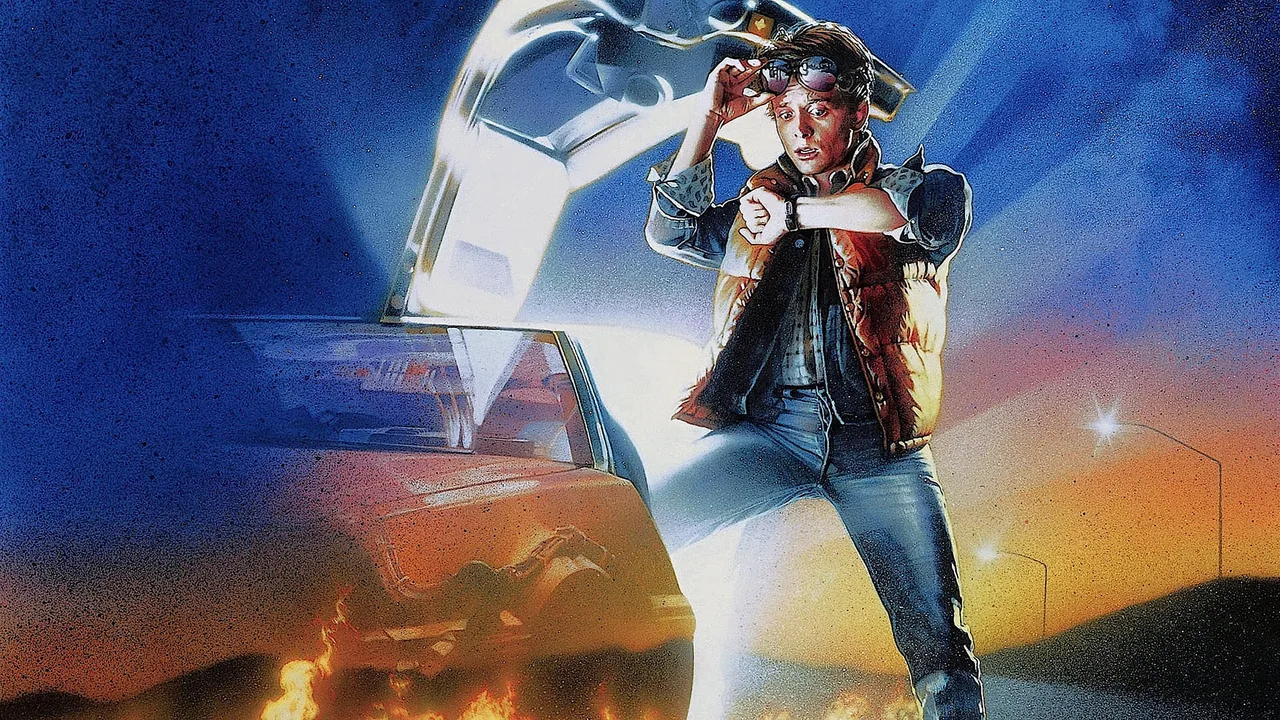
What Would Back to the Future 4 Have Looked Like?
Bob Gale has been asked the same question at every convention and anniversary panel for thirty-six years, and he answers it the same way every time. In October 2010, on a Telltale Games forum, a fan asked how involved he had been in pre-production on a fourth film. "Bob Zemeckis and I never planned a BTTF-4, so there was never any pre-production to be involved with!" He and Robert Zemeckis had "one or two fanciful conversations about it" in the mid-1990s, he added, and the talk stopped for good once Michael J. Fox revealed he had Parkinson's. Same year, same message from the director, in Empire's oral history of the trilogy: "Three is a dramatic number. It's a three-act structure. Four is even. Four is boring."
Climb the ladder and the wording hardens. In 2015, the year the real world caught up with Back to the Future Part II, Zemeckis told The Telegraph a remake "can't happen until both Bob [Gale] and I are dead," then compared it to recasting Citizen Kane: "What folly, what insanity is that?" Gale, to the BBC in 2020: "You know, you don't sell your kids into prostitution. It was the wrong thing to do. We put 'The End' at the end of part three." At the Saturn Awards in February 2025 he cut it to two words that Collider printed in full, and this spring he offered the tidier version: "Never, or f--k you." In June, promoting the annotated screenplay book due out October 20, he gave the fullest answer yet.
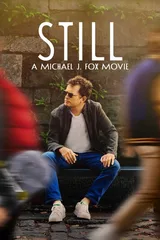
The other two men in the DeLorean are softer. Christopher Lloyd has said since 2015 that he "would love to do a sequel," provided Fox is in it, Zemeckis directs and Gale writes. Fox, promoting STILL in 2023, waved it off: "I'm not fanatical. Do what you want. It's your movie. I got paid already." And Zemeckis admitted in late 2024 that the studio keeps calling, "every six months" (he conceded that was an exaggeration), to ask "Isn't there anything we can figure out to do here?" A fourth film "just isn't in the cards." The one thing he would shoot is the stage musical, "just like [Mel Brooks] did with The Producers," and Universal, in his words, "don't get it."
The sentence they each say themselves
The refusals have a second layer, and it is Parkinson's. Gale, on the Collider Podcast in 2020: "Do we want to see Marty McFly at age sixty with Parkinson's Disease? Did we want to see him at age fifty with Parkinson's Disease? I would say 'No, you don't want to see that.'"
Fox does not disagree. Asked in 2023 whether a fourth film was discussed after Part III, he said he was in the early stages of Parkinson's by then and doubts he would have wanted to take it on. At the fortieth anniversary last October: "I'll be on the street and some kid will go, 'There's Marty McFly!' No, this is an old man." Only Lloyd pushes back, gently: "I think regardless of the Parkinson's, he'd probably jump on the role and he'd be great."
The official position was settled before most of the people asking were born, which makes it odd that the question has a real answer anyway.
Part IV has been made four times already
A fourth Back to the Future story exists, officially, with Gale's name on it, and it has been told several ways. His rule for all of it, from that 2010 Q&A: "Only the movies are canon. Everything else fits into the 'what-if?' category, or might be canon in some alternate universe." Read the what-ifs together and they tell you exactly what a Part IV would have been.
Start with the Telltale game, five episodes from December 2010 to June 2011, Lloyd voicing Doc and Claudia Wells back as Jennifer for the first time since 1985. Six months after Part III, Doc has vanished and the DeLorean comes home empty except for Einstein. Marty traces him to August 1931, where Doc has been arrested for torching a speakeasy and is about to be killed by a gangster named Kid Tannen. What follows is a rescue, a Tannen-run alternate 1986, a detour in which Marty keeps teenage Emmett from seeing Frankenstein and gets a second, worse Hill Valley run by a conformist "Citizen Brown." It feels like a real sequel because it is built from one. Gale, 2010: "there were things we discussed for BTTF-2 which we didn't use that have made it into the game. These involved exploring the history of Doc's family (we thought it would be fun to have Christopher Lloyd play his mother), going back to the days of Prohibition in which Biff's ancestor would be a bootlegger, and a visit to the 1960's." The finale, OUTATIME, ends with three more DeLoreans landing in 1986, each carrying a future Marty begging for help. Marty and Doc drive off to enjoy the present and leave them arguing. That is Gale's entire position on sequels, staged as a gag, with Fox himself voicing the three future Martys.
The IDW comics did the other half. From October 2015 Gale co-wrote a run that answered questions fans had shouted for decades, starting with how Marty and Doc met in 1982. Then Tales from the Time Train picked up the literal final shot of Part III. Gale, 2017: "Doc says, 'Nope, already been there.' I said to John, 'Well, we've gotta pay that off. Doc's already been to the future? We've got to show that.'"
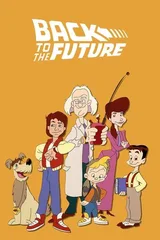
Before either there was the 1991 animated series, 26 episodes on CBS, and it is a show about the Browns. Doc, Clara, Jules, Verne and Einstein settle on a farm in 1991 Hill Valley; Marty is around, but the kids drive it. Mary Steenburgen and Thomas F. Wilson returned as Clara and Biff, and Lloyd hosted live-action science segments with a lab assistant named Bill Nye, his national television debut, two years before Bill Nye the Science Guy.
Then the musical: book by Gale, songs by Alan Silvestri and Glen Ballard, Roger Bart as Doc. It closed in the West End this spring after five years and 1,913 performances, and it is the continuation both Bobs point to as the answer. Gale, on its red carpet in 2023: "People say, 'Why don't you guys do Back to the Future Part 4?' When they say that, they're saying, 'I want something that makes me feel as good as the original did.' That's what this is." He rewrote it rather than transcribe it ("The skateboard chase goes away, and it changes to a lunchroom chase"), because nobody should leave thinking they would have been better off rewatching the film. And the 2015 short Doc Brown Saves the World has Doc erase hoverboards and Mr. Fusion from history: the official in-joke for why the real October 21, 2015 looked nothing like the film.


The film that was cut out of the films
The unmade material points the same way. The first draft of Back to the Future had a stationary refrigerator for a time machine (Steven Spielberg worried children would climb into one) and ended with Marty driving into a nuclear test explosion, cut as too complicated and expensive.
The bigger cut is in Part II. Gale's first draft did not send Marty back to 1955 for the third act. It sent him to 1967, with Biff holding the sports almanac and Lea Thompson's Lorraine as a flower child; the paradoxes got unmanageable and 1955 won. "Biff ended up with the sports almanac in 1967 because I thought it would be cool to do the '60s." That 1967 act is the closest thing to a Part IV script that ever existed. Zemeckis's regret about Part II is structural: "I think it would have been a smarter move to have let people know it was part two of a three-part series." And the "To Be Continued" card fans remember from the first film was a Universal addition to the VHS, teasing a sequel nobody had planned; it was pulled for DVD. Had they known, Gale says, "we would have never have Jennifer get in the car."
So what would Part IV have looked like?
Put the evidence on one table and a film assembles itself, and Marty is not the lead. Look at where every continuation points the camera. The cartoon is about Jules and Verne. The game is about Doc: his arrest, his teenage self, the tyrant he could have become. The comic Gale most wanted to write is about where the time train went. Marty turns up in all of them, but the story belongs to the Browns. So Part IV is a Doc Brown film, set in a 1967 Hill Valley we have never seen, with a Tannen who is neither Biff nor Buford, and the time train as its engine. The DeLorean was an accident a teenager kept crashing into his own family. The time train is a choice, built by a man with a family who has, by his own admission, "already been there." A father who has seen the future and comes back anyway is a different film from three about a kid who has not.
There is a version with Marty in it. It is the honest one, and the one they will never make. The trilogy's engine is watching your parents at your own age. The only Part IV that pays that off is Marty at sixty, watching his own children, the ones Part II fretted over, do it to him. That means an older Fox on screen, and the men who own the story have said they do not want to see it. Gale, in June: "who wants to see a Back to the Future movie without Michael J. Fox? Nobody wants to see that. And he can't do it. And do we even want to see Marty McFly at age 60? We don't want to see that, either. So, let's leave well enough alone."
This is where I part company with the fans. A fourth film would not have to be bad. The trouble is that the film they want already exists, in pieces, and the pieces are better for being what-ifs. The game gets to kill Doc in 1931 and turn him into a tyrant because none of it counts. A canonical Part IV would have to pick one Marty, one timeline, one ending, and own it forever. Gale's line this spring is the right one: "When you go back to the well too many times, the water doesn't taste very good anymore." The what-ifs are the sequel, and they have a freedom the film could never afford.
The catch-up order, if you only know the films
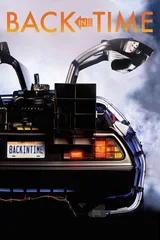
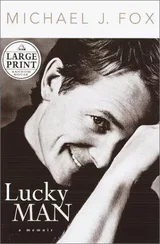
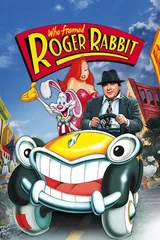
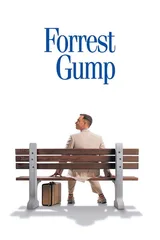
Watch the trilogy again first, in one sitting; Part II reads differently once you know it was written as a middle chapter. Then play the Telltale game from Episode 1 through OUTATIME, the only continuation with Lloyd, Wells and Fox actually in it. The 1991 animated series is next, and shorter than you fear. Then the two documentaries: Back in Time, the Kickstarter-funded 2015 documentary, and STILL, the film Fox made instead of Part IV and the better use of an evening. Read his memoirs alongside it, Lucky Man and No Time Like the Future. And for the second half of the Zemeckis answer, the films he made when he did not make a fourth. Who Framed Roger Rabbit sits between Part I and Part II, and it is where the sequels' comic nerve went first. Forrest Gump is a man carried through American history with no machine at all, a time travel story in the way the trilogy is, about how little say any of us has over the year we were born into.