Ghost in the Shell's Hollywood Remake Missed the Point
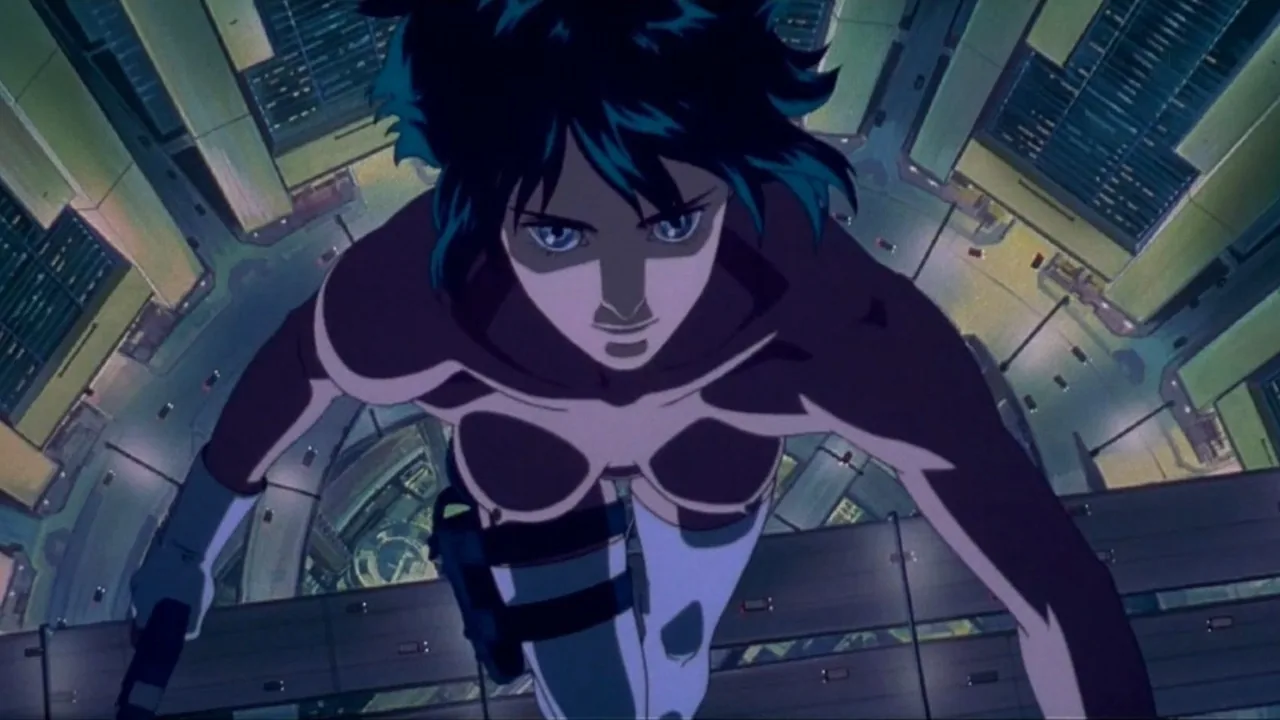
This Friday, September 18, Mamoru Oshii's Ghost in the Shell comes back to North American theaters as a 30th-anniversary 4K re-release from Lionsgate, on the same day Zach Cregger's Resident Evil opens. Oshii's film opened in Japan in November 1995 and reached the United States in March 1996. It runs 82 minutes.
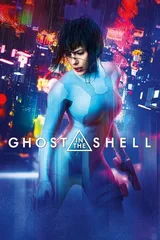
Its Hollywood remake, the 2017 Ghost in the Shell, starred Scarlett Johansson as the Major and opened in the United States in March 2017, in IMAX and 3D. It runs 107.
So the argument every fan of this franchise has had at least once is back on the table: which one? The original, and it isn't close. The remake is handsome, and plenty of it is faithful. What sinks it is one decision about what the Major wants, and the rest of its problems grow out of that decision.
What Oshii did with 82 minutes
Oshii did not go looking for this job. He had pitched Bandai Visual a different project and was asked to adapt Masamune Shirow's 1989 manga instead. He found in it, as he said in Production I.G's production report, "an immediate message for our present world." Few films, he felt, showed the power of computers clearly, and he thought that theme "would be more effectively conveyed through animation."
He has also said his taste for philosophy frustrated producers, because he is so sparing with action, and he has admitted that a movie with more action would sell better. He kept making his films his way anyway.
That restraint is the film. New Port City is modeled on the real streets of Hong Kong, which Oshii called the perfect subject for the film, with its countless signs and cacophony of sounds, and the artists' early sketches stressed how chaotic, confusing and overwhelming the city could be. The images came from a process called digitally generated animation, cel work and computer graphics combined, with light and shadow worked into the cels themselves; art director Hiromasa Ogura called it "a very unusual lighting technique." Character designer Hiroyuki Okiura made the Major more mature and serious than Shirow's version, trading the manga's comic faces for someone wistful and contemplative, and Atsuko Tanaka gives her voice.
Then there is Kenji Kawai's score. The opening theme, "Making of a Cyborg," mixes classical Japanese music and min'yō folk with Bulgarian harmony, and its haunting chorals are a wedding song sung to dispel all evil influences. Hearing that in a theater, with the picture in 4K, is most of the case for buying a ticket on Friday.
The one change that sank the remake
The remake renames the Major Mira Killian and builds its plot around her trying to stop a mysterious terrorist and investigate her past. That second half of the premise is the whole problem.
In 2009, more than seven years before the remake opened, Steve Rose put his finger on what made Oshii's film different, in a Guardian piece about its influence: "Unlike the replicants in Blade Runner, the techno-slaves of The Matrix or the robot in AI, Ghost's cyborg heroine does not seek to regain her 'lost' humanity." Oshii's Major is not trying to recover who she was. She is asking, in Rose's words, whether she possesses "a 'ghost' or a soul," or is just a machine. The film lets that question stay uncomfortable for all 82 minutes.
The remake turns it into a missing-persons case. Peter Suderman, writing for Vox days after it opened, named the swap exactly: "The search for the idea of a soul has been streamlined and Westernized into a simple quest for individual identity and memory." A quest implies an answer, and the remake spends its extra 25 minutes chasing one. Oshii's film never trades its question for a case to close, and it trusts you to carry that question out of the theater.
None of that makes the remake worthless. The Rotten Tomatoes consensus credits it with "cool visuals and a compelling central performance from Scarlett Johansson," and even Suderman called it "a visual marvel, often faithfully replicating key scenes and images from the original film." It copied the pictures and rewrote the question behind them.
It also carried a casting fight it never shook: the choice of non-Asian actors, Johansson above all, drew accusations of whitewashing in the United States. One detail worth knowing if you give it a fair shot anyway: in the Japanese dub, Atsuko Tanaka, Akio Ōtsuka and Kōichi Yamadera reprise the roles they played in Oshii's films and the Stand Alone Complex series. Even the remake, in Japanese, sounds like the original Major.




What The Matrix took
When the Wachowskis were pitching The Matrix, they showed Oshii's film to producer Joel Silver and said: "We wanna do that for real." Lana Wachowski and Lilly Wachowski took more than a mood. The Matrix's falling green code was inspired by the opening credits of Ghost in the Shell, which CG director Seichi Tanaka generated from code, and that code was the names of the film's own staff written in a computer language. The way the Matrix's characters plug in through holes in the backs of their necks mirrors how Oshii's cyborgs connect.
Rose's verdict in The Guardian is the fair one: The Matrix "wasn't quite Ghost in the Shell 'for real', but it is indebted to it." Oshii has heard enough about it.
The chain runs further back than 1995. Akira, Katsuhiro Otomo's 1988 film, inspired a wave of Japanese cyberpunk that included Shirow's Ghost in the Shell, and John Gaeta cited it as an artistic inspiration for the bullet-time effect in the Matrix films. Next to it sits Ridley Scott's Blade Runner from 1982: the British Film Institute counts Akira as a vital cornerstone of cyberpunk alongside Blade Runner and Neuromancer, and Rose called Oshii's story a future-noir thriller along the lines of Scott's film. Watch the four in order and the family resemblance is hard to miss. So is the place where Oshii broke from the family. In Rose's comparison, Blade Runner's replicants and The Matrix's techno-slaves are fighting to get back a humanity they lost. Oshii's Major wants to know whether there is anyone in there to want anything.
Where to start, and where to stop
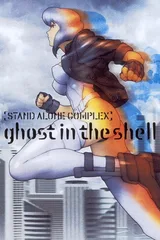
Start with the film in theaters, then go wide before you go deep. Ghost in the Shell: Stand Alone Complex is the franchise's big, livable version: Kenji Kamiyama's two seasons, 52 episodes in all, with a Yoko Kanno score and a first season built around a hacker known as the Laughing Man. Some reviewers felt it lacked the original film's depth. That misses what it is for. It is where you spend time with Section 9, and it earns the hours.
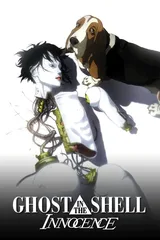
Then Ghost in the Shell 2: Innocence, Oshii's 2004 return and a competitor at that year's Cannes Film Festival. His first decision was that the Major would not be its main character, which makes it Batou's film and the natural second feature. It is denser and more quotation-heavy than the first, and the chanting chorus from the first film was expanded to 75 singers in a recording session that ran 14 straight hours.
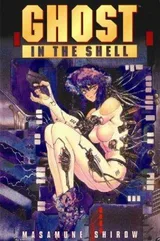
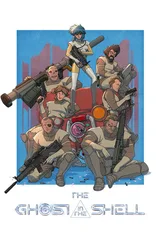
Shirow's manga is a different animal. His Major is younger, funnier and more rebellious, and the pages are thick with his footnotes on technology and philosophy. The newest screen version is Science Saru's The Ghost in the Shell, a ten-episode series based on the manga, directed by Moko-chan with scripts by Toh EnJoe. It began July 7, wrapped last Tuesday, September 8, and streams on Amazon Prime Video.
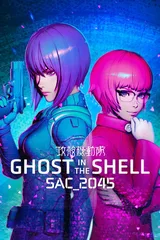
Leave Ghost in the Shell: SAC_2045 for the very end, if you get to it at all. The 3DCG Netflix series drew a 13 percent Rotten Tomatoes approval for its first season, and Anime News Network's Theron Martin called it "easily the weakest entry in the franchise so far." As for the remake, watch it after the original, as a side-by-side. It is the quickest way to see what Oshii's film is actually about, because you will notice exactly where the new one stops asking and starts explaining.