Is American Hagwon Worth 656 Pages?
Nine years after Pachinko, Min Jin Lee is back this Tuesday, September 29, with American Hagwon, and it is a doorstop: 656 pages from Cardinal. If you loved Pachinko, you want to know whether the new one earns that weight. Mostly it does, depending on what kind of reader you are.
The family at the center is the Kohs: Helen and John Koh and their three children, Bo, DH and Mido, move from Seoul to Sydney and eventually to Orange County, across fifteen years from 1992 to 2007. A work mistake by John, then the 1997 Asian financial crisis, knocks the family out of the comfortable life they had built. What survives is the faith that education will save the next generation. A hagwon is a Korean cram school, a private tutoring academy, and the one here, Eagle Academy, is where the children end up working. Kirkus boils the novel down to a single question: "What makes a good life?"

What the critics are split on
The early reviews mostly love it. Book Marks counts four raves, one positive review, two mixed and no pans. Mina Leazer in the Boston Globe called it "well worth the wait" and wrote that "Lee brings a precise scalpel to the Korean diaspora." Kirkus put it plainly: "The author's wisdom is a gift to her readers."
The dissent is specific, and worth taking seriously. Sam Sacks in the Wall Street Journal found the prose plain enough to drag: "The polite reviewerese for this kind of writing is 'workmanlike,' and it often feels like work to get through it." Sanjena Sathian at Vulture praised how the book shows history landing on private lives, then added, "Yet we learn little about the inner lives of its subjects."
Read the two complaints next to the raves and they describe the same book. It is the Pachinko method at even larger scale: a lot of people, a lot of years, big forces pressing on ordinary families, and a narrator who moves across all of them rather than burrowing into one head. If that is what you loved about Pachinko, this is more of it, about a world (tutoring, test scores, parents who give up careers) that is closer to home for many readers than 20th-century Japan.
The verdict
Worth it, for the right reader. Read American Hagwon if you want a family saga you can live in for a month, if you went through a hagwon or grew up with parents who treated grades as survival, or if you finished Pachinko wishing it kept going. Skip it, or borrow it from the library first, if the WSJ's word "workmanlike" is exactly the thing that makes you put a book down. Even the raves praise its reach, not its sentences.
Where to start
If you have never read Lee, do not start here. Start with Pachinko, her 2017 novel about a Korean family in Japan across generations, a National Book Award finalist. It is the best proof her approach works, and American Hagwon will make more sense once you know the rhythm.
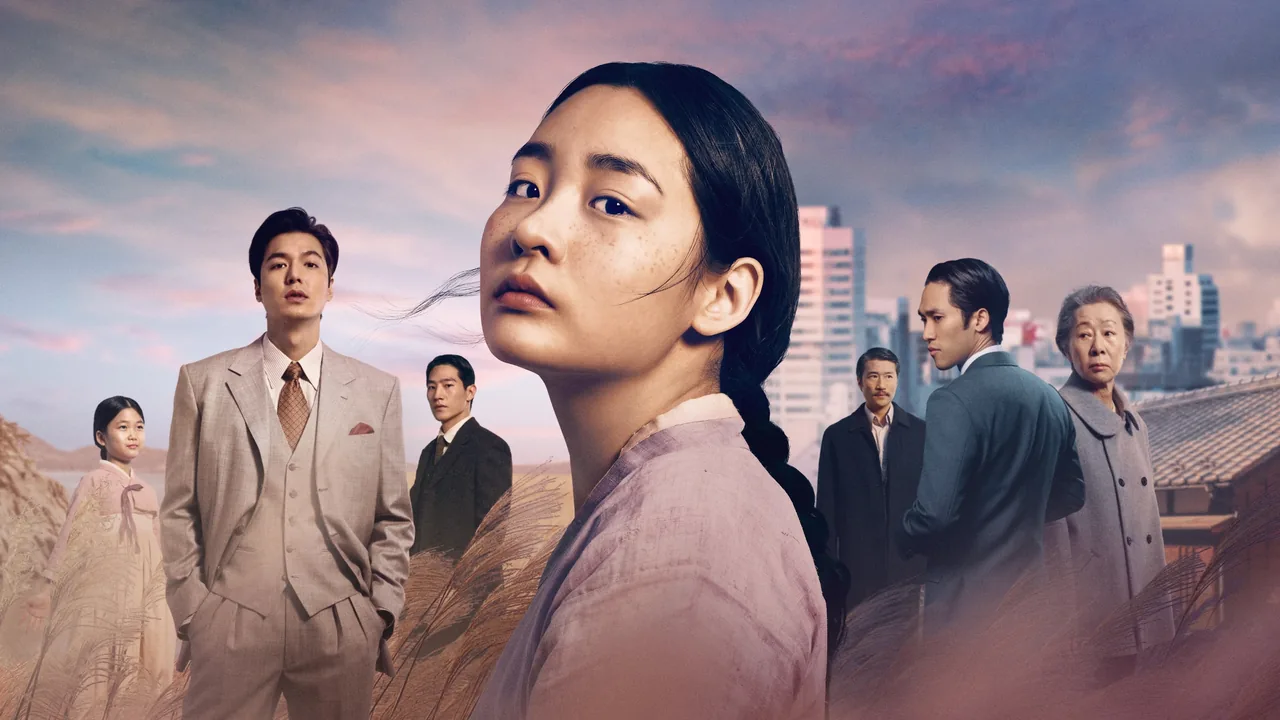
If you would rather watch first, Pachinko on Apple TV+ ran two seasons of eight episodes, in 2022 and 2024, in Korean, Japanese and English, and both seasons sit at 97% on Rotten Tomatoes. It is a gorgeous way in.
Then American Hagwon. Save Free Food for Millionaires, her 2007 debut, for last: the Globe notes Lee now frames the three books as parts of one Diaspora Quartet, with a fourth, The Marshall Plan, still to come. That gives you something to read while you wait.