Kind of Blue Belongs Second on the Shelf
Someone hands you Kind of Blue and tells you it is the greatest jazz album ever made. You put it on. It is lovely. Forty five minutes later it is over and you cannot describe one thing that happened on it, because it behaved perfectly while you cooked dinner. That is the trap under the most recommended record in jazz: it is the easiest one to fail to listen to, and a newcomer who meets it cold comes away with a nice mood and no map.
Miles Davis recorded for five decades and changed the shape of the music at least four times, which makes him both the obvious way into jazz and the easiest place to get lost inside it. His catalog is also the best organised beginner's course the music has, because every turn is audible as a turn. You just have to take the albums in an order that teaches, and the famous one is not the first lesson.
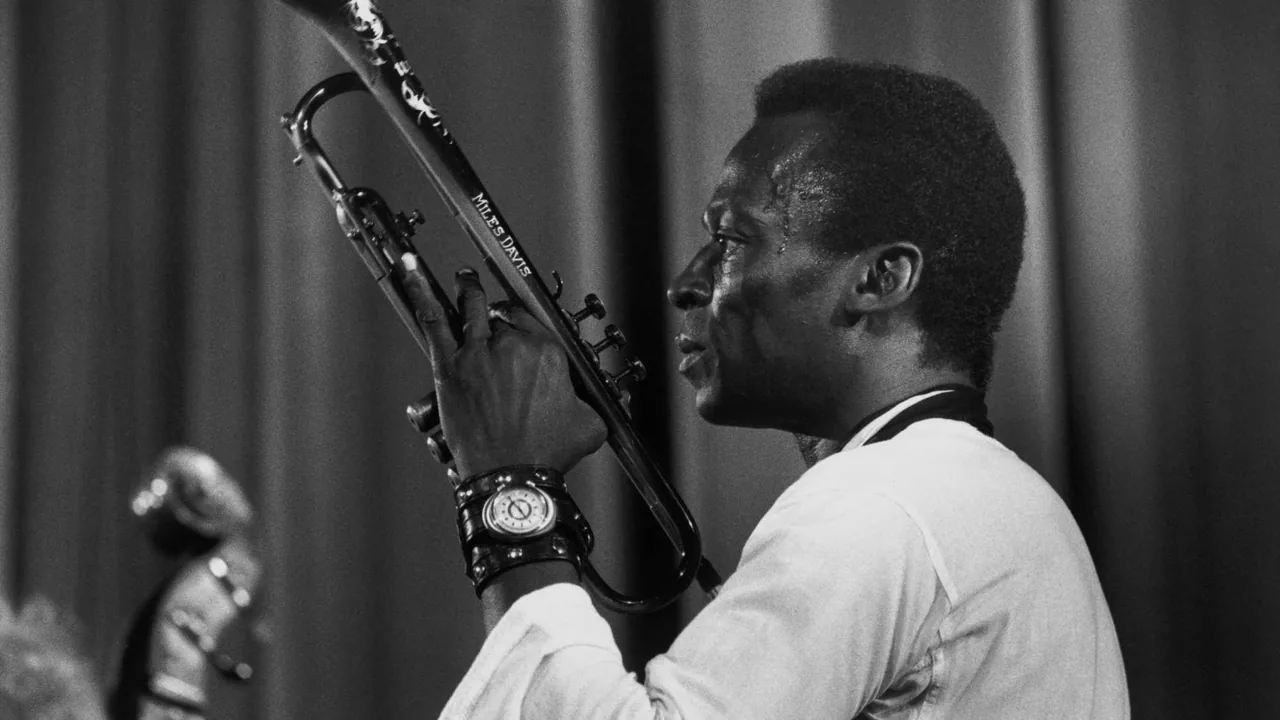
The record that should go first
'Round About Midnight arrived on March 4, 1957, Davis's first album for Columbia, assembled from three sessions at the label's New York studios between October 1955 and September 1956. The band is the first great quintet: Davis on trumpet, John Coltrane on tenor saxophone, Red Garland on piano, Paul Chambers on bass, Philly Joe Jones on drums.
It goes first because it is a record of songs. "Bye Bye Blackbird" and "All of You" are tunes a new listener half knows already, and Davis plays them with a Harmon mute close against the microphone, so the melody comes out small and conversational. In one sitting you learn the shape of a jazz performance: the tune, the solos, the tune again. Then Coltrane enters and does the rest of the teaching for free, because his sound is everything Davis's is not, wide and hot and crowded with notes. Two opposite ideas of what a horn is for, on one track.
The same five men made four other albums in that stretch, and it matters which door you use. Davis still owed Prestige four records when Columbia signed him, so the quintet ran two marathon sessions in May and October 1956 and the label cut the takes into four LPs, Cookin' and Workin' among them. They are wonderful and they are not a beginner's record: a nightclub set caught in a room and sequenced to close out a contract. Come back for them third.
The Columbia deal came out of a festival set: Newport 1955, Davis playing Thelonious Monk's "'Round Midnight" with Monk at the piano, George Avakian of Columbia in the audience. Davis's verdict on the fuss, as the histories of that night record it: "What are they talking about? I just played the way I always play."
Now put on Kind of Blue
Kind of Blue was cut in two sessions, March 2 and April 22, 1959, in the same 30th Street Studio, released on August 17. Davis handed the band scales and melody sketches instead of chord changes. The pianist Bill Evans wrote in the sleeve note that "Miles conceived these settings only hours before the recording dates," and that shortage of preparation is the design. John Coltrane and Cannonball Adderley improvise over a harmonic floor so open that neither can hide in a chord sequence.
Play it second and it stops being furniture. You already know what Davis's mute sounds like working a standard, so "So What" registers as what it is: a man taking nearly all the harmony away on purpose to find out what survives. You already know Coltrane's tone from 1956, so his solo reads as a player at the edge of a change he cannot see the other side of yet. The record has not changed. Your ears have, and that is the whole trick.
When it lands, the softest next step is Someday My Prince Will Come (1961), where Davis's touring band plays a song from Snow White and the Seven Dwarfs and Coltrane, by then leading his own quartet, returns for two guest solos.
The detour with the orchestra
In the same years Davis was making a very different record with the arranger Gil Evans. Sketches of Spain (1960) is the one to take: sixteen minutes of Joaquín Rodrigo's Concierto de Aranjuez with Davis carrying the melody over a full orchestra. If you have ever assumed jazz means fast, this is the corrective.
Miles Ahead (1957) and Porgy and Bess (1958) are the two other big Evans collaborations.
The band that stopped playing songs
The second great quintet is Wayne Shorter on tenor, Herbie Hancock on piano, Ron Carter on bass and Tony Williams on drums, and it left six studio albums. The strongest is Miles Smiles, cut across two days in October 1966, on which Hancock spends three tracks declining to play left hand chords at all and leaves the soloists standing on nothing. It is the record to reach for once you are in. It is not the one to arrive on.
Nefertiti takes the fourth slot instead, because its lesson needs no vocabulary. Recorded in June and July 1967, released the following March, the last fully acoustic studio album Davis made, it opens with fifteen seconds any newcomer can decode: the horns repeat Shorter's melody over and over without taking solos while the rhythm section improvises underneath. The drums are the soloist. The trumpet is the accompaniment. The head and the solos are a convention, not a law, and the players know it.
Miles Smiles asks you to hear what a piano has stopped doing, which means knowing what a piano usually does. Nefertiti asks only that you notice the loudest voice in the room is the drummer. Fourth place goes to the album that teaches without a glossary, and Miles Smiles is the reward for finishing. E.S.P. (1965) is the friendlier door into the same band.
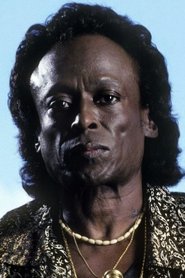
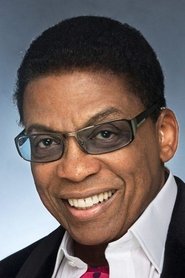

Plugging in
In a Silent Way was recorded in a single session on February 18, 1969 and released that July 30. Two side long pieces, thirty eight minutes, and it does not really exist as a performance: the producer Teo Macero built it out of a three hour session, cutting and repeating sections so each side opens and closes with the same music. Herbie Hancock, Chick Corea and Joe Zawinul are on electric keyboards at once, John McLaughlin on guitar, Wayne Shorter on soprano saxophone, and the record hovers instead of moving. Follow the sequence this far and you will hear what has been removed, which is harder than hearing a solo.
Then, and only then, Bitches Brew. Come to it sixth and the sprawl reads as method. Come to it first and it reads as noise. Same for On the Corner (1972) and Tutu (1986).
What he sounded like talking
Davis talked the way he played ballads, with the notes he left out doing most of the work. Alex Haley's interview with him for the September 1962 Playboy, the first the magazine ever ran, is still the best short account of how he judged his own records.
What also comes through is why musicians wanted to stand next to him.
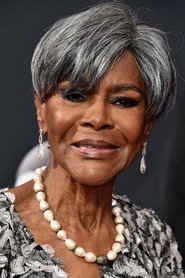
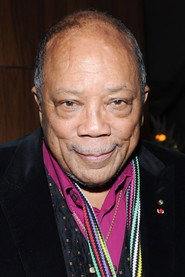
None of which makes him good company in the historical record, and a reader heading into the films should know that first. Davis was violent towards women, and Miles: The Autobiography, the 1989 book he made with the writer Quincy Troupe, did not hide it. Frances Taylor, his first wife, describes on camera in the documentary below the night he hit her after she said she found Quincy Jones handsome: "It was so fast, I saw stars. I was on the floor. It was the most unbelievable thing that ever happened to me." Cicely Tyson, who married him in 1981 and divorced him in 1989, described in a New York Times Magazine interview published in January 2021 an occasion when he struck her, and said it was the only time. The albums settle none of that, in either direction. But a where to start guide that sends you to the documentary owes a warning about what is in it.
The films are the loop, not the introduction
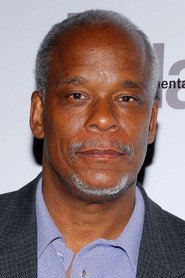
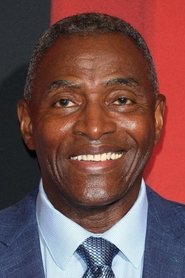
Miles Davis: Birth of the Cool premiered at Sundance in January 2019, made by Stanley Nelson for PBS's American Masters. Its narration is all Davis's own words, lifted from the autobiography and read by the actor Carl Lumbly. Herbie Hancock, Wayne Shorter and Ron Carter all sit for it.
Watch it after the five albums. Before, it is a life story with a soundtrack. After, every chapter is a record already in your ear, and the film explains why the next album sounded different from the last.
Two more close the loop. Miles Ahead is Don Cheadle's, a chase picture about a stolen tape rather than a biography, set in the late 1970s when Davis barely played. Elevator to the Gallows (1958) is stranger and better: Louis Malle's thriller, scored in Paris across one night in December 1957 by Davis and a pickup band improvising to loops of the film. Nowhere else can you hear him composing in real time.
Where the five albums let you out
Every record in that order has a door out of it. Blue Train (1958) and A Love Supreme (1965) are John Coltrane as a leader, and Chasing Trane (2017) is the documentary. Somethin' Else (1958) is Cannonball Adderley's own date with Davis playing on it. Time Out (1959) and Mingus Ah Um (1959) are the other two 1959 landmarks. Head Hunters (1973) is Herbie Hancock pointing the In a Silent Way lesson at a funk band. Our cross-media jazz guide has the wider map.
But start narrow. Put on 'Round About Midnight with nothing else running, start to finish, no cooking. Then Kind of Blue the next night, the same way. If the second one does not land differently than it ever has, jazz may genuinely not be for you, and you will at least have found that out honestly instead of over a saucepan.