Sixteen Emmys Against Fifty-Three Losses
The man who made both of them will not answer the question. Vince Gilligan created Breaking Bad, co-created Better Call Saul with Peter Gould, and has spent the better part of a decade being asked which one is better. In 2018 he told Rolling Stone, "I don't have children, but this is as close as I'll ever get to having children. I find it hard to choose between them." Five years later, with both shows finished, he told the Los Angeles Times that half the people he runs into, maybe more, are bigger fans of Saul, and added: "I thought I'd hate hearing that, but it turns out, I don't. The life lesson is to not overthink things."
He is allowed to be diplomatic. This piece is not: it picks a winner, then hands newcomers the order to watch it all in, black-and-white Omaha hours included.
The case for Breaking Bad
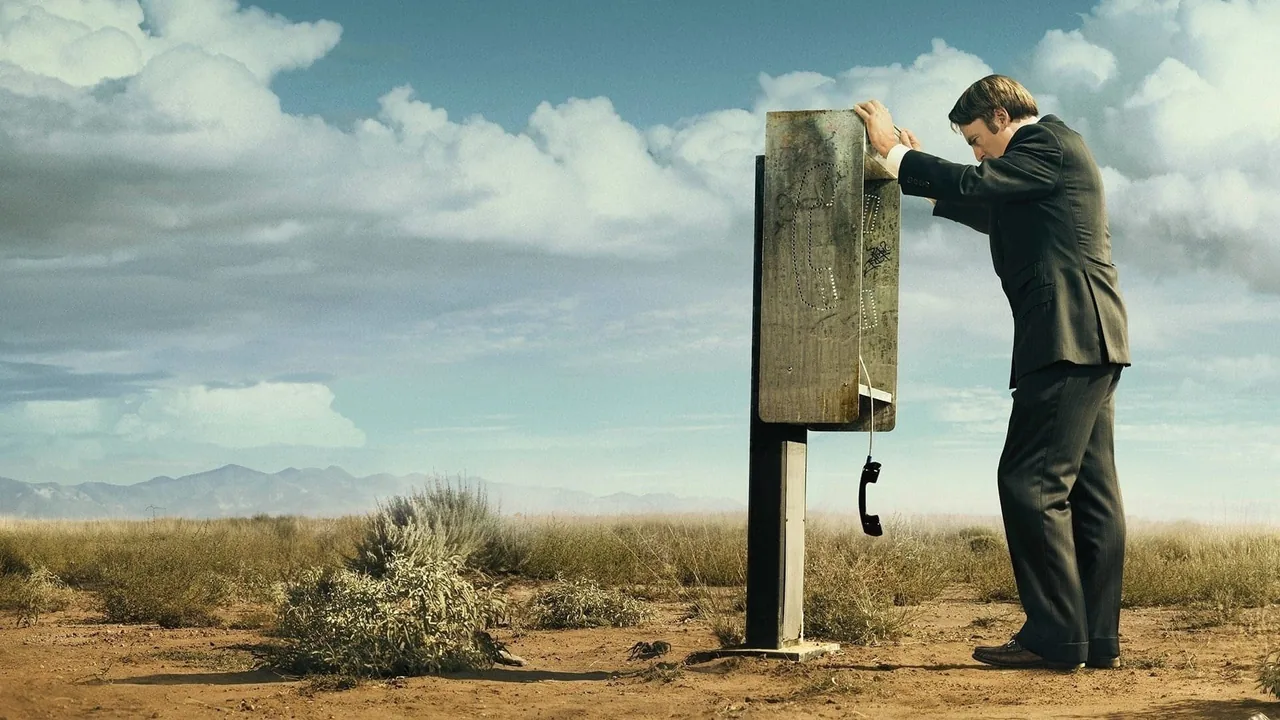
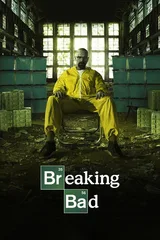
Breaking Bad ran from January 20, 2008 to September 29, 2013, five seasons and 62 episodes, and its trophy shelf is absurd: 16 Primetime Emmys from 58 nominations, Outstanding Drama Series in 2013 and 2014, four lead-actor wins for Bryan Cranston, three supporting for Aaron Paul. In 2013 Guinness World Records named it the highest-rated TV series of all time on its season five Metacritic score of 99.
Numbers are not the argument, though. The argument is momentum. Walter White gets a cancer diagnosis in the pilot and is cooking meth with a former student before the hour is out, and every season after tightens the vice: Tuco, the twins, Gus, the lab, the plane, the wheelchair bell, the desert. Bob Odenkirk, who starred in both, put it plainly to The New York Times in July 2022: "I think Breaking Bad is a more universal kind of story." A man you understand instantly, inside the most propulsive long-form drama American television has made.
It also owns the villains: Giancarlo Esposito's Gus Fring adjusting his tie with half a face, Jonathan Banks's Mike Ehrmantraut, Jesse Plemons's Todd. And "Felina" gives Walt the death he engineered: as Cranston put it, "he's going to go out in the blaze of glory that he always planned."
The case for Better Call Saul
Now the harder sell, which is the point. Better Call Saul should not exist. "When we first started concocting the idea of doing a spinoff, we literally thought it'd be a half-hour show," Gilligan told Rolling Stone in 2018: Saul Goodman in his styrofoam-columned office, visited each week by a different stand-up comic. When that died it became an hour, with Gilligan's maths as the pitch: "Breaking Bad is about 25-percent humor, 75-percent drama and maybe this will be the reverse of that."
Then the real problem. With AMC and Sony's money already committed, he and Gould concluded they had no show, because Saul Goodman could not carry one. "He's a great flavoring, he's a wonderful saffron that you sprinkle on your Risotto," Gilligan said. "But you don't want to eat a bowl full of saffron, you gotta have the rice, you know?" Gilligan credits Gould with the question that finally unlocked it, as he recalled it for the Television Academy in 2025: "What problem does becoming Saul Goodman solve?"
The answer was Jimmy McGill, and it took years to notice. "Then lo and behold, season after season went by and it dawned on us, we don't want to get to Saul Goodman … and that's the tragedy," Gilligan said. Most of its 63 episodes sit between 2002 and 2004, six years before Walter White's diagnosis, following a decent, gifted, self-sabotaging lawyer as he slowly kills the best version of himself. It gives him a brother, Michael McKean's Chuck, whose contempt is the wound everything grows from, and Kim Wexler, played by Rhea Seehorn, a character absent from Breaking Bad who becomes the reason the ending lands like a hammer.
The critics moved with it: the Metacritic average climbs from 78 for season one to 94 for the last. The Television Academy watched all of that and gave it 53 Primetime Emmy nominations and zero wins, a record for the most-nominated show never to win: the industry could not decide whether it was seeing the best show on television or a footnote to one.





The verdict
Better Call Saul is the better show. You still watch Breaking Bad first, and those two sentences do not contradict each other.
Breaking Bad is a machine, and a perfect one: every episode pushes Walt one step further down. Better Call Saul does something the original never attempts: it makes you love a man while showing you, in the same hour, the precise moment he chooses to become worse. The cons with Kim are fun. The Chuck hearing is unbearable. The Howard Hamlin business in season six is the cruellest thing either series did, and it is cruel because you were rooting for it ten episodes earlier.
The prequel also does the rarest thing a prequel can do: it improves its parent. Of the time-machine conversation in the final season, he said Walt "looks at Saul and goes, 'So you were always this way.'" Walter White, in Cranston's reading, "could say it was circumstantial." Jimmy could not. Go back to Breaking Bad after Saul and the loud lawyer in the inflatable Statue of Liberty is no longer comic relief. He is a man you watched lose everything, doing the voice he invented to survive it.
Then the ending. Breaking Bad ends with a machine gun in a trunk. Better Call Saul ends with a man in a courtroom giving back the deal of his life because a woman he loves is in the gallery, and then a shared cigarette in black and white. One is a blaze of glory. The other is a choice. I will take the choice.
The concessions. Saul's first two seasons ask for patience the original never does, and the Mike and Gus half drifts for long stretches with no Jimmy in sight; Gilligan admitted in 2018 that Mike "barely ever interacts with Jimmy McGill anymore." And Saul is not the show for a friend who has seen neither. Odenkirk again, to the Times: Breaking Bad "showed an audience the value of watching something closely," and then the writers "took that investment and they said, 'Now we're going to make a show that you have to watch very closely.' You couldn't do that if you didn't first make Breaking Bad." Which brings us to the order.
The order for newcomers
Do not watch chronologically. Better Call Saul was written by people who assumed you already knew where Saul Goodman ends up; its jokes, its dread and its closing episodes all depend on it. Watching it first turns a tragedy into a mystery, and a much worse one.
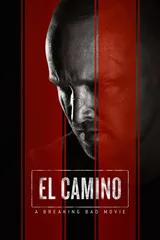
So: Breaking Bad first, all five seasons. Then El Camino: A Breaking Bad Movie, the 122-minute Netflix film Gilligan wrote and directed, released October 11, 2019. It picks Jesse Pinkman up right where "Felina" left him, with Plemons, Banks, Krysten Ritter, Robert Forster and Cranston all back. Cranston's explanation of why it exists is the best one: the finale "didn't satisfy the story of what happened to Jesse Pinkman, that the audience still needed to know, did he make it out?" It is a coda, and it goes before Saul because Saul's last hours sit later on the timeline than anything in it.
Then Better Call Saul, all six seasons, in broadcast order. Do not reorder the black-and-white scenes. They are set in 2010, after Breaking Bad and after El Camino, with Jimmy living as Gene Takavic, a Cinnabon manager in Omaha, Nebraska. They open the first five season premieres as short flash-forwards, then take over nearly the whole of the show's closing episodes. Watch them where they fall: the colour drains out of the show at the pace the writers intended, and the moment Omaha becomes the whole story is the payoff of everything before it. Season six also holds Cranston and Paul's return, shot after a covert flight into Albuquerque and four days in an Airbnb they were not allowed to leave, "almost like the CIA was creating it," in Cranston's telling. Those scenes mean nothing without the 60 hours in front of them.
Purists who run Saul's 2002 to 2004 material first, then Breaking Bad, El Camino and Omaha, get a coherent timeline and a broken drama. The prequel's whole engine is you knowing more than Jimmy does.
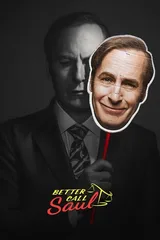

What Gilligan did next, and why it belongs at the end
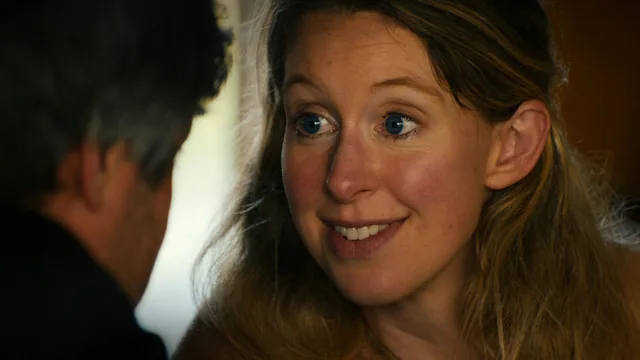
Pluribus premiered on Apple TV on November 7, 2025, nine episodes, with a second season ordered. It is Gilligan's first series since the world of Walt and Saul closed, built around Seehorn as Carol Sturka, a romantasy author who stays immune when the rest of humanity is folded into a contented hive mind, and who sets out to undo it.
"I was nervous about leaving the Heisenberg universe," Gilligan told Rolling Stone in November 2025, and on Breaking Bad's success: "I don't know what we did right to make it go off like a skyrocket. It was just the right actors, the right place, at the right time." Gould told the Los Angeles Times in 2023 that "Vince and I both decided it would be good to give the Gilliverse a little bit of a rest." Pluribus is that rest, and that is why it goes fourth: it is what Better Call Saul made possible, a lead role for the actor the prequel discovered, in a story that owes nothing to Walter White.
Gilligan learned television on The X-Files before any of this, and his stated ambition for the spin-off, per that 2018 interview, was modest to the point of comedy: "Let's hope it's more Frasier than AfterMASH." It turned out to be the better show, and its creator, asked in 2018 whether he could ever have imagined a fan saying so, gave the only honest answer: "It doesn't bother me a bit. It tickles me. I love it."