Is It Too Late for Mass Effect?
The friend recommending Mass Effect 2 first is trying to spare you some clunky shooting. I would take the clunky shooting. The best reason to play this series is the history you build with its people. Starting halfway through trades that history for an introduction to people who already know you.
Saturday, November 7 is N7 Day, the annual excuse to talk about Shepard again. My recommendation for a newcomer is simple: buy Mass Effect Legendary Edition, begin with the first game, and carry your decisions into the next two. For someone returning, the more interesting challenge is to resist recreating every old choice. Let this Shepard have an awkward conversation you once avoided.
This guide stays clear of major story revelations until the explicitly marked ending discussion below. You can stop there and leave with the important recommendation: play in order, talk to your crew, and give the people around you as much attention as the mission marker.
The first game earns its place
Mass Effect gives you a ship and a crew before it asks you to care about saving the galaxy. Its pleasures include conversations between missions and wandering planets in the Mako rover. You gradually establish what kind of commander you want to be: patient with a frightened stranger, ruthless when a mission goes wrong, or unexpectedly impatient with a bureaucrat.
The first game's age is visible. Legendary Edition improves its combat and vehicle handling, reduces elevator waits and updates its presentation. These changes make it an easier recommendation, though they do not turn a 2007 role-playing game into a contemporary action game. Expect some friction. I think it is worth accepting because the slower pace gives the setting room to become familiar.
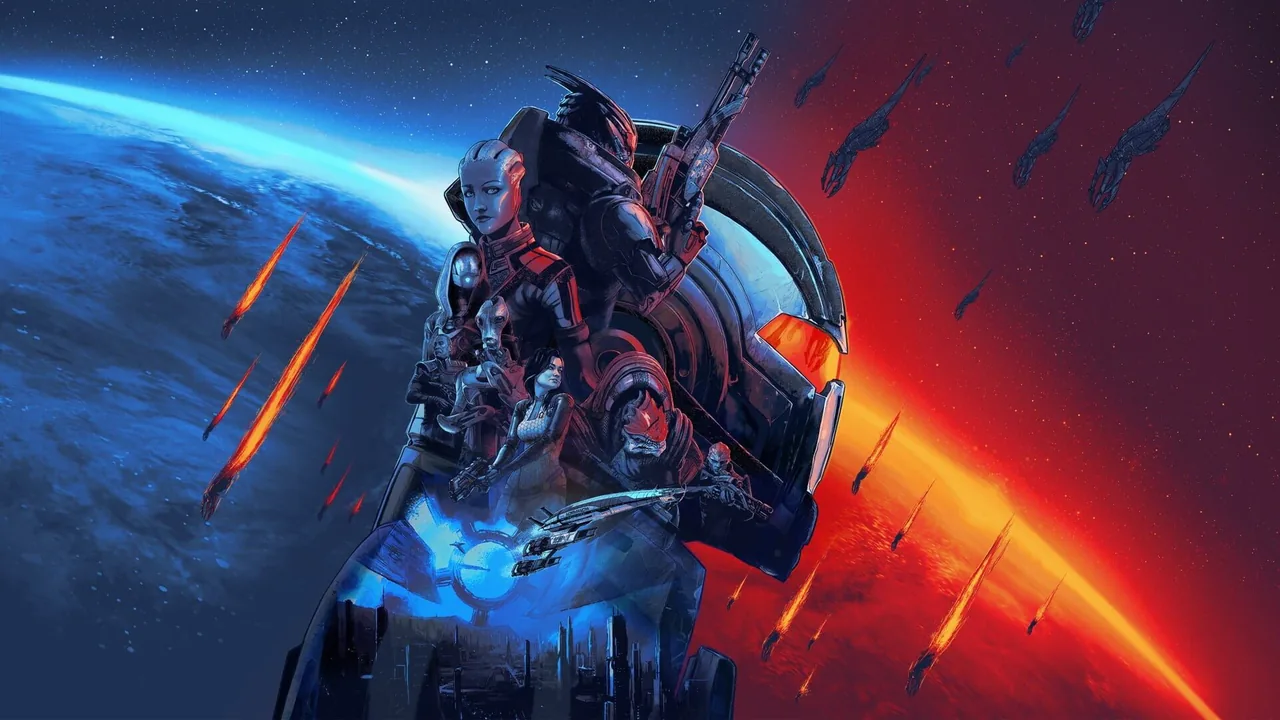
The collection also keeps the trilogy together and includes almost all its single-player downloadable content. You do not need a shopping list of separate expansions before boarding the Normandy. Pick a Shepard whose face and voice you want to spend time with, choose a class, and start. You can spend the evening comparing builds, but I would rather spend it meeting the crew.
Pick a fight you will enjoy
Soldier is my straightforward first-run suggestion if you want to concentrate on shooting and conversation. The original game gives the class broad weapon training and durability. Someone drawn to powers should read the alternatives before accepting that recommendation: choosing a familiar gun need not be the default in a universe full of strange abilities.
More useful than a universal best-class ruling is a small question: do you want to solve encounters with your weapon, your powers, or a mixture? The trilogy supplies several answers. You also control squad powers, and combat can be paused to issue orders. If a fight becomes messy, use that pause. You are a commander with two companions, not a lone action hero obliged to solve every problem by aiming faster.
I would avoid building a first character around a guide's perfect damage calculation. You will spend plenty of time outside combat. A class that sounds enjoyable is a better starting point than one chosen to satisfy somebody else's ranking.
Your crew is the main quest
Mass Effect 2 sharpens the action and gives much of its dramatic attention to recruiting a team and helping its members. Its loyalty missions are essential to the experience. They reveal why these people joined you, and the game's finale takes your preparation seriously.
Do those missions because you care about the people, but also understand the practical warning: rushing the final operation can have consequences. Ship upgrades and squad loyalty influence who survives. A quest that looks like a personal detour may be part of the preparation you will later wish you had made.
There is a trap in knowing this. You can turn the entire game into a checklist designed to guarantee an ideal save. I recommend keeping that impulse under control. Prepare thoroughly, then allow yourself to make judgments without consulting a walkthrough before every conversation. The series becomes more personal when a decision belongs to you.
By Mass Effect 3, that accumulated history changes who is present and how encounters unfold. An imported Shepard carries relationships and losses into the final chapter. Some of the reward is simply recognition: a familiar person walks into a scene, and you remember what happened between you. That is why skipping the first game costs more than a few missing explanations.

Jennifer Hale, who voices Commander Shepard, put the appeal neatly in her GamesRadar+ interview. The line above is her description of the message she sees throughout the choices and characters. It is also a good instruction for playing: take the people seriously, even when the game has handed you an urgent mission.
Spoilers: the trilogy's ending choices
Major ending spoilers follow. New players should skip to “After Shepard” below.
The third game's concluding options include destroying the Reapers, controlling them, and synthesising organic and synthetic life. My preference is Destroy, though it carries a terrible cost for synthetic life. After a trilogy of resisting the Reapers, it feels like the most coherent conclusion for the Shepard I would recommend playing.
Your Shepard may have arrived at a very different conclusion. Control offers a different relationship to the power you have been fighting. Synthesis proposes a transformation whose scale should make anyone pause. My objection to the latter is that it treats the entire galaxy as available for a decision no individual could reasonably authorise. Other players read its promise very differently, which is why the argument has survived the credits.
BioWare's Extended Cut added cinematics and epilogue material to provide more context and closure. It did not fundamentally replace the endings. That distinction matters if you arrive expecting the revision to remove the choice you disliked hearing about. It expands the farewell rather than abolishing the dispute.
A walkthrough can deliver everybody safely to the scene you wanted. It cannot give you the feeling of having made those decisions yourself. I would keep the untidy history, including the conversations I wish I could take back. Your response may depend less on a final option than on whose absence you notice before reaching it.
After Shepard
Mass Effect: Andromeda belongs after the trilogy on my suggested list. It follows Ryder in another galaxy and puts more emphasis on exploration and mobile combat. Treat it as a change of company and pace, rather than a substitute final chapter for Shepard.
If what you want after the trilogy is more movement, more planets and another crew to meet, give it a fair hearing. If what you want is another evening with precisely the people you just left, a different protagonist cannot promise that. It is also reasonable to finish the trilogy and stop.
For N7 Day, my strongest recommendation remains the least complicated one. Open Legendary Edition, choose the first game, and let a new Shepard make a first impression. The famous decisions can wait. Start by getting to know the ship.