George Miller Keeps Refusing the Easy Sequel
Ask George Miller where his films fit together and you will not get the reassuring answer a franchise spreadsheet requires. In a 2015 Fandango interview, he could only loosely place Mad Max: Fury Road after Mad Max Beyond Thunderdome. This is a man who can organise an extraordinary amount of destruction on screen and still decline to organise his own chronology. It is a good reason to love him.
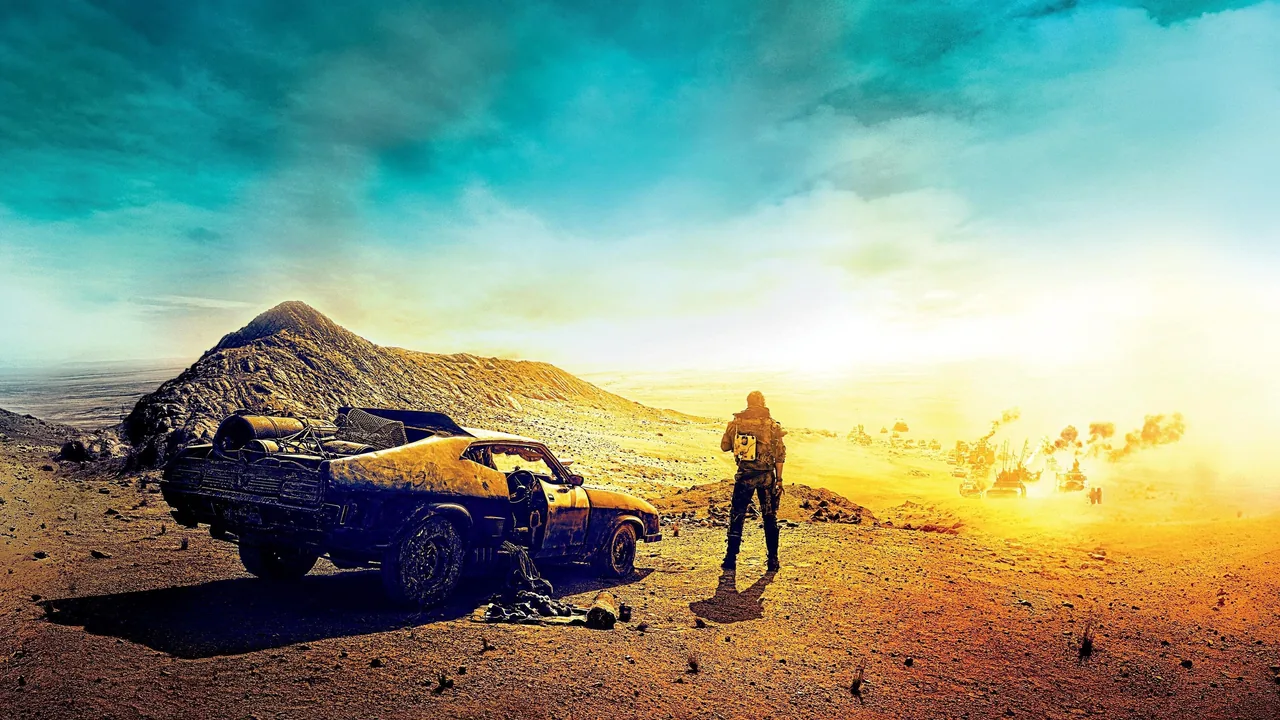
Miller trained as a doctor before becoming a filmmaker. His first Mad Max arrived in 1979, with Mel Gibson as a highway police officer in an Australia that had not quite finished falling apart. Forty-five years later, he was still finding another way into the same world with Furiosa: A Mad Max Saga. That span deserves more than the usual remark about an older director keeping up. The films keep changing shape. He seems much less afraid of upsetting his audience’s expectations than some of the people protecting them on his behalf.
Give the first film its evening
For a first trip through the series, start with the 1979 film and follow release order. Yes, that means resisting the perfectly understandable urge to go straight to Fury Road. The original gives you a smaller, stranger place to begin: police, roads, motorcycles and the remnants of ordinary life. Its Australian locations have a particular value. This is recognisable ground becoming hostile, rather than an imaginary landscape presented as a completed design.
Watching an early film can feel like doing a chore before the famous one. That is the wrong bargain to make with Mad Max. Give this film permission to be a rougher, more intimate proposition. Its modest scale lets you see what Miller was interested in before the world became an instantly recognisable collection of costumes and vehicles. Do not keep asking when it will turn into the sequel. The difference is the reason to include it.
Then let the world get bigger
Mad Max 2, also known as The Road Warrior, followed in 1981. It moves into the open desert and gives its wandering lead a settlement to contend with. At 96 minutes, it is a remarkably manageable commitment for a film with such a large reputation. Put it on a different night from the first. There is pleasure in noticing the change of scale without treating the original as a prologue you had to get through.
The third stop is Beyond Thunderdome. A route that keeps only the most acclaimed entries would be shorter, but it would also give a misleading impression of Miller. The unevenness matters. These films are attempts at different things, not a sequence of identical machines with improved engines. Stay with release order and you meet the director making choices, including choices you may not share. That is more interesting than being handed a list of masterpieces and asked to nod.
A complete run has a pleasure that a ranking cannot offer: you get to disagree with it. The entry somebody else calls expendable may turn out to be the one you keep thinking about. You might prefer a peculiar setting to a more polished chase, or an awkward change of tone to another confident demonstration of something you already admire. Giving each film its own night leaves room for that response. It also makes stopping an honest choice. If this world does nothing for you after a couple of visits, you have learned something about your taste; you have not failed a test.



The trick is knowing where to look
By Fury Road, Tom Hardy has taken over as Max and Charlize Theron plays Furiosa. Miller told Den of Geek that central framing helps viewers follow the fastest action. The next image has to meet the eye in a useful place. It is a brief explanation of a demanding piece of craft.
My favourite test for an action film is whether I care about the next few feet. Huge distances and enormous threats are easy to announce. The immediate task is harder: making one small movement matter enough that I lean towards the screen. A pursuit becomes absorbing when I understand what somebody needs to do right now, even if I cannot imagine how they will manage the larger problem.
That is what I would look for on a return visit. Set the reputation aside for a moment. A celebrated film can become oddly hard to watch when you are busy checking that you are having the correct response to it. Give yourself permission to be caught up in a practical problem, instead of inspecting every image for evidence of greatness.
Miller also described the earlier films as loosely connected adventures, rather than pieces of an exact chronology. His account gives a viewing guide some welcome freedom.
Save Furiosa for last
The tempting correction is to move Furiosa to the front. It is a prequel, after all. Resist. Anya Taylor-Joy takes the central role in a film that stretches across years, with a 148-minute running time and a different sense of pace. Knowing the later film makes that change more interesting. You can ask what a longer view adds to a character already introduced through action, rather than counting down to the point where the next movie begins.
It is also worth allowing two actors to approach a role differently. A prequel performance can be trapped by the demand to explain every gesture of the person the audience already knows. You need not watch it as an impersonation test. Theron and Taylor-Joy appear in films with different jobs to do. See Fury Road first, then give Furiosa room to establish its own pace. You can prefer one without pretending the other was obliged to deliver the same evening.
The route, then, is the five films as audiences first met them: Mad Max, Mad Max 2, Beyond Thunderdome, Fury Road, Furiosa. No extra reading is necessary. Spread them out, argue about the weaker stops, and notice what Miller chooses to change each time. His great gift to this series is the willingness to return without treating the last film as an instruction manual. Begin with the small Australian road movie. There is an enormous amount of desert ahead.