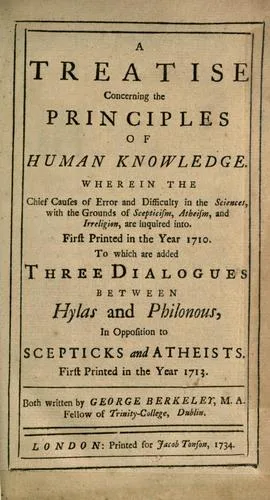
A Treatise Concerning the Principles of Human Knowledge (1710)
A Treatise Concerning the Principles of Human Knowledge is a 1710 idealism book written by Alfred Klemmt and George Berkeley.
In this exceptional work, Berkeley makes the striking claim that physical things consist of nothing but ideas and therefore do not exist outside the mind. This claim establishes him as the founder of the idealist tradition in philosophy. The text printed in the volume is the 1734 edition of the Principles, which represents Berkeley's mature thought. Also included are four important letters between George Berkeley and Samuel Johnson, written between 1799 and 1730. This edition of Berkeley's most famous work provides readers with a thorough introduction to the central ideas of tone of the world's greatest philosophers.
Quick answers
What is A Treatise Concerning the Principles of Human Knowledge about?
In this exceptional work, Berkeley makes the striking claim that physical things consist of nothing but ideas and therefore do not exist outside the mind. This claim establishes him as the founder of the idealist tradition in philosophy. The text printed in the volume is the 1734 edition of the Principles, which represents Berkeley's mature thought. Also included are four important letters between George Berkeley and Samuel Johnson, written between 1799 and 1730. This edition of Berkeley's most famous work provides readers with a thorough introduction to the central ideas of tone of the world's greatest philosophers.
When was A Treatise Concerning the Principles of Human Knowledge published?
A Treatise Concerning the Principles of Human Knowledge was published in 1710.
Who made A Treatise Concerning the Principles of Human Knowledge?
A Treatise Concerning the Principles of Human Knowledge was written by Alfred Klemmt and George Berkeley.
