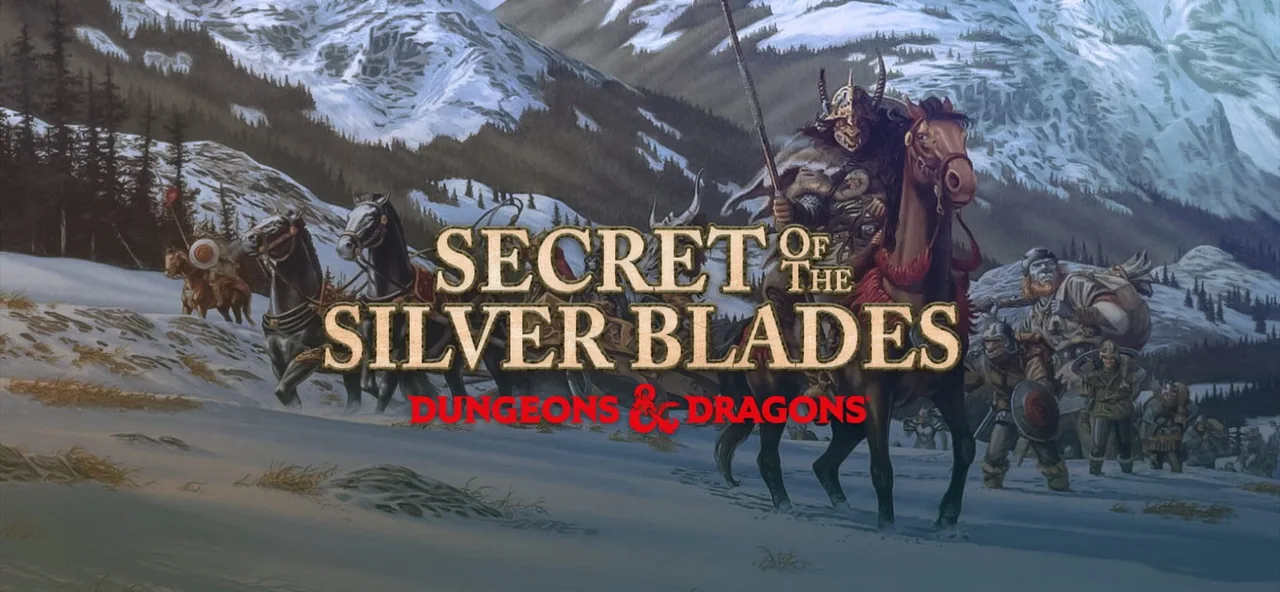
Advanced Dungeons & Dragons: Secret of the Silver Blades (1991)
Advanced Dungeons & Dragons: Secret of the Silver Blades is a 1991 role-playing (rpg) video game made by SSI (Strategic Simulations, Inc.).
Miners in the Dragonspire Mountains dug too deep and cracked open a sealed vault, and now horrors pour out of the shafts toward the valley towns above. The third Gold Box chapter answers their plea with turn-based Advanced Dungeons & Dragons combat across the largest dungeon expanse SSI had yet built. Veterans transferred from Pool of Radiance and Curse of the Azure Bonds arrive at high level, wielding tougher spells against monsters designed to test them. The frozen setting narrows the focus to one long descent into the mine and the ancient evil waiting at its root, a grim, combat-heavy climb.
Similar games
Explore Advanced Dungeons & Dragons: Secret of the Silver Blades guides
Advanced Dungeons & Dragons: Secret of the Silver Blades in our writing
- Companion guide: Dungeons & Dragons on the PC: From the Gold Box to Baldur's Gate 3
A few thoughts on Advanced Dungeons & Dragons: Secret of the Silver Blades
As the middle of a continuous saga, this asks to be played after Pool of Radiance and Curse of the Azure Bonds, with the storyline finishing in Pools of Darkness. Players who want the same tactical D&D combat with modern presentation should move on to Baldur's Gate II and the turn-based Solasta, both descendants of this grid-and-dice tradition.
A party you carry forward from game to game
Secret of the Silver Blades carries your veterans in from Pool of Radiance and Curse of the Azure Bonds, high level and scarred, straight into a new campaign. That same idea, a roster you build once and keep, drives Baldur's Gate II's imported hero, Neverwinter Nights' persistent party, Icewind Dale's built-from-scratch company, and Eye of the Beholder II's carried-over adventurers.
Turn-based D&D tactics on a grid, not real-time chaos
Secret of the Silver Blades runs its Advanced Dungeons & Dragons combat turn by turn on a tactical grid, the same rhythm that Temple of Elemental Evil built its whole reputation on and that Solasta revived decades later. Baldur's Gate III, Pathfinder: Wrath of the Righteous, and Pathfinder: Kingmaker all let you drop into that same grid-and-initiative style whenever the fight gets serious.
Fantasy quests for a ragtag party of adventurers
Every Gold Box game, Secret of the Silver Blades included, is built around a company of mismatched heroes marching into danger together, the same setup that powers Dungeons & Dragons: Honor Among Thieves and The Legend of Vox Machina on screen, Stranger Things' kids running their own campaign, and the traveling company at the center of The Witcher and Blood of Elves.
Old-school PC RPGs from before real-time 3D took over
Secret of the Silver Blades belongs to a stretch of PC RPGs where turn-based grids and stat sheets did the work graphics couldn't. Baldur's Gate and Planescape: Torment carried that same design forward with more story, Ultima IV and Ultima VII built whole worlds around a virtue system and free exploration, Betrayal at Krondor leaned on puzzle-heavy quests, and Fallout took the formula post-apocalyptic.