Baldur's Gate: Tales of the Sword Coast (1999)
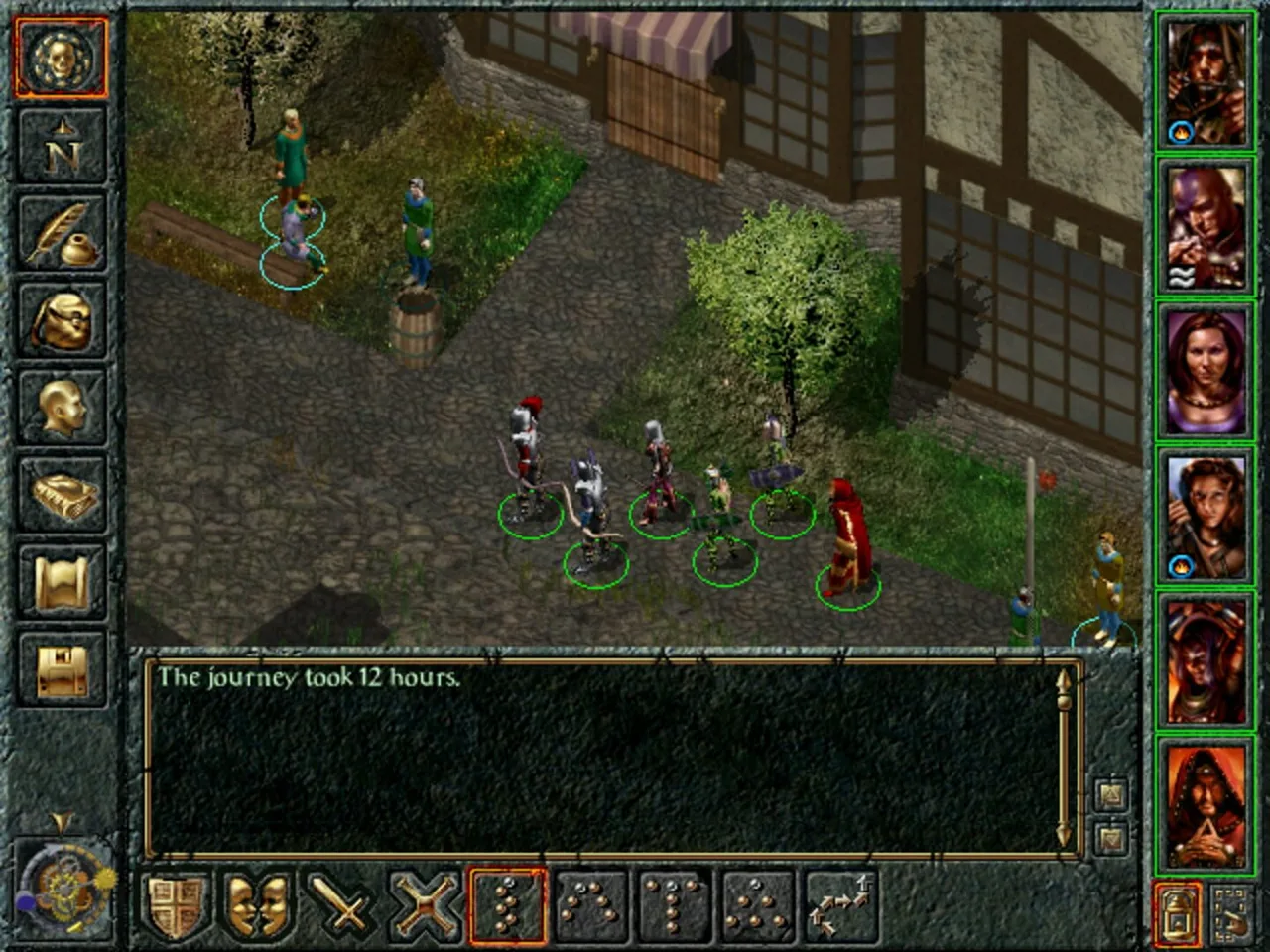
Baldur's Gate: Tales of the Sword Coast is a 1999 role-playing (rpg) video game made by BioWare and BioWare Edmonton.
Tales of the Sword Coast is an expansion to Baldur's Gate, adding four distinct new regions to the Sword Coast outside the main campaign: dungeons built around the ruins of Durlag's Tower, a fog-shrouded island with its own mysteries, and two other areas aimed at harder combat. It does not continue the main storyline. The expansion raises the experience cap, introduces stronger encounters, and assumes a party already hardened by the base game. Its appeal is more of the same Infinity Engine density: exploration, Forgotten Realms lore, and difficult fights for parties who cleared Baldur's Gate and wanted more.
Similar games
Explore Baldur's Gate: Tales of the Sword Coast guides
Baldur's Gate: Tales of the Sword Coast in our writing
- Companion guide: Interplay: By Gamers, For Gamers, and the Golden Age of the RPG
A few thoughts on Baldur's Gate: Tales of the Sword Coast
Players who dig into the Infinity Engine games tend to reach for the setting's companion reading. Volo's Guide to Baldur's Gate II fills in the city's factions and history in prose form, and Dragon Age - Last Flight sits in adjacent high-fantasy territory for readers drawn to morally complicated characters in a world already broken before the story starts.
Dense, lore-heavy fantasy worlds built for people who read the wiki
Tales of the Sword Coast piles Durlag's Tower and a foggy new island onto an already dense slice of Forgotten Realms lore, and it never explains itself twice for anyone who skipped the reading. Volo's Guide to Baldur's Gate II, Gardens of the Moon, Oathbringer, The Witcher 3 and Skyrim all reward that same patience, a setting so thick that half the pleasure is learning how the pieces fit together.
Brutal endgame content built for a party that already won once
This expansion assumes a hardened party and raises the stakes to match, throwing tougher fights at characters who cleared the base campaign expecting a victory lap. Elden Ring, Hollow Knight, God of War and BioShock Infinite's punishing higher difficulty modes all make the same bet, giving veteran players something that respects what they already survived instead of easing off.
Parties that run on banter as much as on the mission
Tales of the Sword Coast keeps the same six-person party from the base game, and Baldur's Gate has always sold that party through its bickering as much as its dungeons. Stargate SG-1, Shrek, Harry Potter and the Philosopher's Stone, The Boys and Avengers: Infinity War all let a mismatched group's back-and-forth carry scenes the plot by itself would not.
Cursed ruins where the place itself is the real threat
Durlag's Tower reads less like a dungeon than a cursed structure with its own malice, and the fog-shrouded island plays the same trick, the location is the threat before any monster shows up. Made in Abyss, Dororo, Jujutsu Kaisen and Saiyuki all build tension the same way, treating a haunted or cursed place as a hostile force in its own right.