Banjo-Tooie (2000)
Banjo-Tooie is a 2000 platform video game made by Rare.
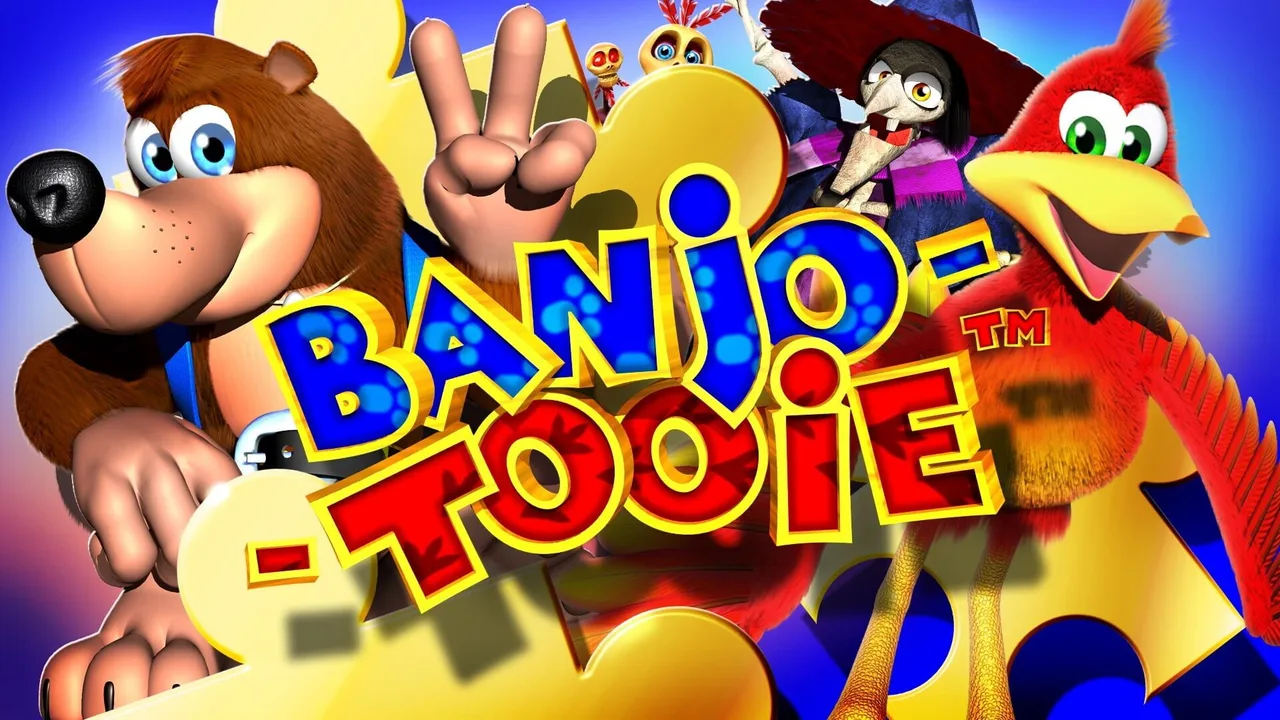
Banjo-Tooie sends bear and bird back into trouble when Gruntilda returns and the stakes get considerably bigger. Eight new worlds include a sprawling industrial factory, a dilapidated theme park, and a prehistoric wilderness, each interlocking with others so that puzzles in one world sometimes require tools or characters found elsewhere. The game builds on every move from Banjo-Kazooie and adds dozens more, including the ability for Banjo and Kazooie to split up and operate independently. Rare pitched the sequel as a longer, deeper, and more ambitious version of the original.
Similar games
Explore Banjo-Tooie guides
Banjo-Tooie in our writing
- Companion guide: Rare: GoldenEye, Banjo-Kazooie and the N64 Golden Age
A few thoughts on Banjo-Tooie
The Super Mario World animated series covers the same flavour of Nintendo-era collectathon platformer translated into cartoon form, sharing the colourful worlds and wisecracking companion dynamic.
Epic fantasy quests that span whole worlds, not just one kingdom
Banjo-Tooie sends its bear-and-bird duo through eight interlocking worlds, from an industrial factory to a prehistoric wilderness, each one gated by tools found somewhere else entirely. Redwall, The Girl Who Drank the Moon, Brisingr, Wizard and Glass, and Oathbringer all build that same sense of a huge, interconnected fantasy world where the next region depends on what you found in the last one.
Open worlds built for players who want to find everything
Rare built Banjo-Tooie's eight worlds to interlock, so puzzles solved with tools from one region unlock rewards clear across the map, and total completion demands real persistence. Skyrim, the Witcher 3, both Grand Theft Auto entries here, and Red Dead Redemption 2 hand players the same kind of enormous, layered map worth exploring corner to corner.
Comedy manga with the same tongue-in-cheek, cartoonish energy
Gruntilda's return gives Banjo-Tooie a villain built entirely for comic relief, and Rare wraps every new move and mini-game in the same tongue-in-cheek writing the studio is known for. Crayon Shin-chan, Dr. Slump, Sabrina the Teenage Witch, City Hunter, and Rurouni Kenshin all mix slapstick and genuine adventure the same loose, cartoonish way.
Teams and duos who split up to cover more ground
Banjo-Tooie's biggest new trick lets the bear and bird separate and tackle different halves of a puzzle on their own, each using powers the other doesn't have. My Hero Academia, the Teenage Mutant Ninja Turtles, Patlabor, Sailor Moon, and Inuyasha's search party all run on ensembles built the same way, a group that only clears the mission because everyone's skill set is different.