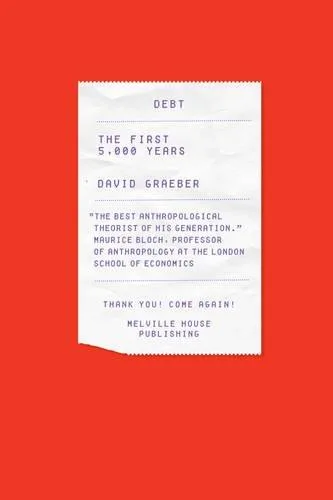
Debt (2011)
Debt is a 2011 money book written by David Graeber.
David Graeber begins with a claim that upends the usual story of money: debt came first, long before coins or barter. Drawing on anthropology and five thousand years of records, from Sumerian temple ledgers to modern finance, he traces how credit, obligation, and their forgiveness have shaped law, religion, slavery, and war. Words like guilt, sin, and redemption, he argues, all grew out of ancient debates about what we owe one another. Published in 2011, the book is sweeping and combative, and its reach across civilizations drew both wide praise and sharp disputes over its accuracy.
Similar books
Explore Debt guides
A few thoughts on Debt
This is history-of-money argument, best followed on screen by documentaries that examine how finance really works. Inside Job dissects the 2008 collapse with the same appetite for systemic causes, and The Big Short turns the machinery of debt into gripping drama. Both pair well with David Graeber's long view of who owes what, and why we come to call it moral.
Movies that pull back the curtain on how money really works
Graeber spends Debt showing how credit, obligation and deception have always run together, long before anyone called it fraud. The Big Short, Inside Job, The Wolf of Wall Street and Catch Me If You Can all dramatize that same con from the inside, while The Pursuit of Happyness shows what it costs the people standing outside the system when it fails.
True stories of people who refused to accept what they were told they owed
Debt keeps returning to the idea that power dresses up exploitation as obligation, something owed rather than something taken. The autobiographical accounts behind Frederick Douglass's narrative, Gandhi's memoir and Natan Sharansky's Fear No Evil, along with the colonial critique of Noli Me Tangere and the displacement in Refugee, all track people refusing to accept what they were told they owed.
Comics about empires that expect you to pay up
Graeber traces how war and conquest have always generated the debts ordinary people are left to pay off, tribute dressed up as duty. Kingdom's warring states, 300's clash with the Persian empire, Asterix's small village dodging Roman tax collectors, Superman: Red Son's Cold War ideology and Watchmen's power politics all turn that same machinery, empire demanding what it says it's owed, into their plot.
Stories about people who were bought, sold or forced to pay tribute
Graeber keeps circling back to slavery and conquest as the oldest engines of debt, people turned into property or forced to hand over tribute just to be left alone. Vikings and The Last Kingdom run on raiding and tribute economies, Spartacus: House of Ashur puts Rome's slave trade on screen, and Peaky Blinders and Mad Men update the same machinery into loan sharks and postwar consumer credit.