Doom II: Hell on Earth (1994)
Doom II: Hell on Earth is a 1994 shooter video game made by id Software.
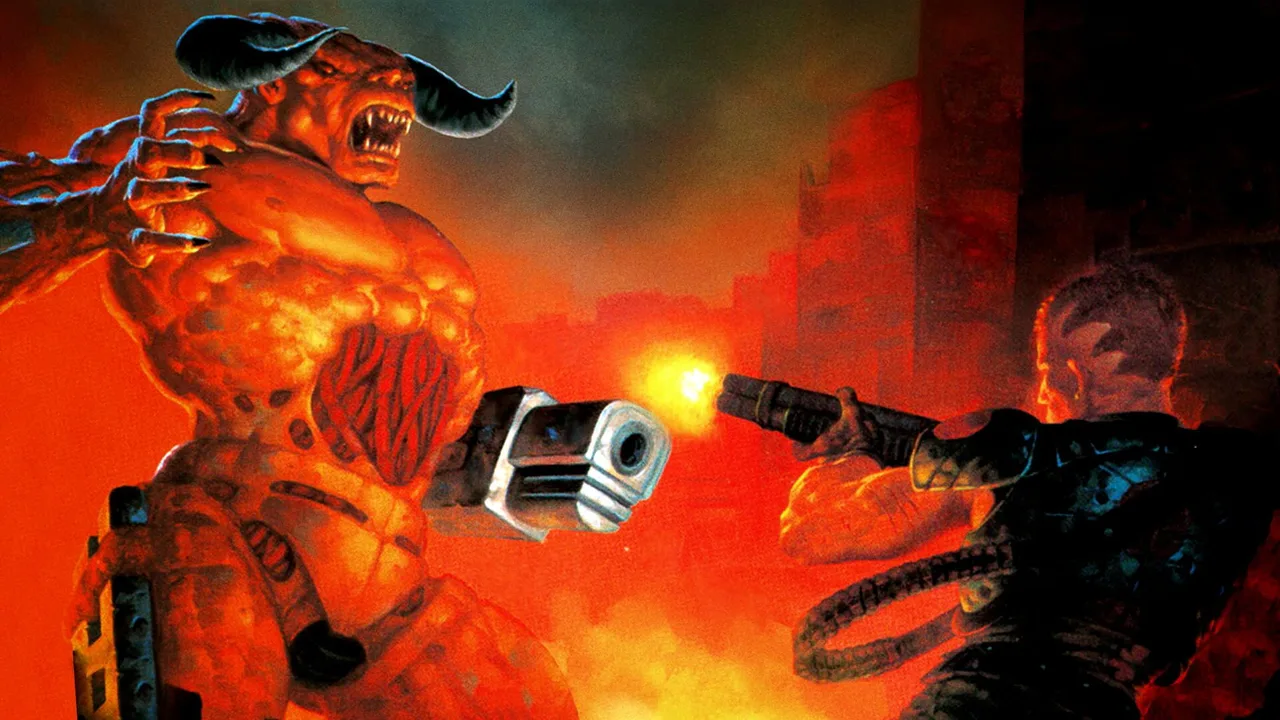
Doom II: Hell on Earth picks up where its predecessor left out: the demons followed the marine home. Earth is already lost by the time the player steps in, and the new mission is threading through a city turned slaughterhouse to reach an escape route. id Software kept the speed and maze logic of the original and added the Super Shotgun, a point-blank cannon that became one of the most imitated weapons in shooter history. Expanded enemy rosters and denser arena design pushed the difficulty higher across all 30 levels.
Similar games
Explore Doom II: Hell on Earth guides
Doom II: Hell on Earth in our writing
- Companion guide: id Software: Doom, Quake and the Birth of the Shooter
A few thoughts on Doom II: Hell on Earth
The DOOM: Original Game Soundtrack arrived decades after the original game but feels like the music Doom II always deserved. Hell Comes to Frogtown shares the same B-movie bravado, a lone tough guy pressing through hostile territory with minimal backup.
Games where one weapon becomes the whole reason you keep playing
Doom II is remembered as much for the Super Shotgun as for its demon count, a single weapon so satisfying it reshaped how shooters design their arsenals afterward. Half-Life 2's gravity gun, Portal's portal gun, and God of War's Leviathan axe pull the same trick: build the entire combat loop around one tool worth mastering.
Aggressive, high-tempo albums for clearing a level at full sprint
Doom II never lets up, and its momentum pairs naturally with music built for the same relentless pace. The official Doom soundtrack sits alongside Death's technical death metal on Leprosy, the Prodigy's industrial breakbeats on The Fat of the Land, and Reverend Horton Heat's amped-up psychobilly on Leather Teeth, four records that refuse to slow down for anyone.
Concept albums about the last person standing in a dead future
The demons in Doom II have already won by the time the game starts, and Earth's fate is left to one person cleaning up the wreckage. That same lone-survivor framing runs through Deltron 3030's dystopian hip opera, Muse's apocalyptic Black Holes and Revelations and Simulation Theory, and the moody synths of the Blade Runner score, all building entire worlds around a single figure holding the line.
Stories where ordinary people get dragged into literal hell
Doom II strands its marine on an Earth already lost to Hell, and that same premise of ordinary space becoming something monstrous shows up across genres. Hell Comes to Frogtown drops its hero into a mutant-run wasteland, Backrooms turns familiar architecture hostile, Lee Cronin's The Mummy resurrects an ancient evil, and Mortal Kombat II pulls its fighters toward a demon-ruled realm.