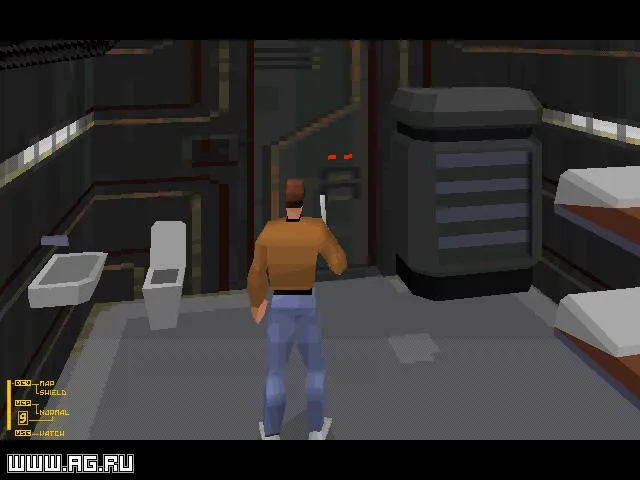
Fade to Black (1995)
Fade to Black is a 1995 action video game made by Delphine Software International.
Fade to Black picks up Flashback's Conrad Hart several years on, now imprisoned aboard an alien vessel and scrambling to escape. The 1995 sequel moved the series into full 3D third-person action, swapping the rotoscoped platforming of its predecessor for real-time environments and direct combat. The tone stays cold and conspiratorial, Conrad navigating labyrinthine corridors and hostile planets while the threat to Earth grows more concrete. It was one of the earlier attempts to bring cinematic sci-fi storytelling into a fully three-dimensional space.
Similar games
Explore Fade to Black guides
Fade to Black in our writing
A few thoughts on Fade to Black
The blurring of real and constructed reality in eXistenZ shares Fade to Black's unsettled quality, where the boundaries of the hero's situation keep shifting underfoot. Both reward a willingness to sit with disorientation.
Cold, paranoid science fiction where escape isn't guaranteed
Conrad Hart wakes up a prisoner aboard an alien ship in Fade to Black, and the whole game plays like a cornered escape rather than a triumphant one. eXistenZ's reality-bending paranoia, Half-Life 2's occupied Earth, Old Man's War's alien battlefronts, Stranger Things' cover-ups and the watching facilities of Portal and Portal 2 all share that same clenched, conspiratorial chill, where control is never really yours.