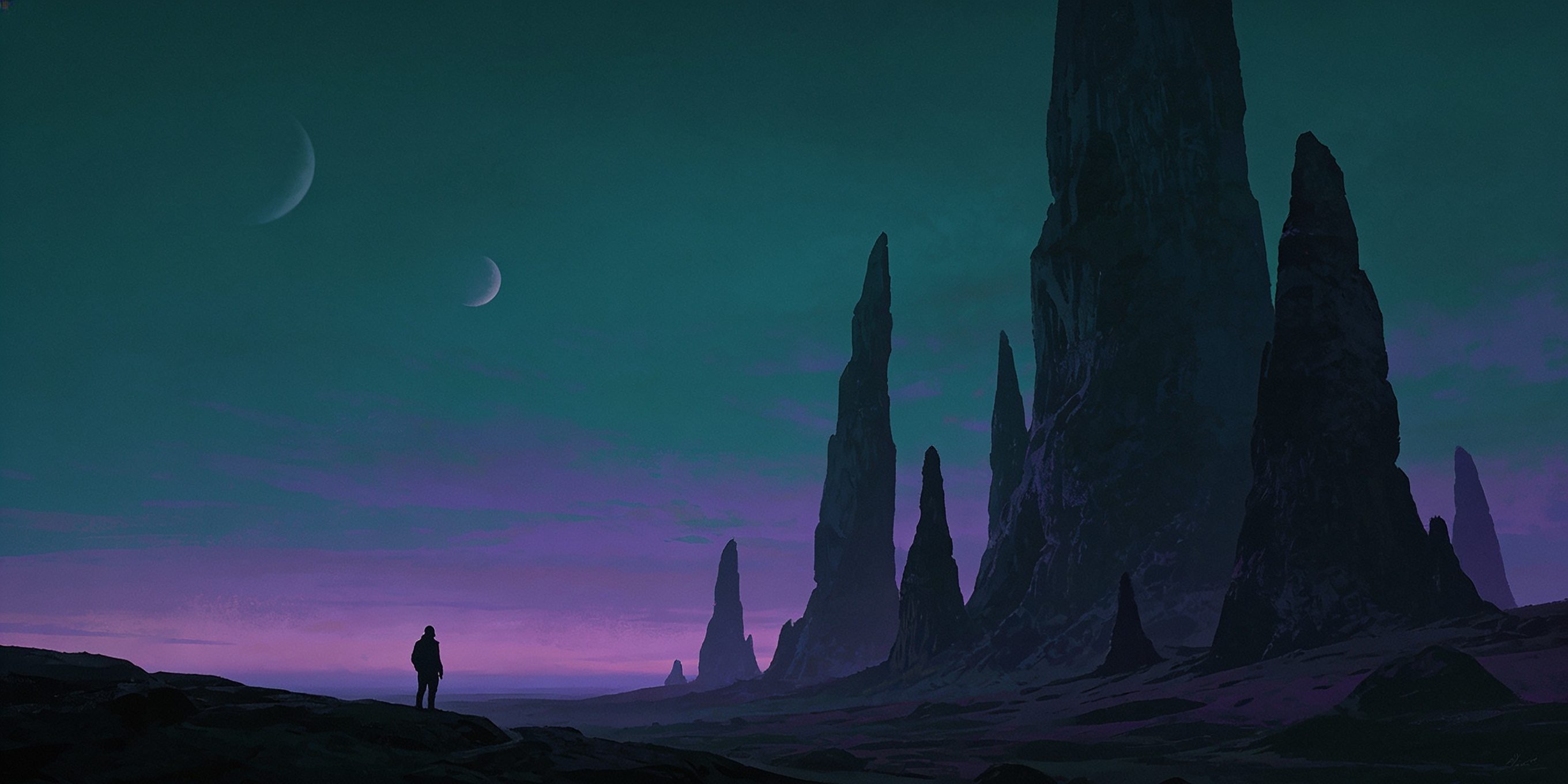

In the early 1990s, while most games were about points and lives, a small studio in Paris was quietly making cinema you could play. Delphine Software gave the world two of the most influential games ever built in France: Eric Chahi's Another World, a wordless, rotoscoped science-fiction dream made almost single-handed, and Paul Cuisset's Flashback, a hand-animated action-adventure that became the best-selling French game of its era. Both looked and moved like films, and both proved a video game could carry real atmosphere, real artistry, real feeling.
This is the studio's run: the cinematic platformers that changed the medium, the Cinematique point-and-click adventures that led to them, and the games that followed. Here is the map.
The essential Delphine
Start here

The cinematic game, made in France
Delphine's signature was motion. Where other studios drew characters as sprites that snapped between poses, Delphine rotoscoped real movement, so its heroes ran, jumped and stumbled with a weight and grace nothing else had. Paired with widescreen framing, moody colour and stories told through action rather than text, it created a house style that felt unmistakably cinematic and unmistakably French. Two of the games it produced this way, Another World and Flashback, are still studied as landmarks.
The cinematic platformers
Rotoscoped, wordless, film-like
The adventures and beyond
Whodunits, time travel and the later years

A short history of Delphine Software
- 1988Delphine Software forms in Paris as the games arm of the Delphine media group.
- 1991Eric Chahi's Another World redefines the cinematic game, largely built by one person.
- 1992Paul Cuisset's Flashback becomes the best-selling French game of its era.
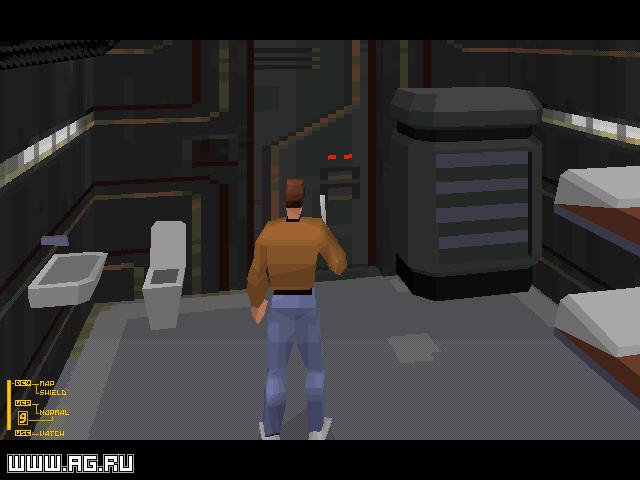
- 1995Fade to Black carries the Flashback story into fully 3D worlds.
- 1999Darkstone shows the studio moving into 3D action role-playing.
- 2004Delphine Software winds down, but the influence of its cinematic games endures.
The people who built Delphine
The two auteurs behind Another World and Flashback. Follow either to their full catalogue.
Keep listening on Podfriend
Shows and themes that go deep on this era of gaming.
More golden-age studios
Every studio in the series. More on the way.
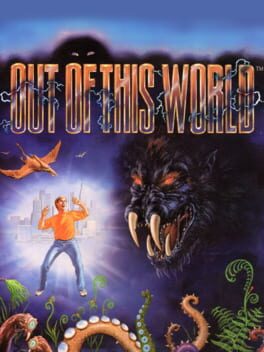
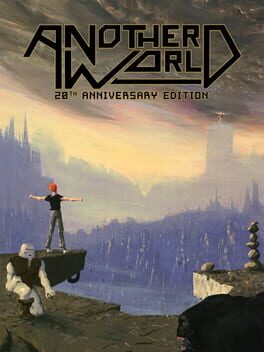
Almost no words, no interface, just a wordless alien world you learn by dying to it. Another World proved a game could be a film you play.
Frequently asked
What is Delphine Software best known for?
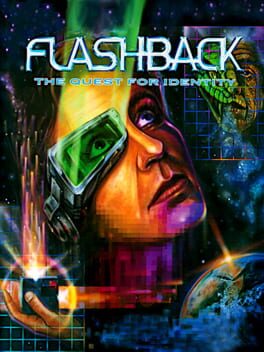
Another World (known as Out of This World in North America) and Flashback: The Quest for Identity, two landmark cinematic platformers with rotoscoped animation, plus the Cinematique point-and-click adventures and later games like Fade to Black and Darkstone.
Who made Another World?
Eric Chahi created Another World almost single-handedly at Delphine Software, released in 1991. Its wordless storytelling and rotoscoped, polygon-based animation made it one of the most influential games ever made.
Why is Another World also called Out of This World?
Another World was retitled Out of This World for its North American release to avoid confusion with a television series of the same name. It is the same game.
What made Delphine's games look so cinematic?
Delphine used rotoscoping to base character animation on real filmed movement, paired with widescreen framing and stories told through action rather than text. The result felt closer to film than to the sprite-based games of its time.