Hearthstone (2014)
Hearthstone is a 2014 strategy video game made by Blizzard Entertainment.
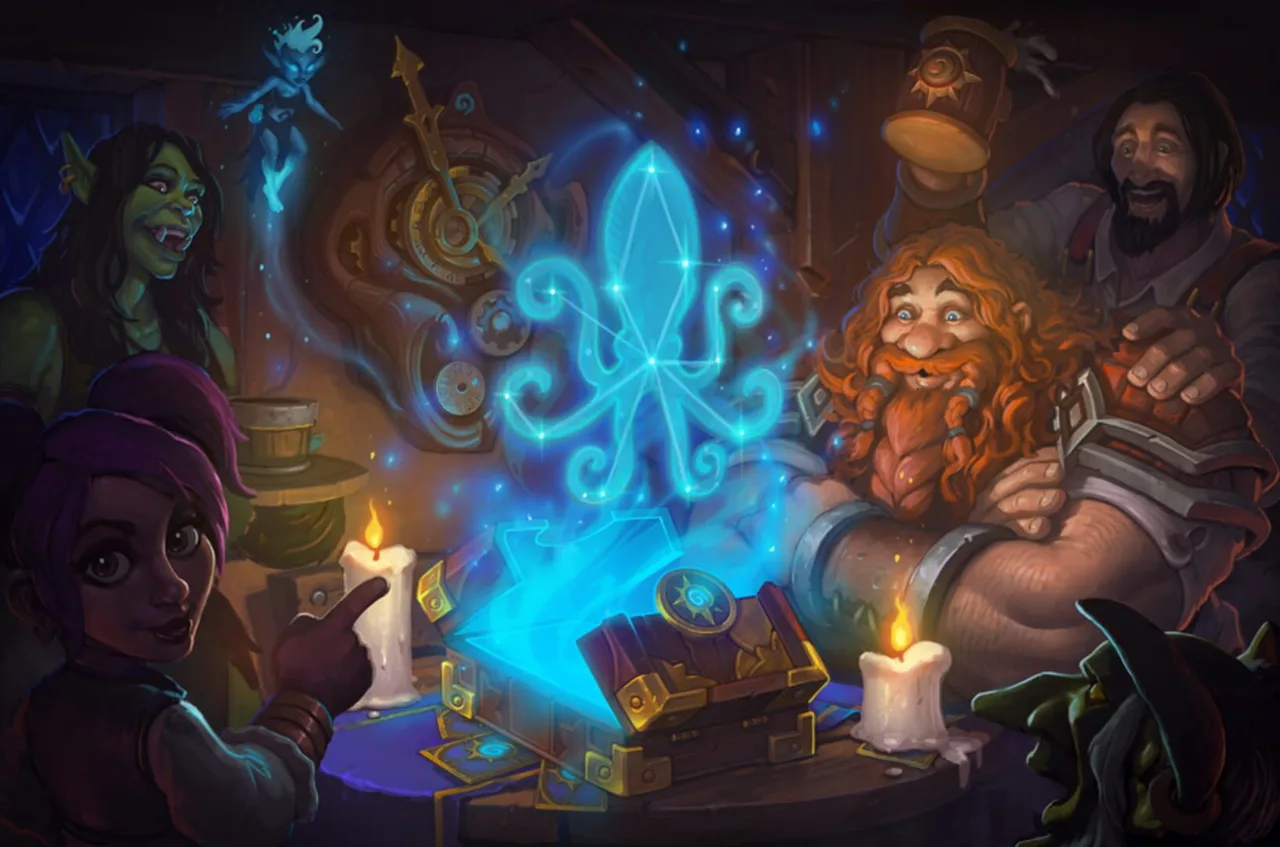
Hearthstone strips the Warcraft universe down to its most theatrical elements: spells, minions, and the heroes themselves reduced to 30-card decks on a wooden tavern table. Blizzard launched it free-to-play in 2014 with a deliberately light tone, letting players who knew the lore grin at the references and newcomers simply enjoy a card game that rewards both fast instinct and careful deck construction. Matches run short, the animations are punchy, and the game expands constantly with new card sets that shift the dominant strategies.
Similar games
Explore Hearthstone guides
Hearthstone in our writing
A few thoughts on Hearthstone
If the Warcraft world keeps pulling at you, Lord of the Clans (Warcraft, Book 2) is a novel about Thrall, one of the game's playable heroes, and it gives real weight to a character Hearthstone treats as a playing piece.
Sprawling fantasy worlds built from decades of accumulated lore
Hearthstone takes an entire Warcraft universe, decades of expansions, characters and grudges, and compresses it into a game two people can finish over a coffee break. The Witcher 3, Skyrim and Elden Ring hold that same density of accumulated lore across sprawling open worlds, while Oathbringer and Gardens of the Moon build fantasy epics so layered that longtime readers still argue over the details.
Epic mythology played with a wink instead of total seriousness
Hearthstone lets players who know every scrap of Warcraft lore grin at the references while newcomers just enjoy a fast, funny card game, treating an entire dark fantasy universe with a light touch. Shrek does the same to fairy-tale tropes, KPop Demon Hunters and Ne Zha 2 turn ancient mythology into something buoyant and playful, and Soul Eater builds a whole monster-hunting academy around jokes as much as danger.
Long-running fantasy series that keep expanding their own world
Hearthstone never really finishes, new card sets keep arriving and reshaping which strategies actually work, so the tavern table from 2014 looks nothing like it does today. Redwall and The Secret of the Nagas both spun single books into entire ongoing sagas, Slay the Gods keeps its mythic conflict growing season after season, and Hollow Knight built a small metroidvania into a world players are still exploring years later.