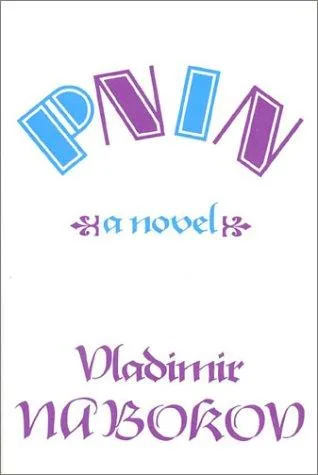
Pnin (1957)
Pnin is a 1957 fiction book written by Vladimir Nabokov and Enrique Murillo.
Timofey Pnin is a Russian emigre professor teaching at a small American college, and almost nothing goes smoothly for him. He boards the wrong train, mangles English idioms, fusses over his shabby lodgings, and carries the losses of exile with a dignity that keeps tipping into farce. Nabokov's 1957 novel, his fourth written in English, treats this gentle, bumbling man with a comedy that never curdles into cruelty. Behind the laughter sits the weight of the Russian Revolution and the war that scattered his world. The prose is precise, affectionate, and quietly devastating.
Similar books
A few thoughts on Pnin
Readers charmed by Vladimir Nabokov's blend of comedy and exile can watch his own most famous story reach the screen in Stanley Kubrick's Lolita, which carries the same sly, precise voice into film.
Russian writers stranded far from home
Pnin carries a vanished Petersburg into a New England faculty lounge, and Nabokov lets the loss sit under the comedy without ever spelling it out. These books and series follow the same displacement: Russians in Berlin boarding houses, in hotel confinement, in a borrowed language. Start with Mary to hear the young Nabokov working the same ache in Russian.
Start with the Russian classics Nabokov grew up on
Nabokov taught Russian literature and borrowed its timing. Pnin's pratfalls descend from Gogol's provincial farces, and the tenderness toward a ridiculous man runs back through Turgenev and Korolenko. Read these to hear the tradition Pnin argues with, from the Dikanka evenings to Tolstoy's late novella and the fables Russian schoolchildren memorized.
Comedies with real grief running underneath
The laughs in Pnin arrive with a cost attached: the wrong train, the mangled idiom, the dignity of a man who lost his country and keeps his manners. These Russian films work the same seam, funny on the surface and mourning something below it, from a monastery farce to soldiers swapping stories in wartime. White Nights keeps the tenderness and skips the jokes.
Campus stories where the professor is the outsider
Pnin fixed the campus novel's favorite figure in place: the foreign lecturer his department tolerates without making him one of its own. Student life and faculty maneuvering run through these picks too, in Russian dorm comedy, in an exam that decides a future, in a graphic novel about mathematicians quarreling over logic.