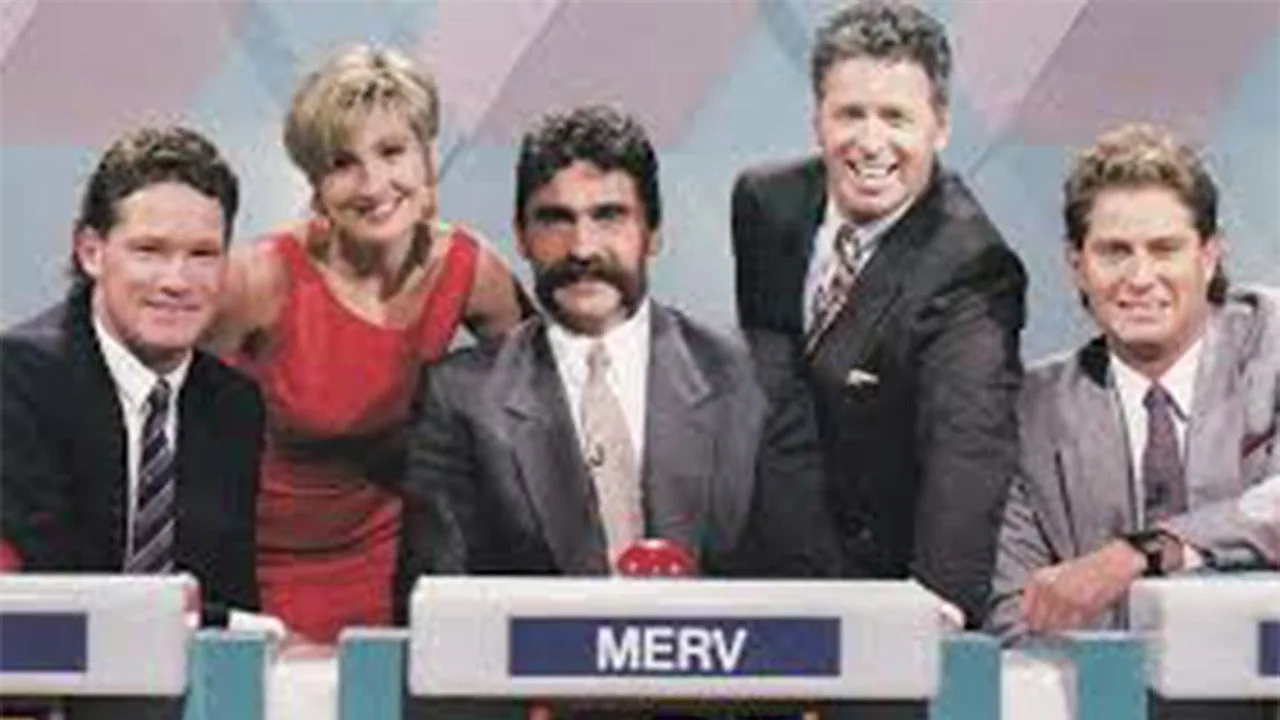
Sale of the Century (1980)
Sale of the Century is a 1980 family series. It stars Jo Silvagni, Tony Barber and Delvene Delaney.
Three contestants, a score that climbs and drops on every buzzer, and a table of goods priced at a fraction of what they cost in the shops. Australia's version of Sale of the Century worked that bargain for twenty one years on the Nine Network, from July 1980 to November 2001, and it played in prime time rather than the daytime slot most quizzes get.
The questions come fast and cover everything, answered on the buzzer, a right answer adding to your total and a wrong one handing some of it back. That total doubles as your spending money. Between rounds the host offers prizes at knockdown prices, and anything you buy comes out of the same number that decides who wins the night. Take the stereo and fall behind the two people standing beside you, or hold your nerve and play on for the bigger lot at the end. Champions return the following night against new challengers, so a good week compounds into something worth driving home.
Tony Barber set the pace, having already fronted the same format in the seventies under the title Temptation, and he stayed more than a decade before Glenn Ridge took over in 1991. Pete Smith announced almost every episode after the first ten went to air. Delvene Delaney, Alyce Platt and Nicky Buckley worked the prize floor across different eras. The Australian build proved sturdy enough to travel, including back to the United States for a revival that ran from 1983 to 1989.
Cast
Similar series
Explore Sale of the Century guides
A few thoughts on Sale of the Century
The nearest cousin outside television is The Jackpot, a 1950 comedy about a man who wins a radio quiz and then has to live with the prizes filling his house and the tax bill trailing them. Same appetite for merchandise, same joke about what winning costs you. Q & A builds a novel around a contestant answering for a fortune, with the life behind each answer explaining how he came to know it, so the trivia carries weight the buzzer never gives it. For the strategy rather than the general knowledge, the manga Liar Game drops ordinary people into money games where reading the person across the table beats knowing the answer. Much darker than a Thursday night on Nine, though it runs on the same arithmetic of risk and spend.
Buzzer quizzes where a wrong answer costs you points
Sale of the Century ran its questions at a sprint: buzz in, add five dollars to your total, miss and hand five back. That scoring rule punishes hesitation and recklessness at the same rate, which is the tension these quizzes live on too. Some build a category board, some set a professional chaser on you, all of them want an answer before you are sure.
Game shows built around the prize table
Between question rounds, Sale of the Century wheeled out a stereo or a lounge suite priced at a fraction of shop value, and contestants spent their score on it instead of banking it. Contestants on these shows do the same arithmetic in public: guess the ticket price, spin for the cash, trade a known offer for a case they cannot see inside.
Quiz formats handed over to comedians
Sale of the Century played its general knowledge straight, with Tony Barber keeping the clock honest and no room for a gag. These shows take the same trivia machinery and let comics wreck it, scoring points that stop mattering by the second round. Australians raised on the Nine Network quiz graduated to Spicks and Specks doing music rounds in exactly this spirit.
Stories that put a contestant in front of one big question
Twenty one years of Sale of the Century taught Australian viewers to read a quiz as pure nerve: a buzzer, a running total, a stranger one answer away from a car. Novelists and directors keep stealing that shape. These books, films and one manga drop a character into a contest and make the stakes personal rather than commercial.