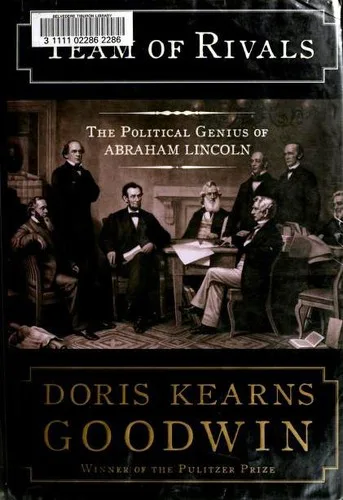
Team of Rivals (2005)
Team of Rivals is a 2005 union army book written by Doris Kearns Goodwin.
Abraham Lincoln entered the White House in 1861 as the least experienced man in his own party, then filled his cabinet with the rivals he had beaten for the nomination. William Seward, Salmon Chase, and Edward Bates each thought themselves his better. Doris Kearns Goodwin traces how Lincoln bound these proud, quarrelsome men into a working government while the Union split and the Civil War ground on. Drawing on diaries and private letters, she reads his patience and political skill as the quiet engine behind emancipation and eventual victory.
Explore Team of Rivals guides
Team of Rivals in our writing
- Companion guide: Political Intrigue & Power
- Companion guide: The American Civil War
A few thoughts on Team of Rivals
Steven Spielberg's Lincoln draws directly on this book, with Daniel Day-Lewis playing the president in the fight to pass the Thirteenth Amendment. For the wider war that frames Doris Kearns Goodwin's story, Ken Burns's documentary series The Civil War remains the essential companion, patient and elegiac across its nine episodes.
Governing with rivals who never wanted you to win
Goodwin's book follows Lincoln turning three rivals who wanted his job into a cabinet that won a war. Ken Burns' The Civil War supplies the wider canvas Lincoln worked inside, and Spielberg's Lincoln dramatizes that same late maneuvering from within the cabinet room. Blind Ambition tells a similar story of presidential proximity, decades later and less nobly, and The 48 Laws of Power lays out the theory behind it.