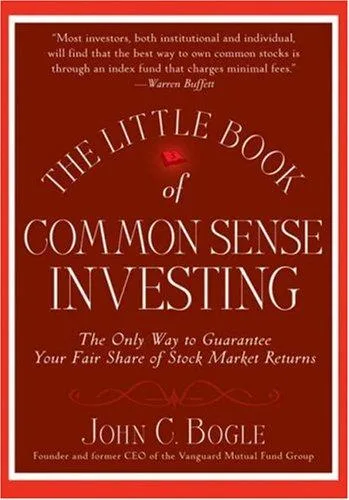
The Little Book of Common Sense Investing (2007)
The Little Book of Common Sense Investing is a 2007 finance book written by John C. Bogle.
John Bogle founded Vanguard and built the first index mutual fund, and this compact book is his argument boiled to its core. Beating the market, he insists, is a loser's game once fees, taxes, and trading costs are subtracted. The reliable path is dull on purpose: buy the whole market through a low-cost index fund and hold it for decades. Bogle backs the case with plain arithmetic and a career's worth of scars, aiming his fire at the mutual-fund industry that profits whether or not clients do. Blunt, repetitive by design, and hard to argue with.
Similar books
Explore The Little Book of Common Sense Investing guides
A few thoughts on The Little Book of Common Sense Investing
John C. Bogle's plain-spoken skepticism about Wall Street's fee machine finds a louder cousin in The Big Short, Adam McKay's film that turns market plumbing into gallows comedy and shows what happens when the industry's incentives run unchecked. Different subject, same lesson: the people selling the product rarely have your returns at heart.
Practical rulebooks that replace expert mystique with simple systems
The Little Book of Common Sense Investing strips investing down to one repeatable rule: buy the whole market cheaply and hold it, ignoring anyone who claims they can beat it. The Art of War, The 48 Laws of Power, Ultralearning and Hacking for Dummies take the same approach to war, influence, skill-building and computer systems, distilling a messy discipline into a short list of blunt rules anyone can apply.
Documentaries and shows that test popular claims against the data
The Little Book of Common Sense Investing builds its entire case on plain arithmetic, daring readers to check the math rather than trust the fund industry's pitch. MythBusters, Bowling for Columbine, Frontline and NOVA share that same instinct, pitting a widely repeated claim against actual evidence and letting the results speak, whether the subject is gun violence, a viral rumor or the physics underneath it.