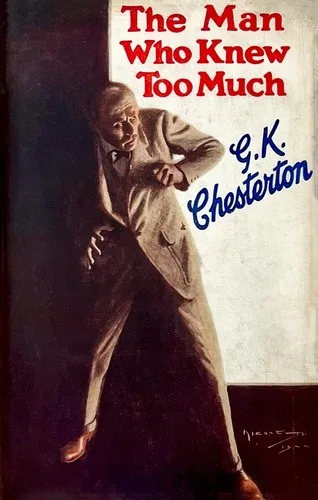
The Man Who Knew Too Much (1922)
The Man Who Knew Too Much is a 1922 fiction book written by Gilbert Keith Chesterton.
Horne Fisher knows too much. A tired, well-connected insider of the British establishment, he can solve almost any crime that crosses his path and can almost never see justice done, because the guilty are his friends, his relatives, the men who run the Empire. G. K. Chesterton's 1922 collection pairs Fisher with the young journalist Harold March across eight linked mysteries set in the uneasy years before the First World War. The puzzles are real, but the true target is political rot and power protecting its own. Chesterton writes detection as moral argument, sharp and disenchanted.
Similar books
Explore The Man Who Knew Too Much guides
A few thoughts on The Man Who Knew Too Much
Gilbert Keith Chesterton's better-known sleuth reached television as the long-running Father Brown, and the same voice carries through it: a mild, watchful investigator who cares more about the sinner's conscience than the mechanics of the crime. Fisher's world of establishment cover-ups gives that formula a colder, more political edge, but the moral detective is the shared inheritance.
Golden age whodunits where the killer turns out to be one of their own
Chesterton built Horne Fisher as an insider who solves crimes committed by people he actually knows, friends and relatives among the well-connected. These puzzle mysteries share that same closed circle: a small cast of respectable suspects, a country house or village setting, and a detective working out which of the people they trust actually did it.
Investigators who always bring a partner to bounce ideas off
Horne Fisher never works alone: journalist Harold March tags along across all eight stories, asking the questions Fisher already knows the uncomfortable answers to. These detective shows run on that same chemistry, a sharp investigator paired with a steady partner or straight man, working a case together instead of posturing as a lone genius.
Cases where the powerful protect each other instead of the truth
Fisher solves almost every case that crosses his path and still watches justice fail, because the guilty are his friends and the men who run the Empire. These stories share that same disenchanted core: institutions built to investigate wrongdoing end up shielding whoever already holds the power.