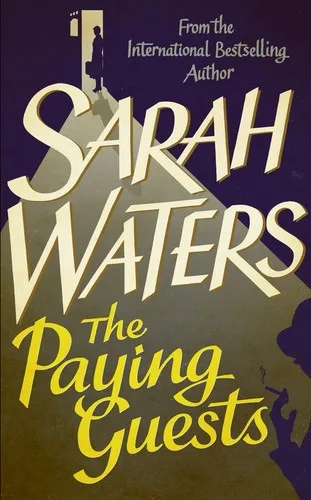
The paying guests (2014)
The paying guests is a 2014 fiction book written by Sarah Waters.
London, 1922. The war has drained the servants, the money, and the men from a genteel Camberwell villa, leaving widowed Mrs Wray and her unmarried daughter Frances rattling around rooms they can no longer afford to keep alone. Necessity brings lodgers: Lilian and Leonard Barber, a young couple of the clerk class whose presence unsettles the household's careful rhythms. Sarah Waters builds the pressure slowly, through glances and small transgressions across a class divide, before feeling pulls everyone off balance. Precise period detail, real tenderness, and a mounting sense that nothing quiet here can stay quiet for long.
Official site
Similar books
A few thoughts on The paying guests
For more of Sarah Waters' hidden lives and slow-burn tension, try her own Fingersmith; Ian McEwan's Atonement for class, desire, and consequence in a similar English key; and the film Carol for restrained period longing. Downton Abbey covers the same post-war upstairs-downstairs world with softer edges.
More Sarah Waters, and the adaptations worth watching
The Paying Guests puts Frances and Lilian on opposite sides of a rent book, and Waters writes the rest of her London the same way: period research that stays out of the way, desire driving the plot, a narrator who tracks laundry and money as closely as longing. Night Watch and The Little Stranger sit nearest. Fingersmith carries the register to screen.
Queer love stories that take their time, in comics and on screen
Waters spends half of The Paying Guests on glances across a landing before anyone says a plain word, and readers who love that patience want it in other forms too. These comics and series keep the same attention on small gestures: a hand, a shared cigarette, a door left open. Most sit in the present day, so the restraint carries over and the period detail does not.
Slow-burn period stories that tip into crime
The Paying Guests gives its first half to rent, tea trays and footsteps on the stairs, then drops its household into serious legal trouble and stays there for another three hundred pages. These picks work the same seam: an ordinary house, a rising unease, and an investigation that arrives with the manners of the period intact.
Period dramas about the class line running through one house
Mrs Wray takes in the Barbers because the money ran out, and The Paying Guests never stops counting who scrubs what and who pays whom. These series put the same arithmetic on screen, with the servants' corridor and the drawing room in one frame. Dope Girls and We That Are Left cover the same battered London of the 1920s.