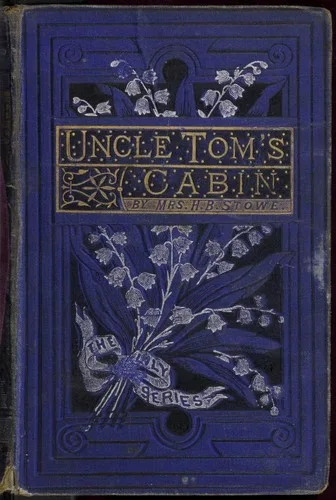
Uncle Tom's Cabin (1964)
Uncle Tom's Cabin is a 1964 master and servant book written by Harriet Beecher Stowe.
Harriet Beecher Stowe's 1852 novel follows Tom, an enslaved man of deep Christian faith who will not run when the chance comes, unwilling to shift his own bondage onto others. Sold away from the only home he knows, he is sent down the Mississippi into far harsher hands. Stowe wrote to make Northern readers feel slavery as a moral fact rather than an abstraction, and the book became one of the most influential of its century. It is sentimental by design and unflinching about cruelty, a document of its moment as much as a story.
Similar books
Explore Uncle Tom's Cabin guides
Uncle Tom's Cabin in our writing
- Companion guide: The American Civil War
A few thoughts on Uncle Tom's Cabin
Uncle Tom's Cabin brings Harriet Beecher Stowe's story to the screen. For a related journey toward freedom, Freedom follows an escape north along the Underground Railroad with the same faith-driven weight. Both sit best alongside the novel as ways into the same history, read with an eye on when and why each was made.
Stories of American slavery and the long road to freedom
Harriet Beecher Stowe wrote Uncle Tom's Cabin to make slavery a moral fact readers could feel rather than an abstraction. These stories carry that weight, following enslaved and freed people through separation, escape, and the push toward freedom. Some are sentimental, some plainspoken, but each asks you to sit with cruelty instead of looking past it.
Period dramas about endurance in a nation at war with itself
Uncle Tom's Cabin turns on faith and endurance under a system built to break both. These period dramas share that ground, set in a divided nineteenth-century America where ordinary people carry impossible burdens across war, frontier hardship, and hard choices. They trade spectacle for the slow cost of holding onto conviction.