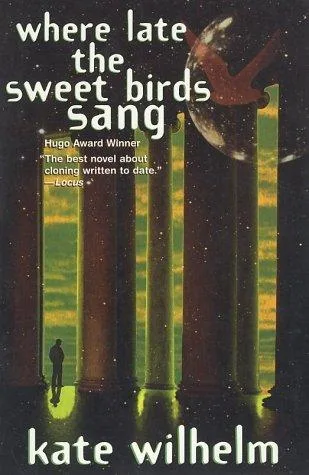
Where Late the Sweet Birds Sang (1976)
Where Late the Sweet Birds Sang is a 1976 fiction in english book written by Kate Wilhelm.
After civil collapse and creeping sterility empty the world, one extended family retreats to a sheltered valley and gambles on cloning to keep the human line alive. Kate Wilhelm follows the community across generations as the clones raised there develop a group identity that drifts steadily away from the individualism of the people who made them. Told in three linked parts, the 1976 novel weighs the cost of survival against what is lost when sameness replaces the self. Rigorous in its biology and unhurried in its telling, it won the Hugo Award and remains a touchstone of humanistic hard science fiction.
Similar books
Explore Where Late the Sweet Birds Sang guides
Where Late the Sweet Birds Sang in our writing
- Companion guide: Clones & Copies
A few thoughts on Where Late the Sweet Birds Sang
Readers drawn to survival and identity should try Silo, a series about an enclosed community preserving itself after catastrophe, and The Handmaid's Tale, which turns dwindling fertility into control. Osamu Tezuka's manga Phoenix circles the same questions of rebirth and humanity, while Ghost in the Shell probes the self and Interstellar chases the survival of the species.
Dystopias where the system erases the individual
Wilhelm watches cloned generations lose the individualism of the people who made them. These carry the same fear of the self dissolving into control, from the engineered obedience of Thunderhead and the reproductive tyranny of The Handmaid's Tale to the erased identities of Shatter Me, the Scorch Trials and a poached Indigenous future.
Cloning, genetic destiny and manufactured humanity
The novel bets survival on cloning and asks what the copies owe the originals. These push the same questions about engineered life, from the cyborg identity crisis of Ghost in the Shell and Appleseed's bio-augmented soldiers to Tezuka's cosmic cycle of rebirth and a rock opera about harvested organs.
Humanist science fiction about surviving the end
Where Late the Sweet Birds Sang weighs the cost of survival after civilization empties out. These share that quiet, character-first reckoning with the end, from the buried survivors of Silo and the last-ditch mission of Project Hail Mary to Interstellar's search for a new home and the plague survivors of Swan Song.